Start with an empty room, not a tidy-up
A walk-in only gets truly organized when everything comes out at once. Moving piles from one rod to another hides the real problem, which is usually that the closet holds two or three wardrobes: the one you wear, the one you used to wear and the one you mean to wear someday.
Clear the bed or a large table and sort into broad groups as items come out: tops, bottoms, dresses, outerwear, shoes, bags, accessories and things that do not belong in a closet at all. That last pile is often bigger than people expect, from gift wrap to paperwork.
Zone each wall by how often you reach
The most useful rule in a walk-in is reach frequency. The zone between roughly your hip and your shoulder is prime real estate and should hold only what you wear each week. Everything else moves up, down or to the back.
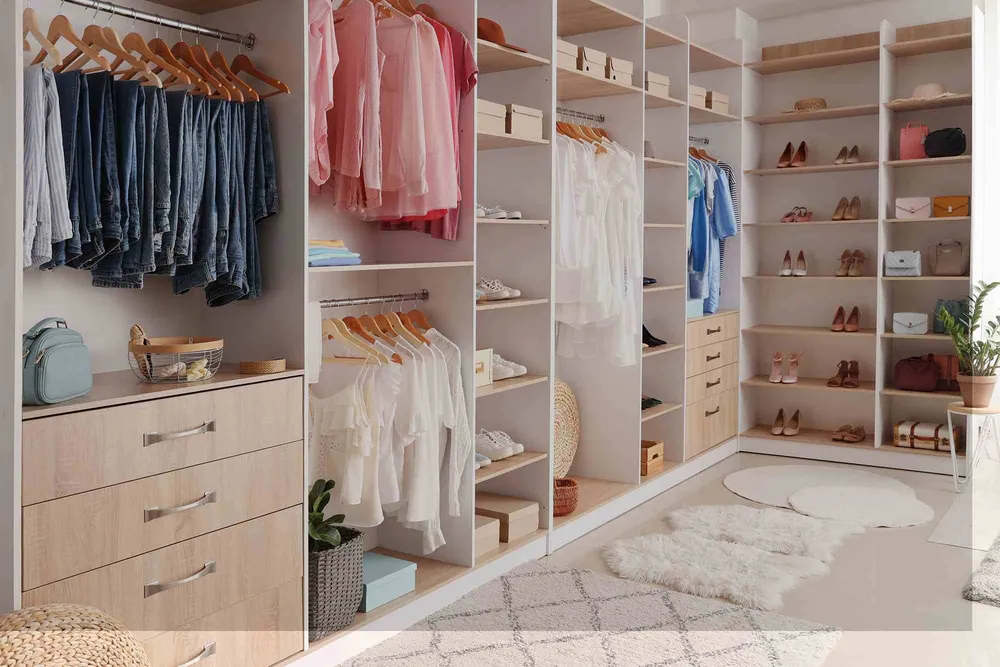
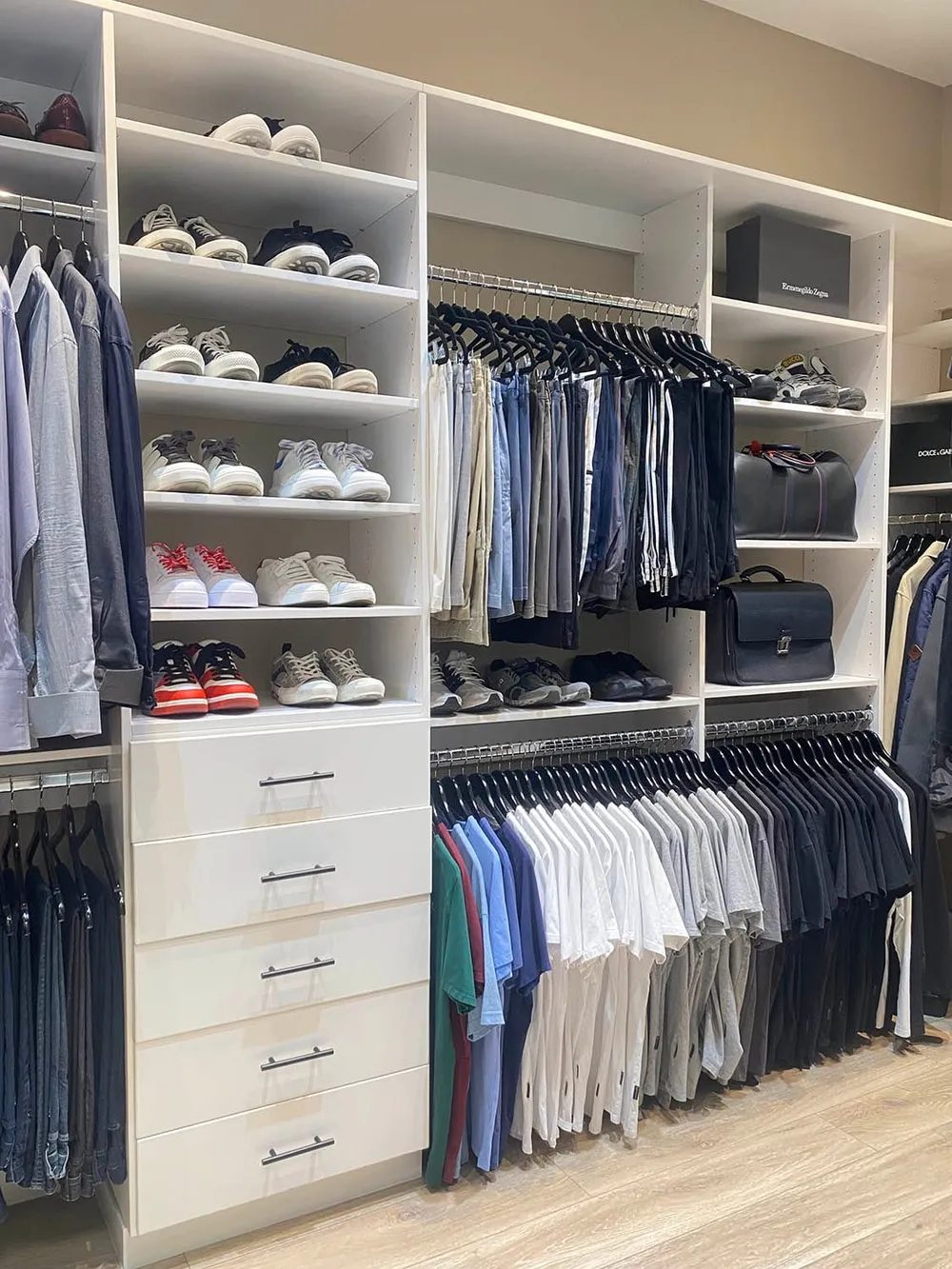
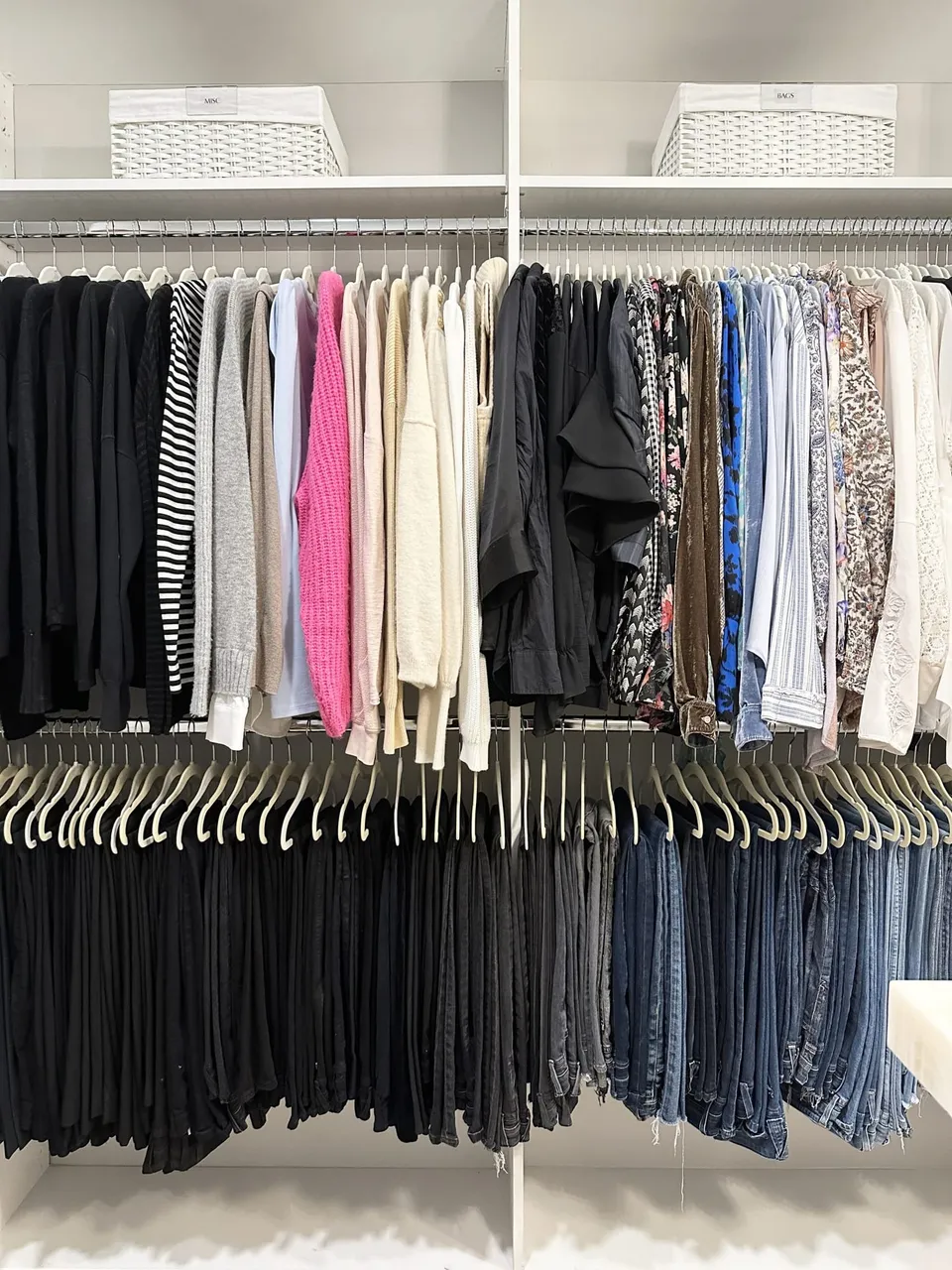
Most walk-ins in Las Vegas new builds come with a single rod and one shelf running around the room, which wastes a lot of height. Double-hanging the shirt and trouser wall, with rods at about 40 and 80 inches, roughly doubles usable hanging space without any new square footage.
| Zone | Height | What belongs there |
|---|---|---|
| Upper shelf | Above 72 in | Off-season bins, luggage, keepsakes |
| Prime zone | 30 to 72 in | Daily tops, work clothes, folded knits |
| Long-hang | Rod near 66 to 70 in | Dresses, coats, robes |
| Low zone | Floor to 30 in | Shoes, hampers, heavy bins |
Step by step
- Measure the room
Note each wall's width, rod heights and shelf depths before you buy a single bin.
- Empty and sort
Take everything out and group it by category, setting aside items that belong in other rooms.
- Edit honestly
Keep what fits and gets worn; bag donations for Goodwill of Southern Nevada, Opportunity Village or a similar option before they drift back in.
- Assign walls
Give the wall you face on entry to daily wear, and side walls to long-hang, shoes and off-season pieces.
- Load and label
Hang by category and color, fill bins, and label every shelf container so it goes back to the same spot.
Group by category first, then by color
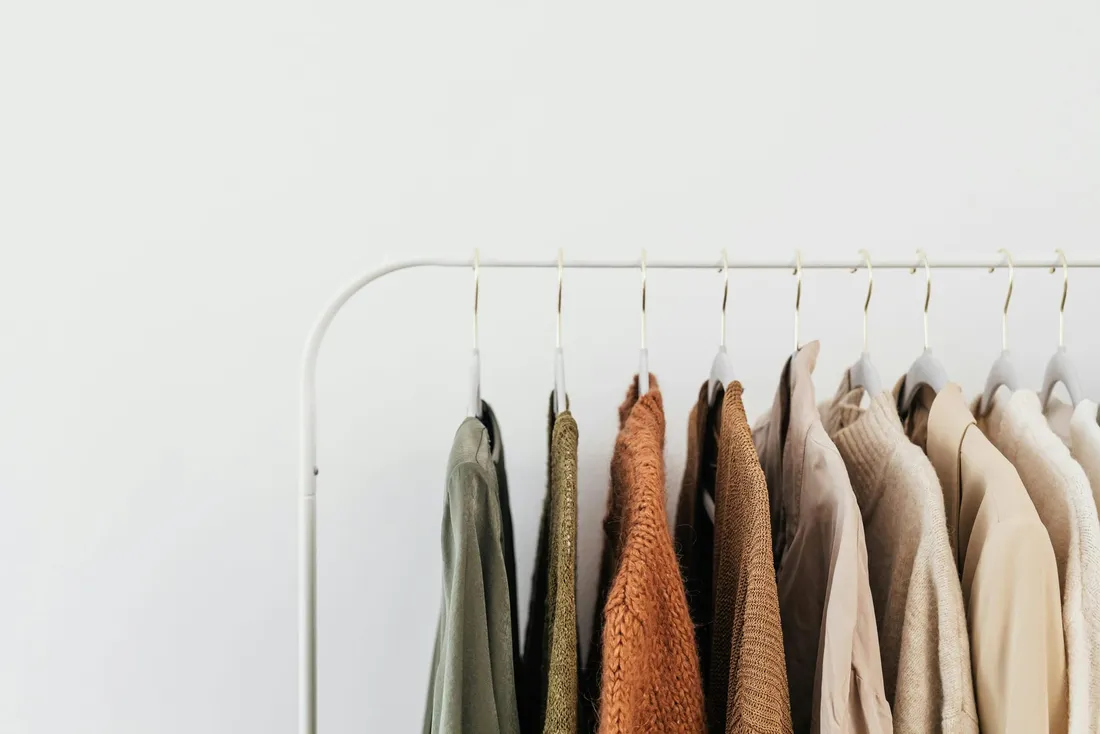
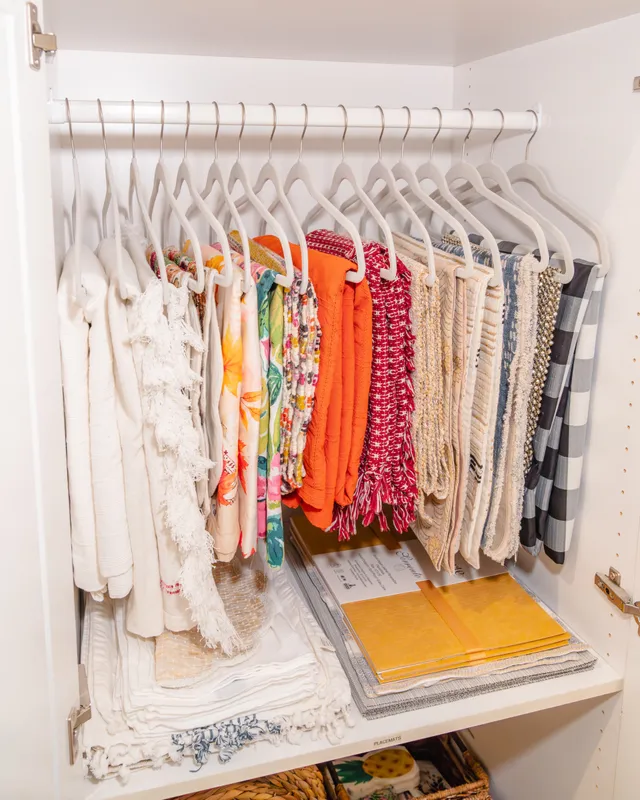
Hang by type before anything else: all button-downs together, then tees, then sweaters on shelves, then trousers. You get dressed by asking what kind of piece you need, so the closet should answer that question first.
Within each category, order light to dark. It looks calm, and it shows you at a glance when you own nine navy sweaters and no camel one. If you want to take that further, our guide on organizing a closet by color covers the details.
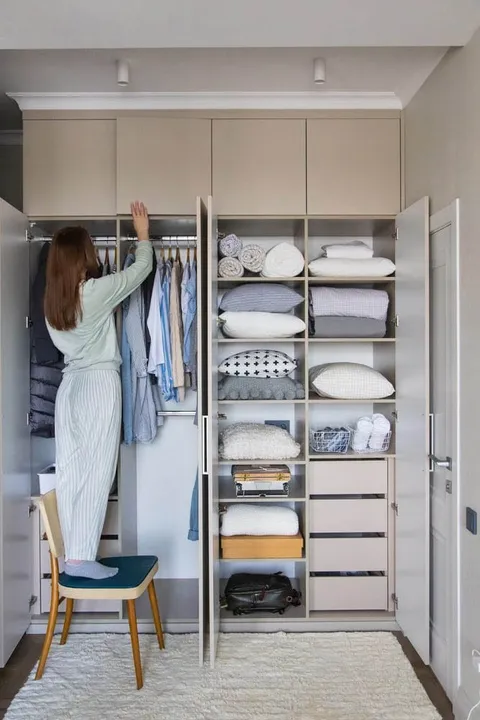
Use products that fit the walls you have
Buy products after you measure, never before. Shelf depth in most walk-ins runs 12 to 16 inches, so a bin that is 15 inches deep on a 12-inch shelf will hang off the edge and collect dust.
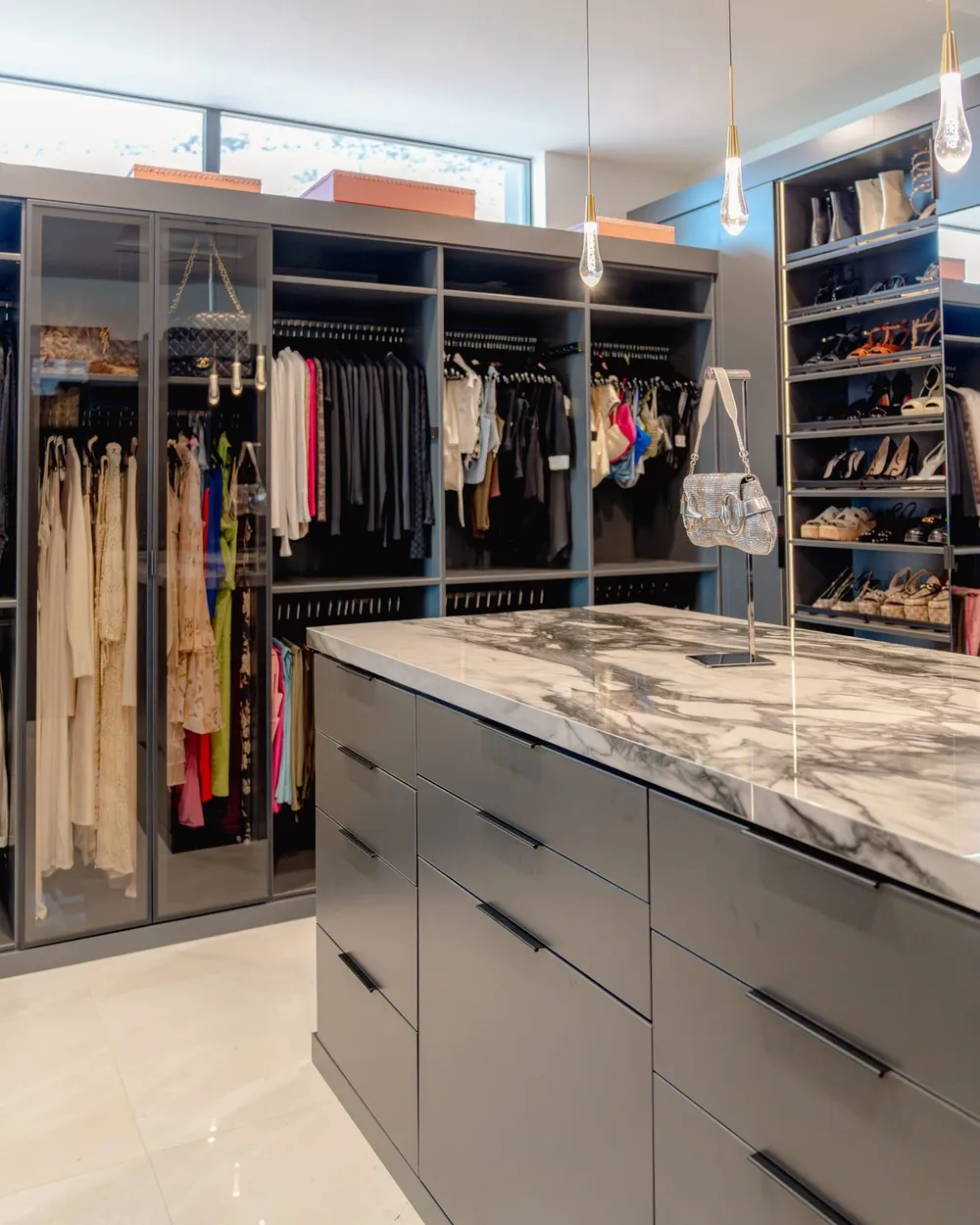
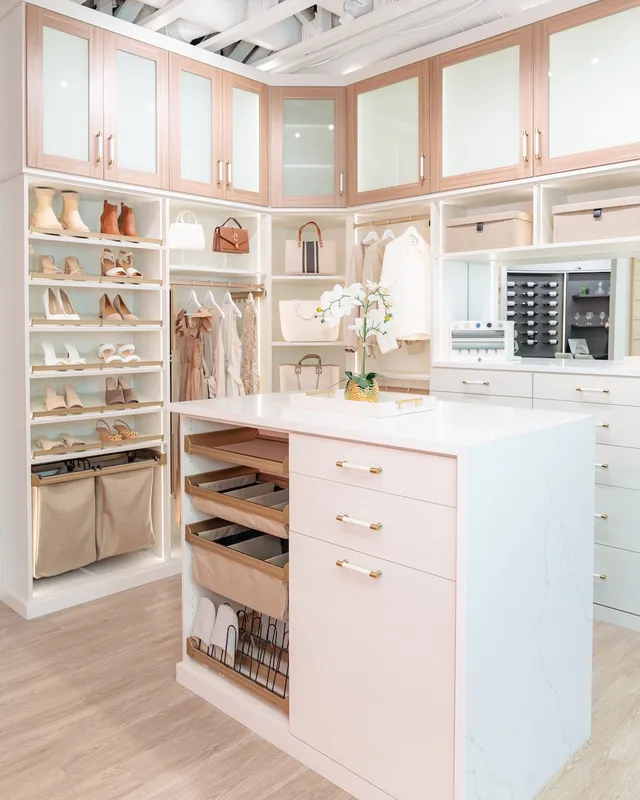
If the closet needs real carpentry, such as new towers, drawers or an island, that is work for a closet company. We often coordinate with one, then come back to plan what goes where; the custom closet organizer page explains how that handoff works.
- Slim velvet or wood hangers in one style, so garments line up and nothing slips
- Clear or lidded fabric bins on high shelves, labeled on the short end that faces you
- Shelf dividers to keep folded stacks under 10 to 12 inches tall
- Felt-lined trays in a drawer for watches, sunglasses and rings
- Two hampers or one divided hamper on the floor, so laundry never lands on a chair
Protect the closet from desert dust
Fine dust settles on upper shelves and shoulder seams faster in the valley than in most places, especially if your closet shares a wall with the garage or has a window. Lidded bins up top and breathable garment bags on rarely worn pieces cut down on wiping and spot cleaning.
Keep a dry microfiber cloth in the closet and give shelves a wipe when you do your seasonal swap. It takes five minutes and keeps the space feeling fresh.