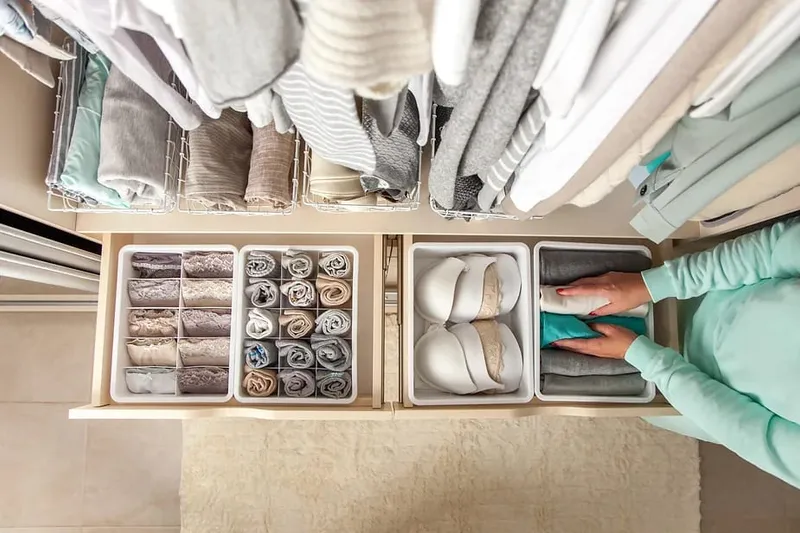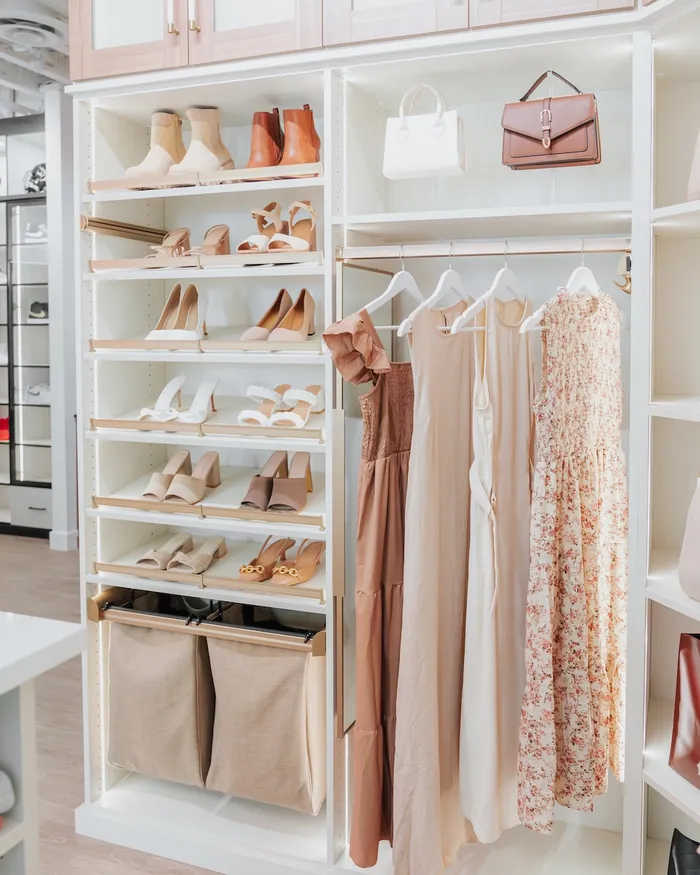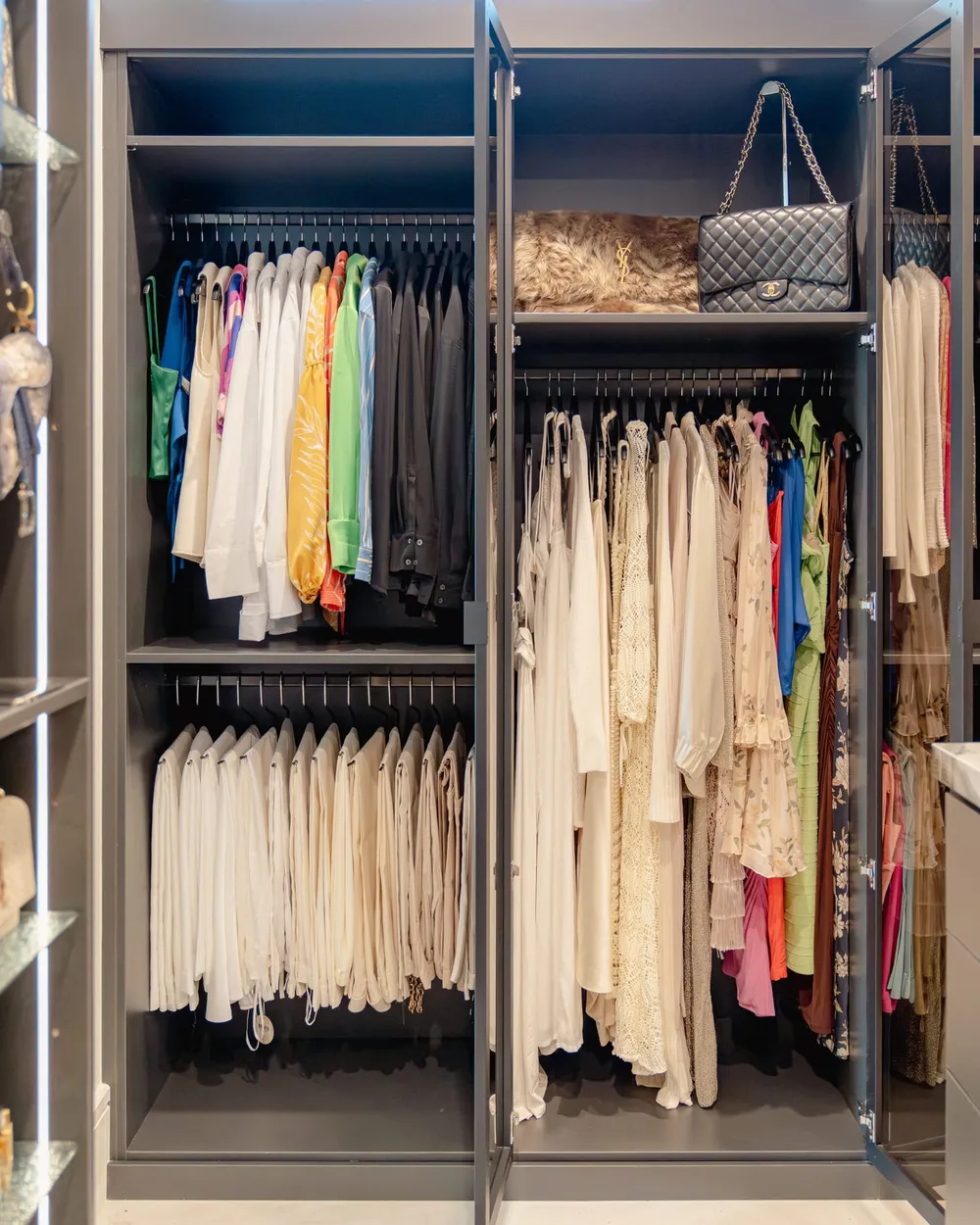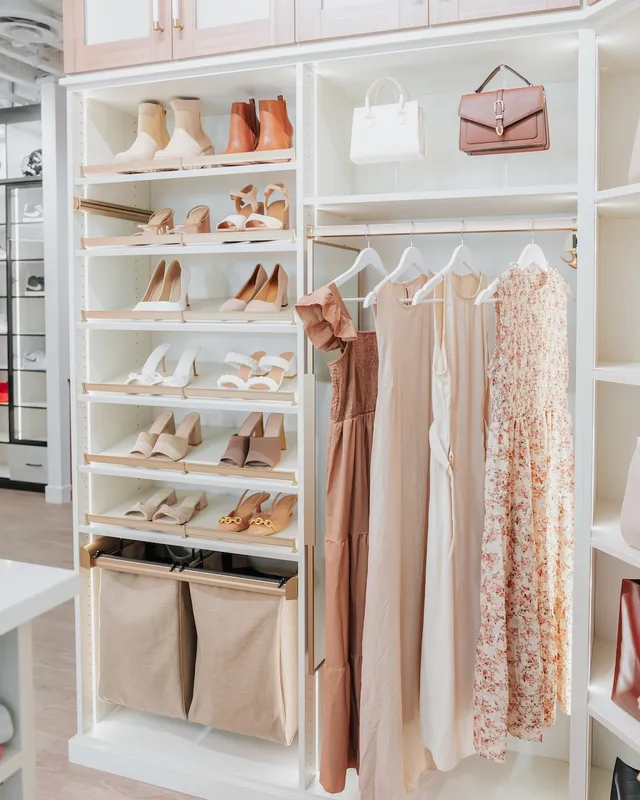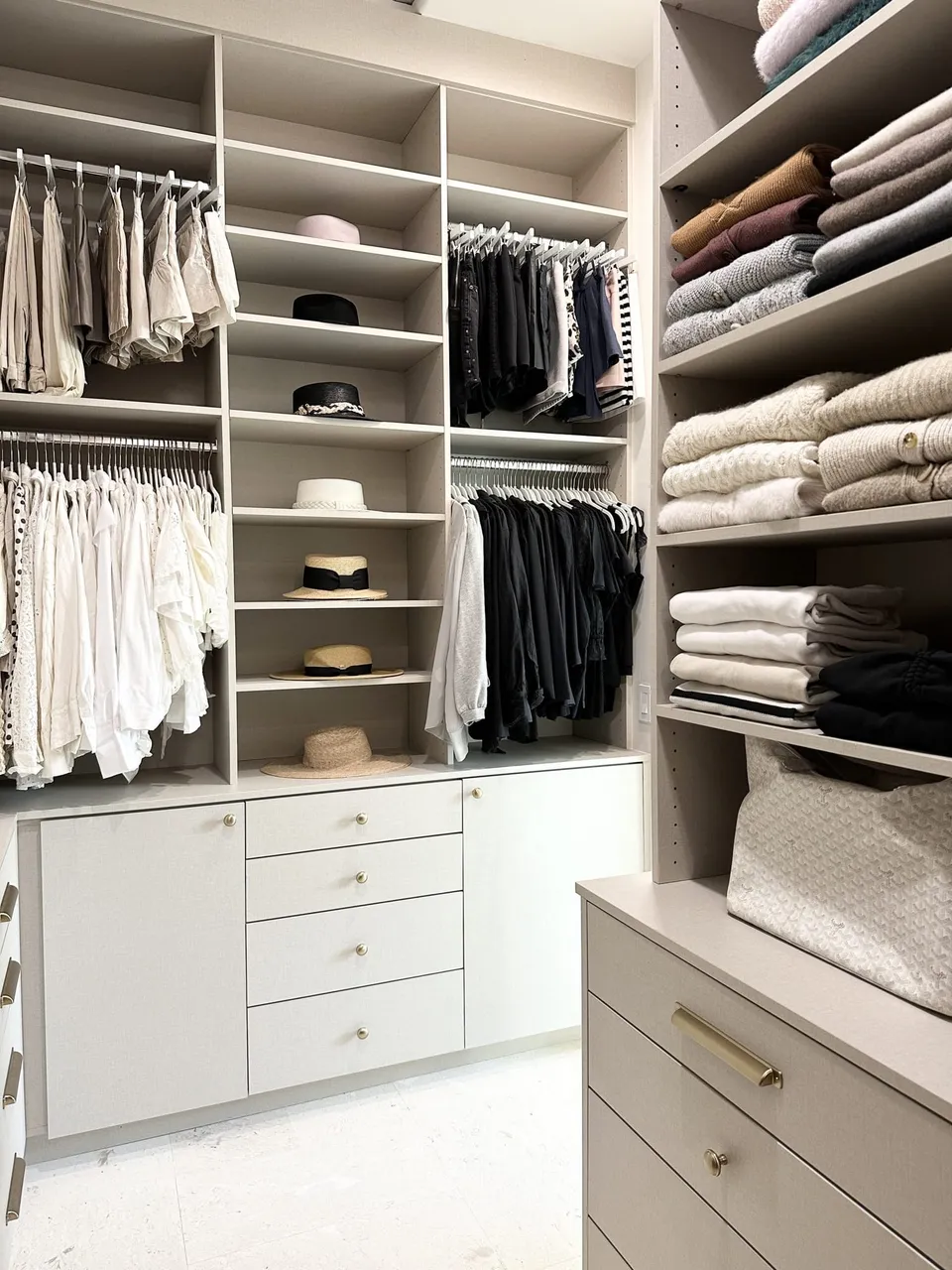
The center window is your prime space
A reach-in closet is usually 24 inches deep and wider than its door opening. That means the middle section is easy to reach, while the ends behind the door frame are awkward. Treat them differently.
Hang daily tops and bottoms in the center, where you can see them the moment the door opens. Put off-season clothes, formalwear and items you wear a few times a year in the corners, where reaching in once a month is fine.
Fix the corners first
Corners are where reach-in closets lose the most space. A few practical fixes make them usable without any carpentry.
- Hang long garments like coats and dresses at the far ends, where their length does not block anything
- Use a tall, narrow shelf unit in the corner for shoes or folded items
- Add hooks on the side walls for bags, belts and robes
- Store a labeled bin of seasonal accessories on the shelf above each corner
Step by step
- Empty and measure
Note the width, depth, rod height and how far the corners extend past the door frame.
- Edit
Remove anything that does not fit, is not worn or belongs elsewhere.
- Assign the center
Put daily clothes directly behind the opening.
- Fill the corners
Use the ends for long-hang, off-season or occasional items.
- Set the floor and shelf
Add one floor solution and labeled bins above.
Plan rods and shelves around what you own
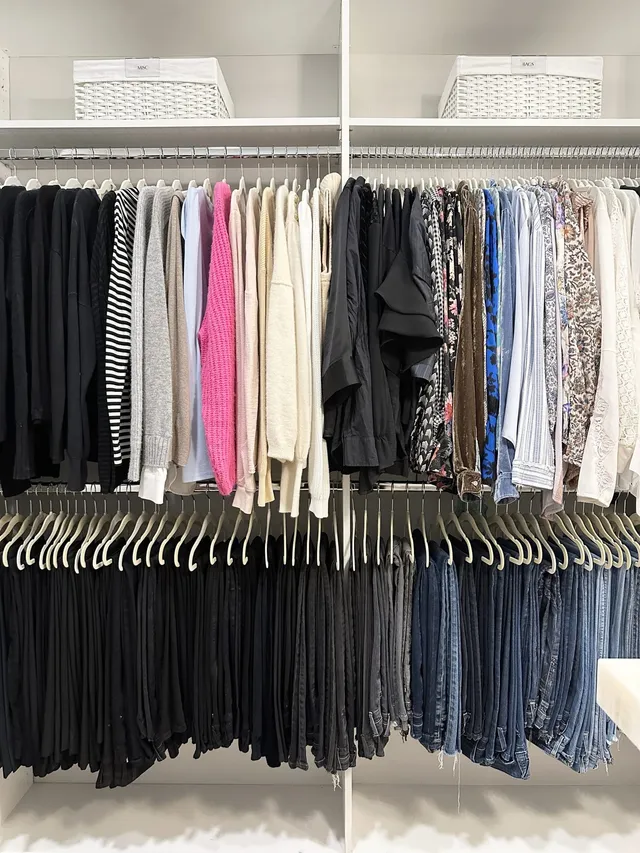
Many Las Vegas homes, especially newer builds, come with a single rod and a shelf at about 66 to 70 inches. If you mostly own shirts and folded trousers, a second rod at about 40 inches doubles hanging space. If you own many dresses, keep at least one section of single long-hang.
Tension or hang-from-rod systems are an easy first step. If you want permanent shelving towers or drawers, a closet company can install them, and an organizer helps decide the layout beforehand. Our custom closet organizer page explains how we coordinate those projects.
| If you mostly own | Best layout |
|---|---|
| Shirts, trousers, short pieces | Double-hang across most of the width |
| Dresses and long coats | One long-hang section plus double-hang beside it |
| Folded knits and tees | Shelf tower or drawer unit in the center or one side |
| Lots of shoes | Floor rack plus an over-the-door organizer |
Pick doors and bins that suit a shallow space
Bifold and sliding doors each hide part of the closet. With sliding doors, keep the most-used section on whichever side you open first. With bifolds, remember they fold into the space, so keep the first few inches of rod clear.
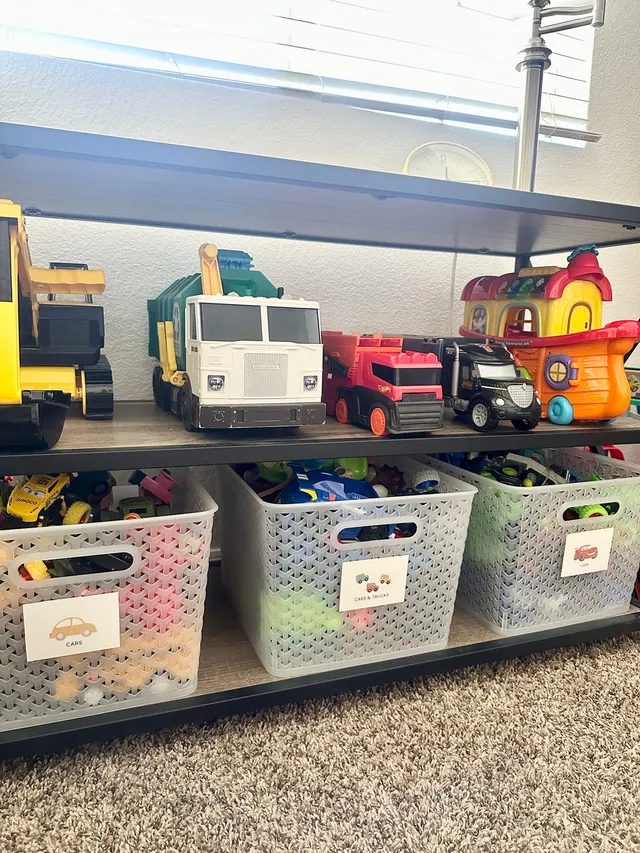
On the upper shelf, choose bins about 12 to 14 inches deep with front handles. Deeper bins are harder to pull down from above head height. Clear or fabric bins both work; label the front either way.
Keep the floor clear
Floors become dumping grounds in reach-ins faster than anywhere else in the house. Give the floor one job, such as a two-tier shoe rack or a low drawer unit, and keep everything else off it.
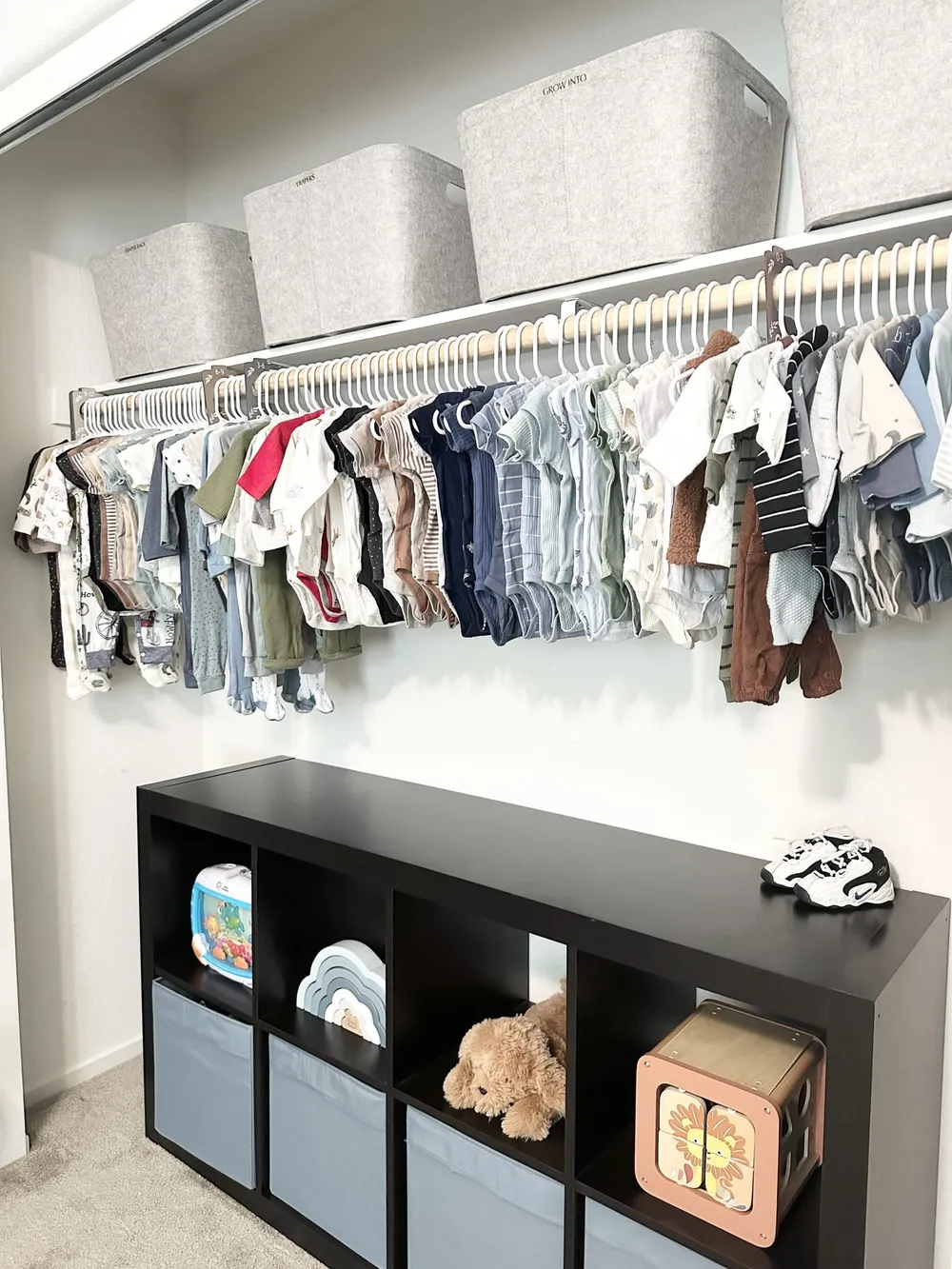
If kids use the closet, a reach-in is ideal for low rods and labeled bins they can manage themselves. Our kids closet organization page covers child-height layouts.