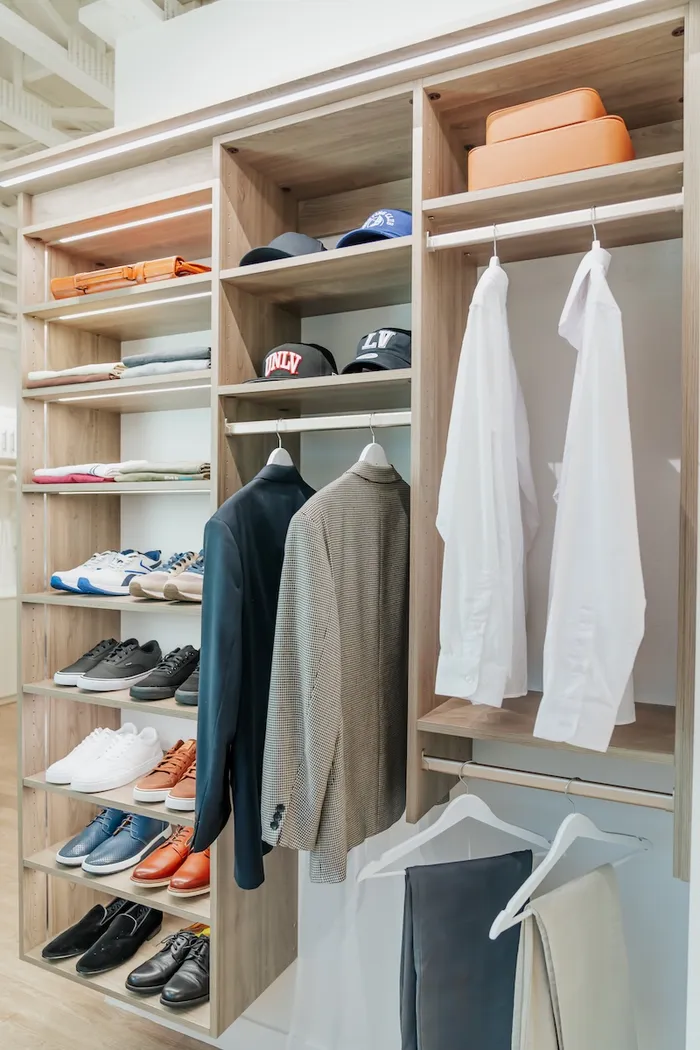
Volume is the first problem to solve
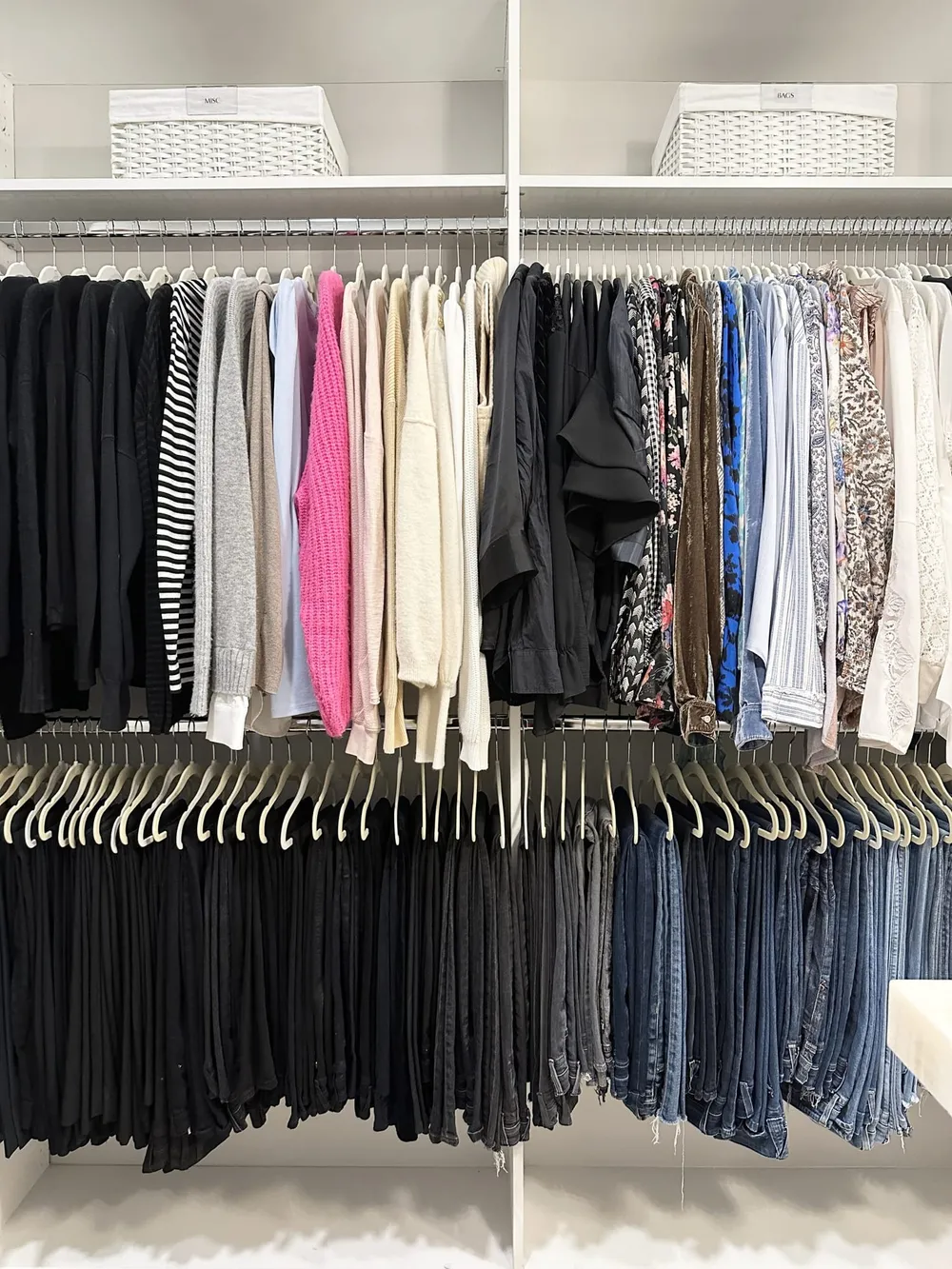
No product makes 120 garments fit on 36 inches of rod. Before you shop, count what you have and decide what the closet should hold. A rough rule: a 4-foot rod comfortably fits about 50 to 60 garments on slim hangers, fewer if they are coats.
Move everything that is not this season somewhere else. In Las Vegas the cold months are short and mild, so heavy coats and boots can live in a lidded bin under the bed or on a high guest-room shelf for most of the year. Our guide to storing winter clothes in a hot climate explains which spots in the house stay cool enough.
Use the height you are ignoring
Small closets usually have their worst waste above the shelf and below the hems. The space between the top shelf and the ceiling can take a second, narrower shelf or a row of lightweight bins. Under short-hanging tops there is often 30 inches of floor doing nothing.
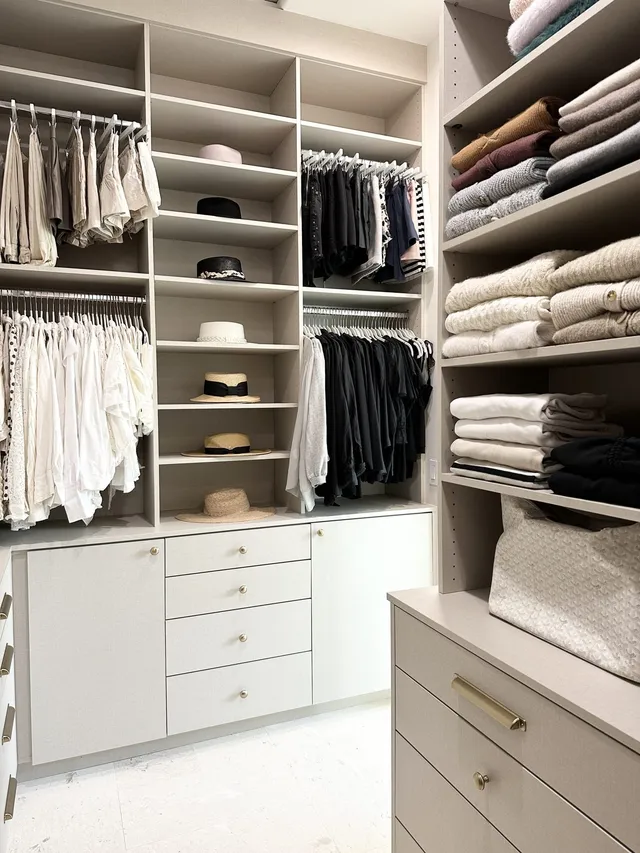
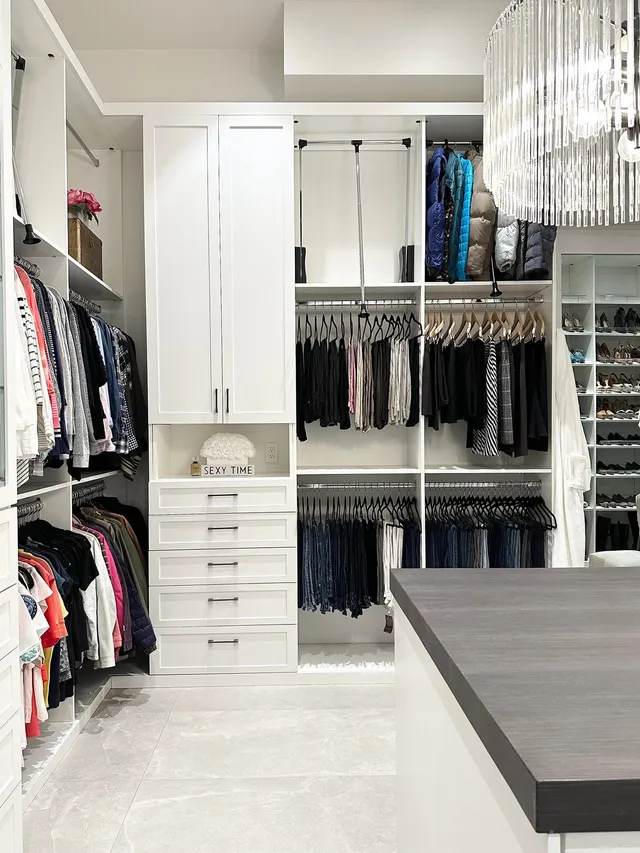
If the rod sits around 66 inches with a shelf above, a hanging rod extender or a second tension-mounted rod at about 40 inches turns one row of shirts into two. Trousers folded over a hanger bar fit neatly on the lower row.
- Second shelf or riser above the existing shelf for rarely used items
- Lower rod or rod extender beneath short hanging clothes
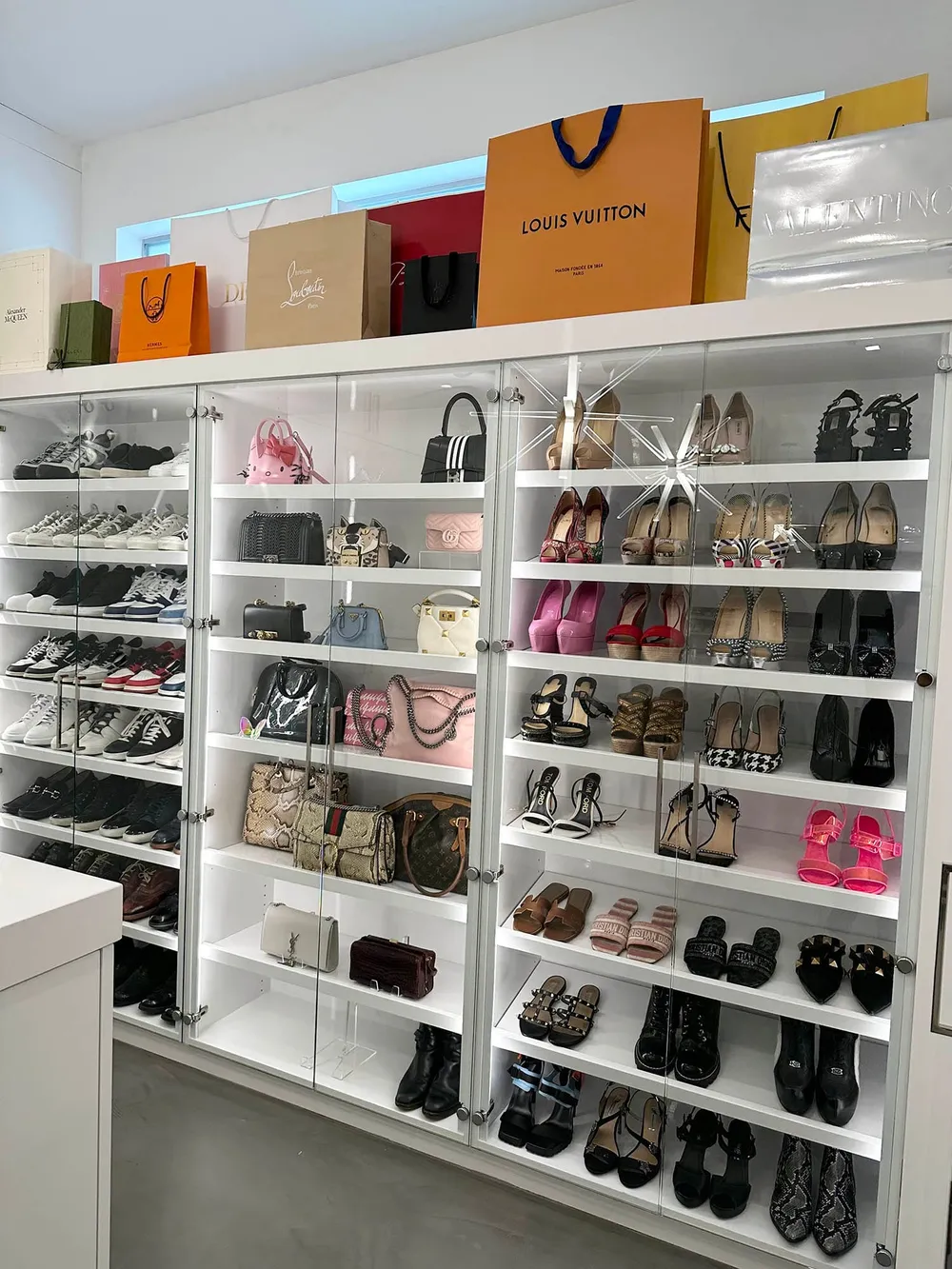
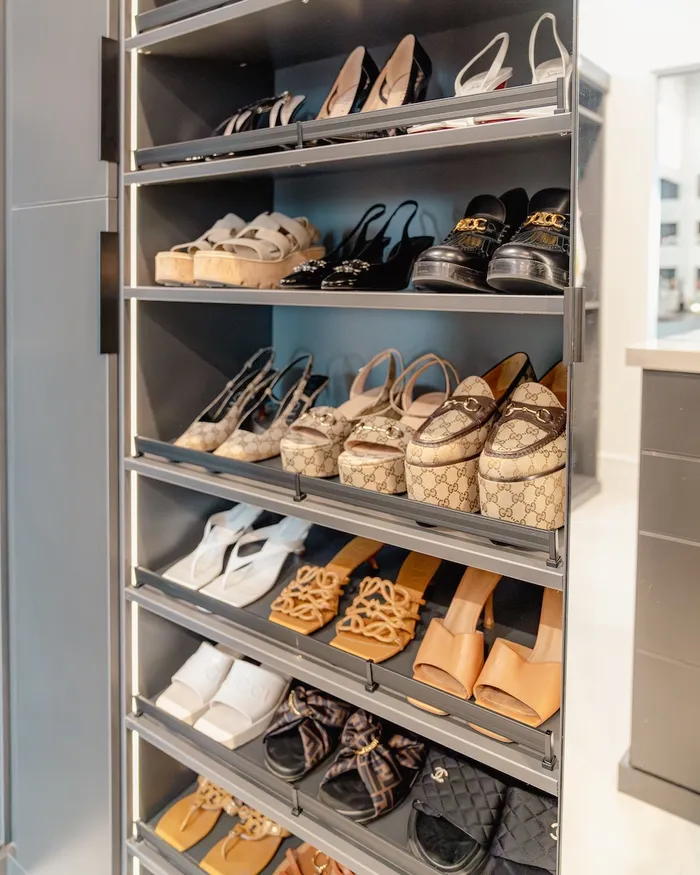
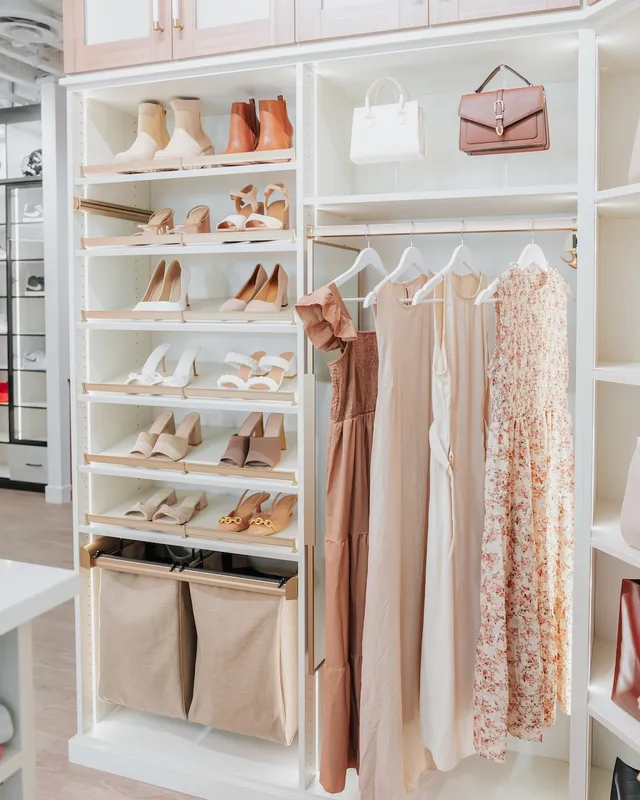
- Narrow drawer unit or stacking shoe shelves on the floor
- Over-the-door rack for shoes, scarves or belts
Step by step
- Pull out the off-season
Remove anything you will not wear in the next three months and store it elsewhere in the house.
- Count your hangers
Set a hanger budget that fits the rod comfortably, and edit down to it.
- Add a second level
Install a lower rod or extender where short clothes hang, and a riser on the shelf.
- Swap the hangers
Change to one style of slim hanger so everything sits at the same height.
- Claim the door
Add a door rack or hooks for accessories, checking clearance before you mount anything.
Slim products buy back inches
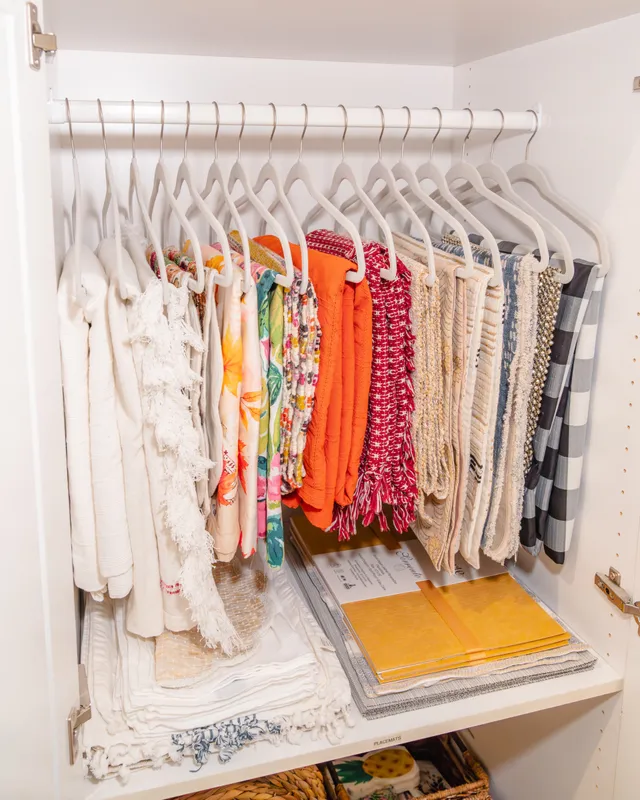
Swapping bulky plastic or wooden hangers for slim velvet ones typically frees 30 to 50 percent of rod width. That single change often matters more than anything else you can buy for a small closet.
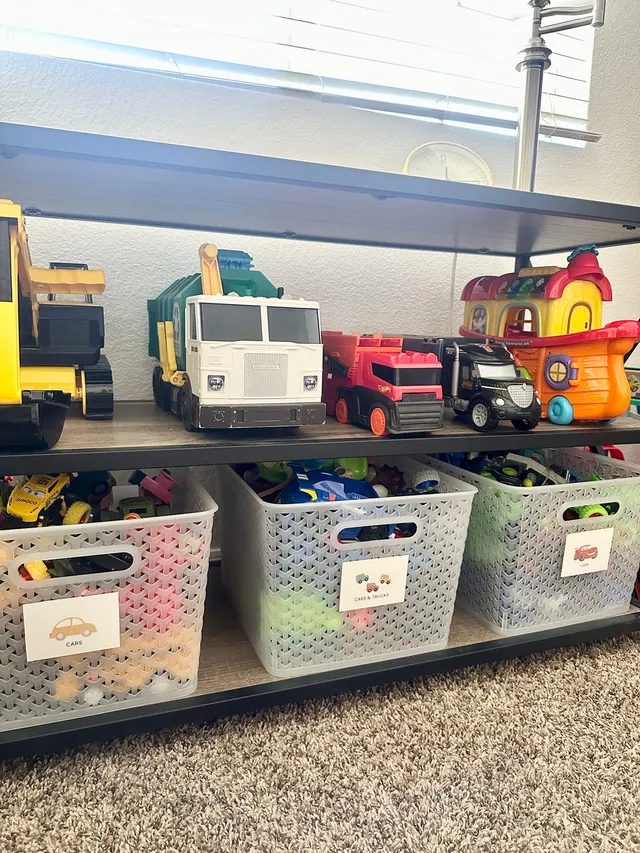
Choose bins that match your shelf depth and stack them only two high, so the bottom one is still reachable. Fabric bins with a front handle work better than lidded boxes in a tight space, because you can slide one out without moving the one on top.
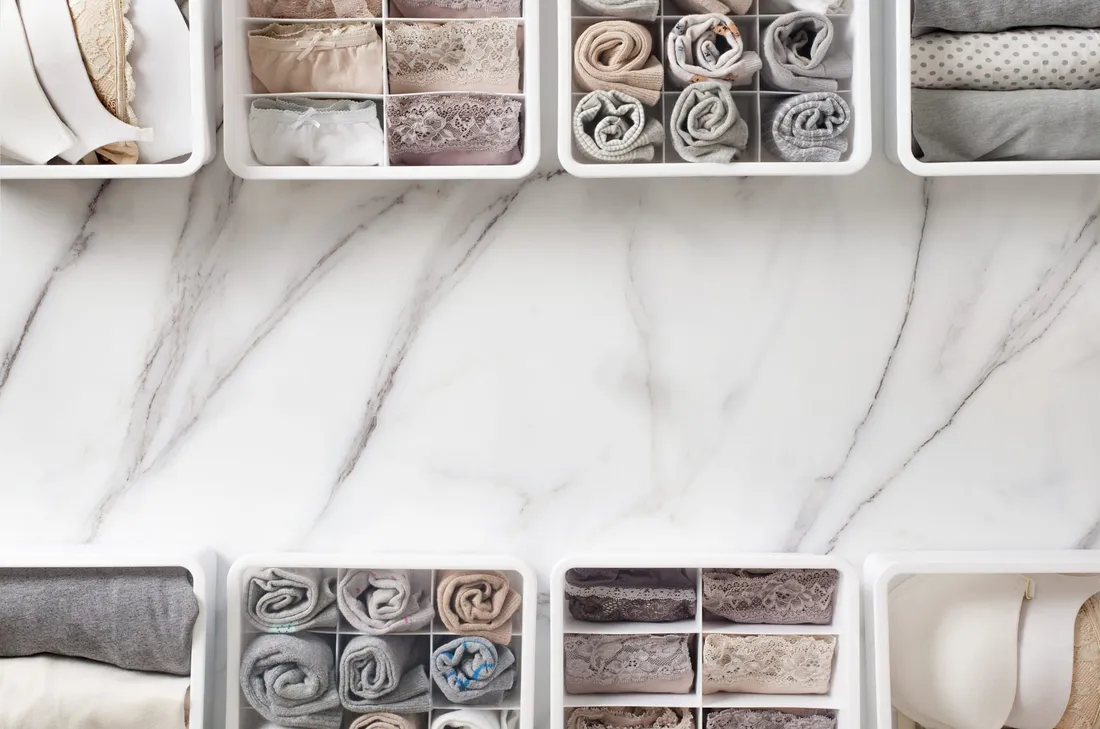
Make the door and side walls work
The inside of a hinged door can carry a slim rack for flats, sandals, belts or a hamper bag, as long as it clears the shelf when it closes. Measure the gap between the door and the shelf edge first; it is often only 3 or 4 inches.
Side walls in a reach-in can take adhesive or screw-in hooks for the next day's outfit, a robe or a bag you carry daily. Keep it to two or three hooks so it does not become a second, messier rod.