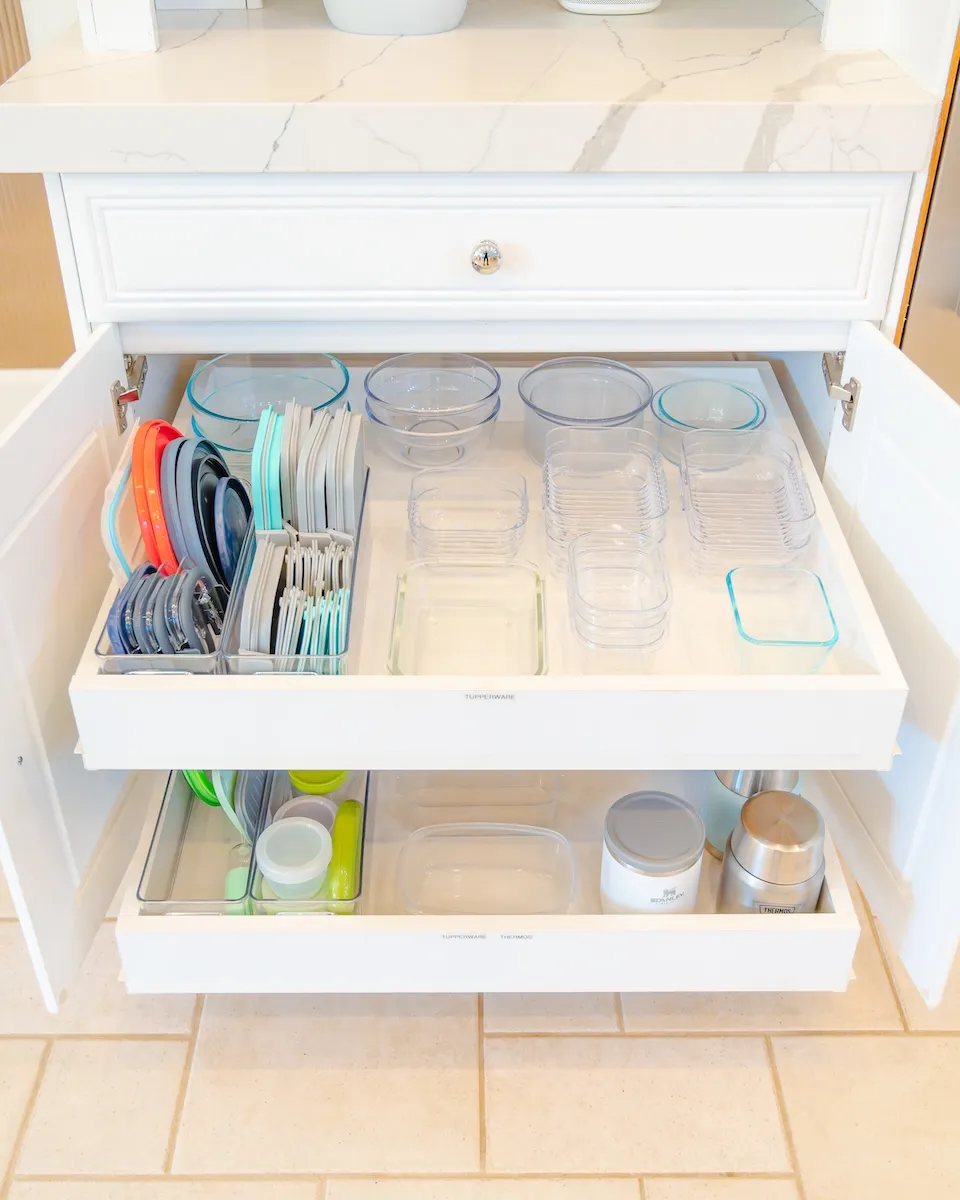
Every shelf has a temperature, so give it a job
Cold air settles, and the door swings open into warm kitchen air. That makes the bottom shelf and back wall the coldest spots and the door the warmest. Organizing by those zones is both tidier and safer.
Use this layout as a starting point and adjust for your fridge model.
| Zone | What goes there |
|---|---|
| Upper shelves | Leftovers, drinks, ready-to-eat foods, herbs in water |
| Middle shelves | Dairy, eggs in their carton, deli items |
| Bottom shelf | Raw meat and fish in a lipped bin or tray |
| Crisper drawers | Vegetables in one, fruit in the other |
| Door | Condiments, dressings, butter, juice |
Bins turn loose items into categories
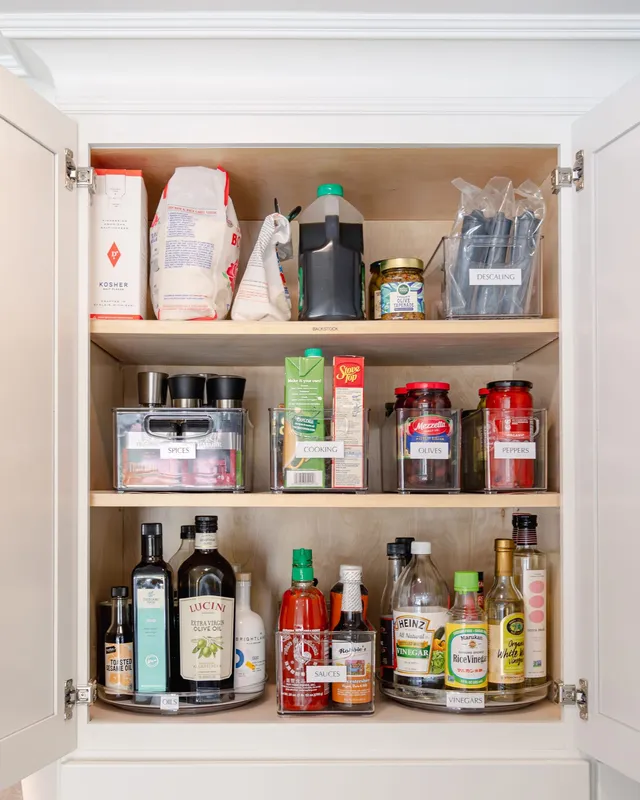
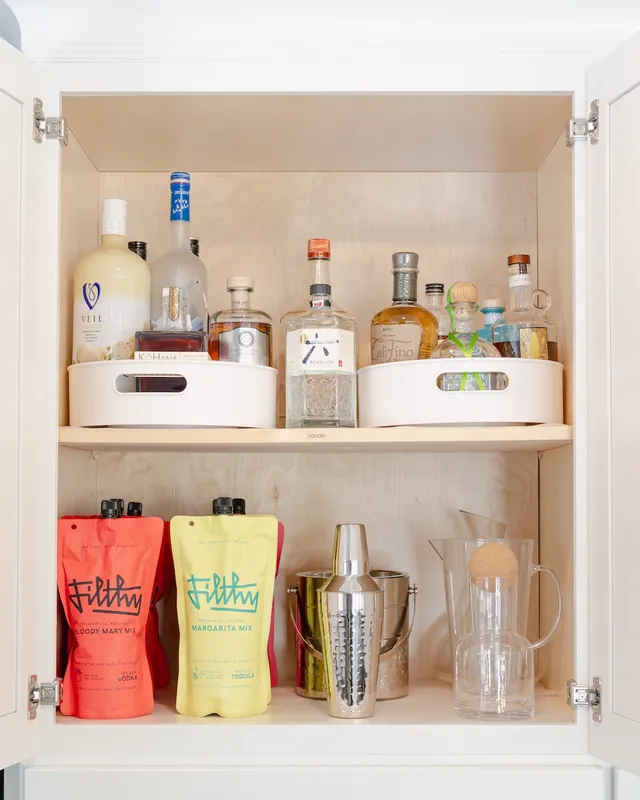
Clear, open-front fridge bins are the single most useful product here. One bin for yogurt cups, one for cheese, one for sauces and jars, one for kids' snacks. You pull the bin out like a drawer instead of reaching past a crowd of jars.
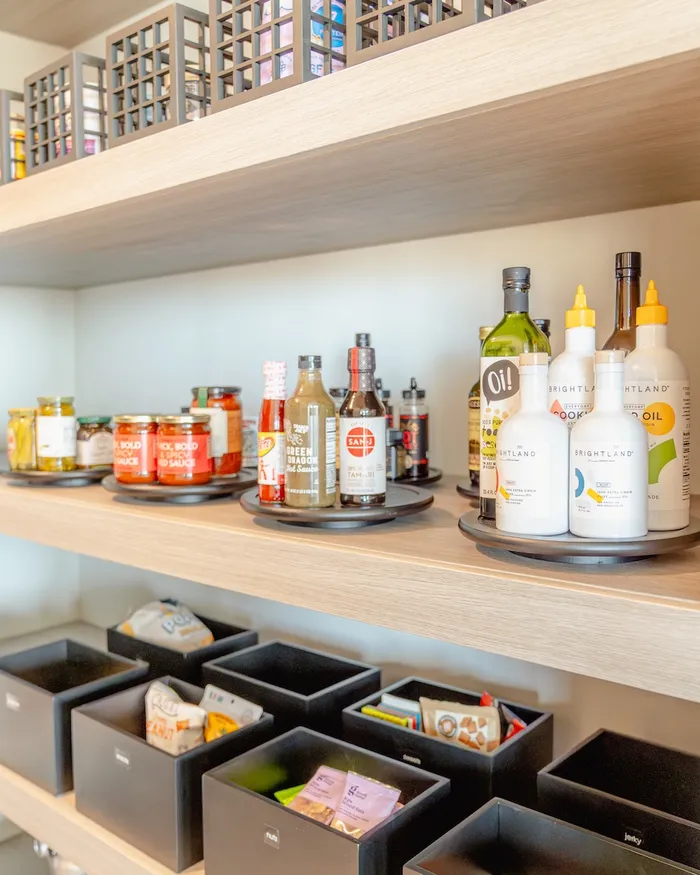
Measure your shelf depth before buying; many fridge shelves are 14 to 18 inches deep and bins that run the full depth make the back usable. A turntable on an upper shelf keeps sauces and jars visible.
Step by step
- Empty and clean
Take everything out, toss expired items and wipe shelves with warm soapy water.
- Adjust shelf heights
Set shelves to fit your tallest everyday items, like milk and juice, without wasted gaps.
- Load by zone
Return food to its temperature zone, using bins to group small items.
- Set the eat-first bin
Place it at eye level and fill it with whatever needs to go soon.
- Reset weekly
Before shopping, clear out old food, wipe spills and restock bins.
Create an eat-first bin
Most food waste in the fridge comes from things that get pushed to the back. Put a bin labeled "Eat First" at eye level for leftovers, opened containers and produce that needs to be used in a day or two.
Everyone in the house checks that bin before starting something new. It is a small habit that changes how much you throw away.
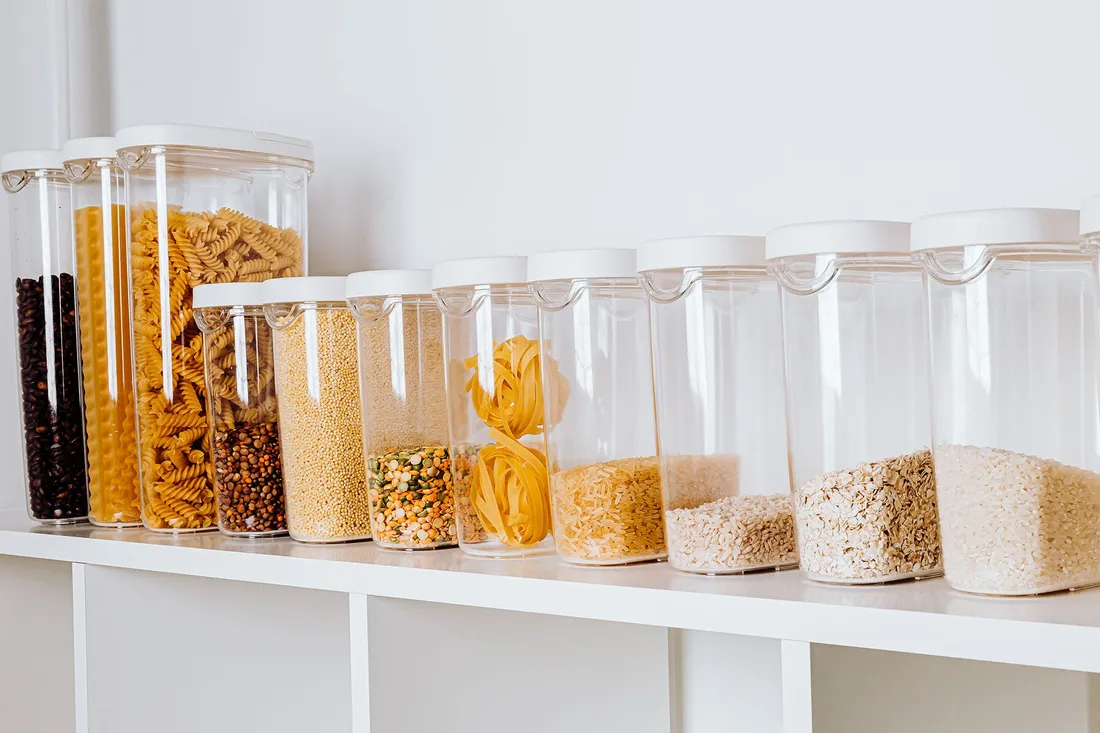
Prep produce so it gets eaten
Washed and cut vegetables in clear containers get eaten; whole heads of lettuce in grocery bags often do not. Store prepped produce at eye level and whole produce in the crispers.
Line crisper drawers with a paper towel to absorb moisture and make cleaning easier. Keep ethylene-producing fruit, like apples, away from leafy greens.
Plan around hot-weather shopping and hosting
In a Las Vegas summer, groceries can warm up quickly in the car, so unload cold items first and put them straight into their zones. A fridge organized by zone makes that fast.
If you host often or have a second fridge in the garage, keep the main fridge for daily food and the second one for drinks and party overflow. Garage refrigerators work hard in summer heat, so check their temperature more often. For built-out setups, see our refrigerator organization service.