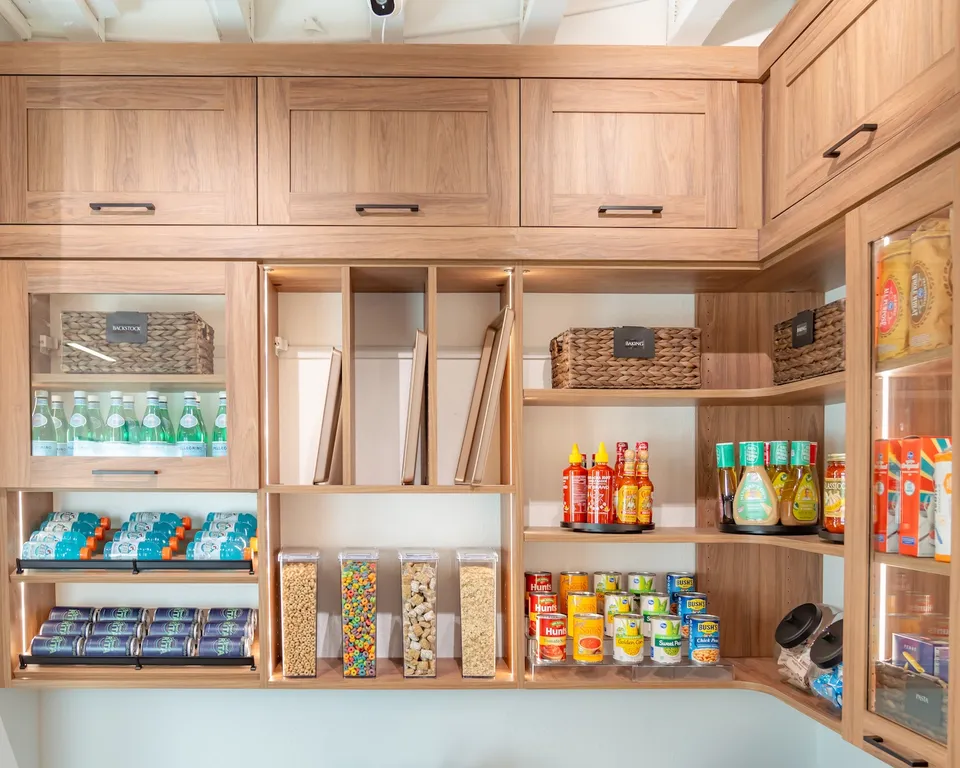
Start by shrinking the inventory, not buying shelves
A small pantry cannot hold a warehouse-club haul. The first move is deciding how much backup stock you actually need and finding another home for the overflow, such as a garage cabinet for paper goods or a hall closet shelf for extra cereal.
In Las Vegas, be careful with that overflow. A garage regularly passes 120°F in summer, so canned goods, oils, chocolate and anything in plastic should stay inside the house. Paper towels and sealed cleaning refills tolerate the garage much better than food.
The door is your second pantry
An over-the-door rack with adjustable baskets can hold spices, packets, foil and wraps, snack bars and small jars. Measure the gap between the door and the shelf fronts when the door is closed; many racks need 4 to 5 inches of clearance.
If the shelves are too deep for a rack, mount narrow wall baskets on the inside walls to either side of the door frame. Even a 4-inch-deep strip holds a surprising number of spice jars.
Step by step
- Measure height, width and depth
Write down each shelf's size and the door clearance. Every product decision depends on these numbers.
- Edit to a few weeks of food
Pull duplicates and bulk packs and give them an overflow home inside the house.
- Claim the door and walls
Install a door rack or wall baskets for small, light items.
- Add vertical helpers
Use risers, inserts and under-shelf baskets to fill tall gaps.
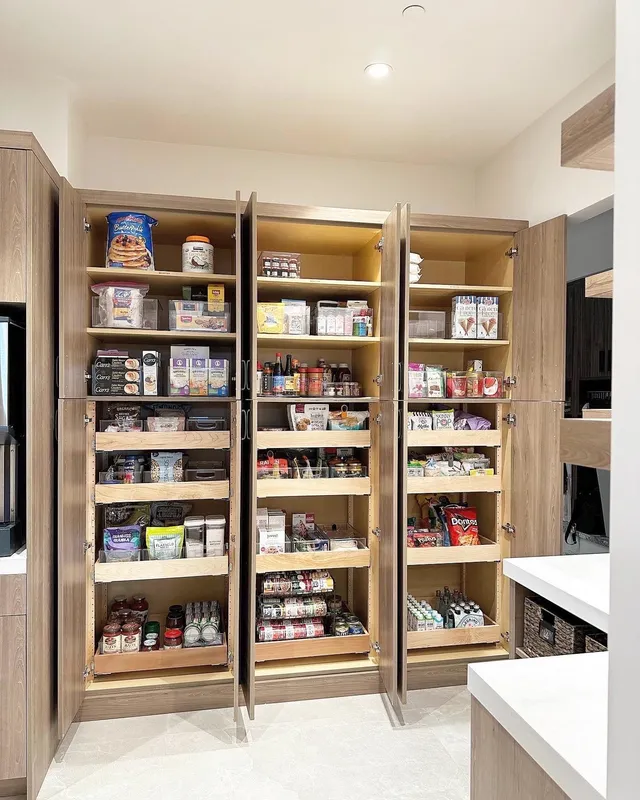
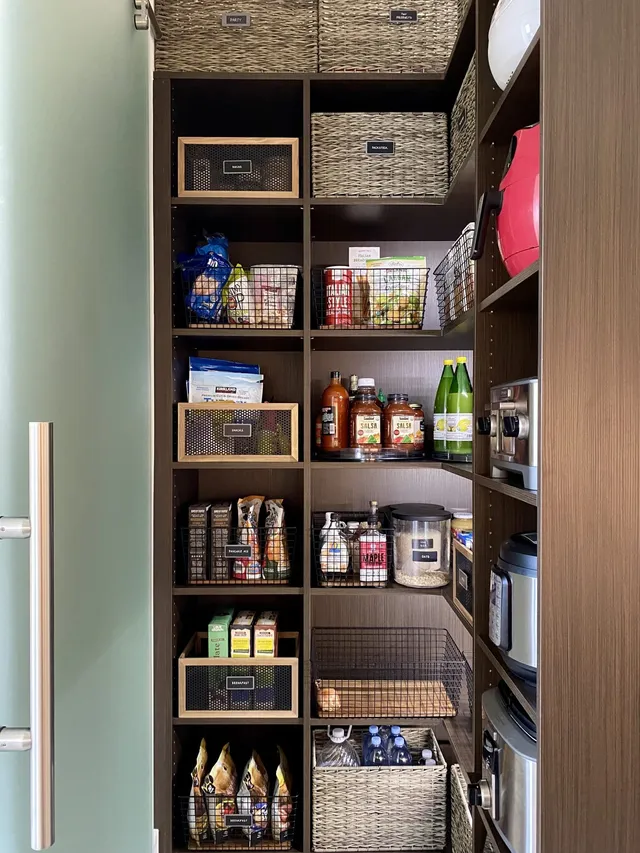
- Contain with square bins
Group like items in slim bins you can pull forward.
Fill the vertical gap between shelves
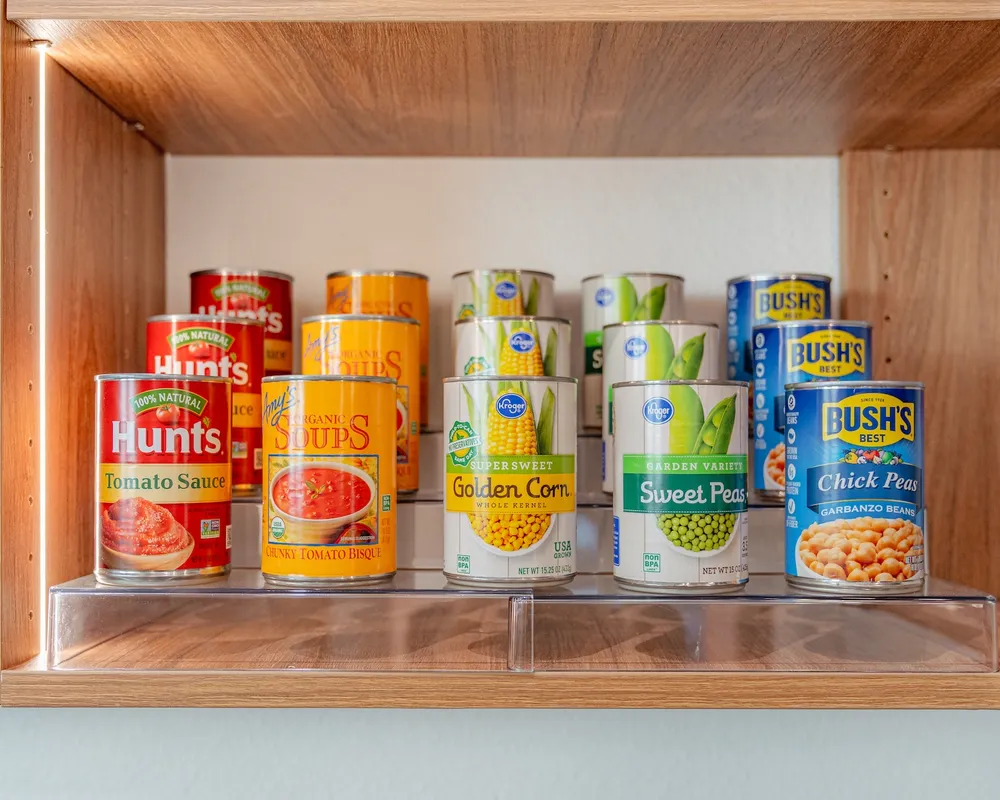
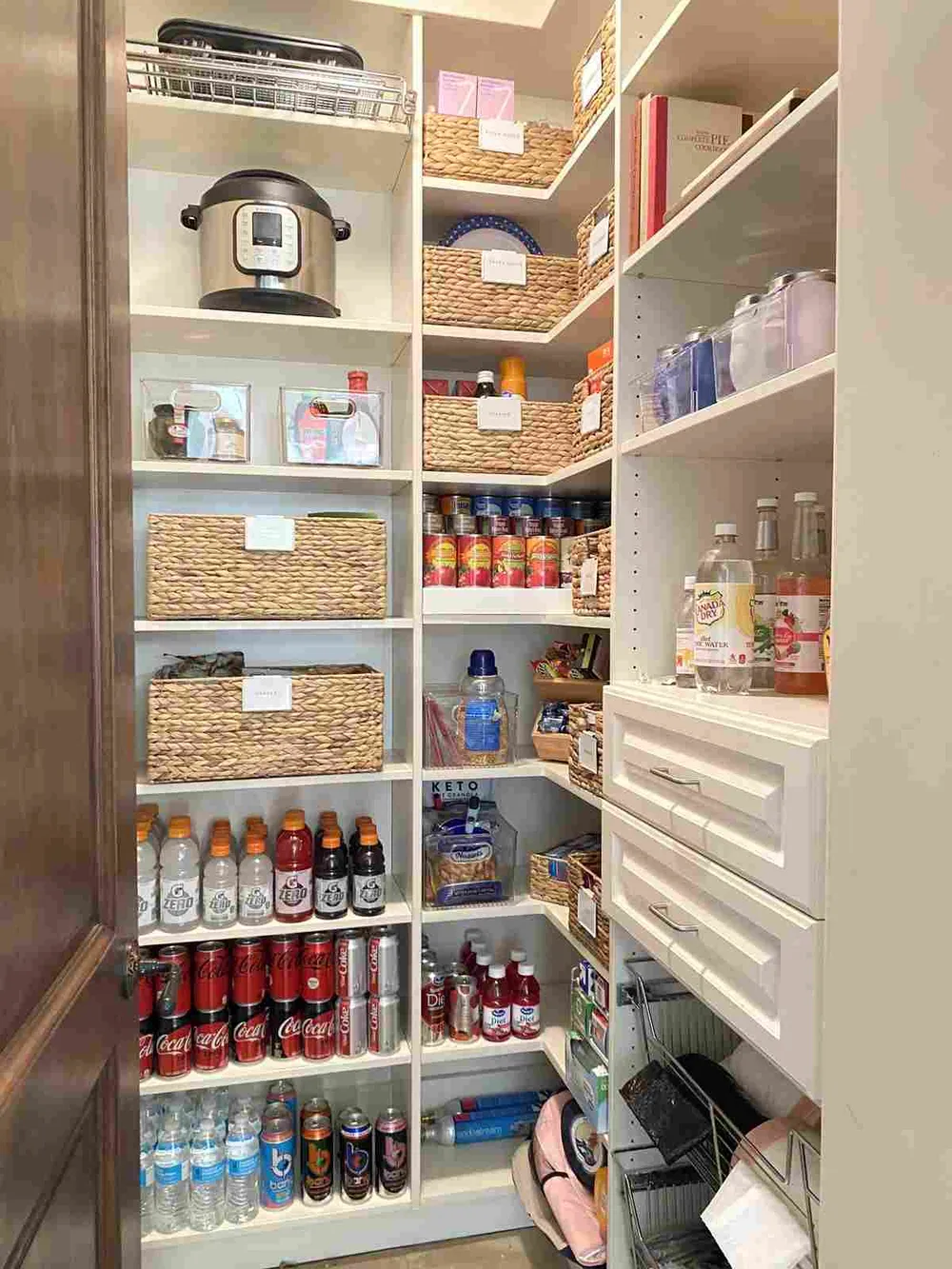
Builder pantries often have shelves 16 to 18 inches apart with only 8 inches of food on each one. Under-shelf baskets that hook onto the shelf above, stackable shelf inserts and tiered can risers turn that empty air into usable storage.
Stack only what you can lift easily. Two layers of cans on a riser is practical; three tiers of glass jars is a weekly accident.
| Problem | Small-pantry fix |
|---|---|
| Cans hidden behind cans | Three-step can riser |
| Tall gap above short items | Stackable shelf insert or under-shelf basket |
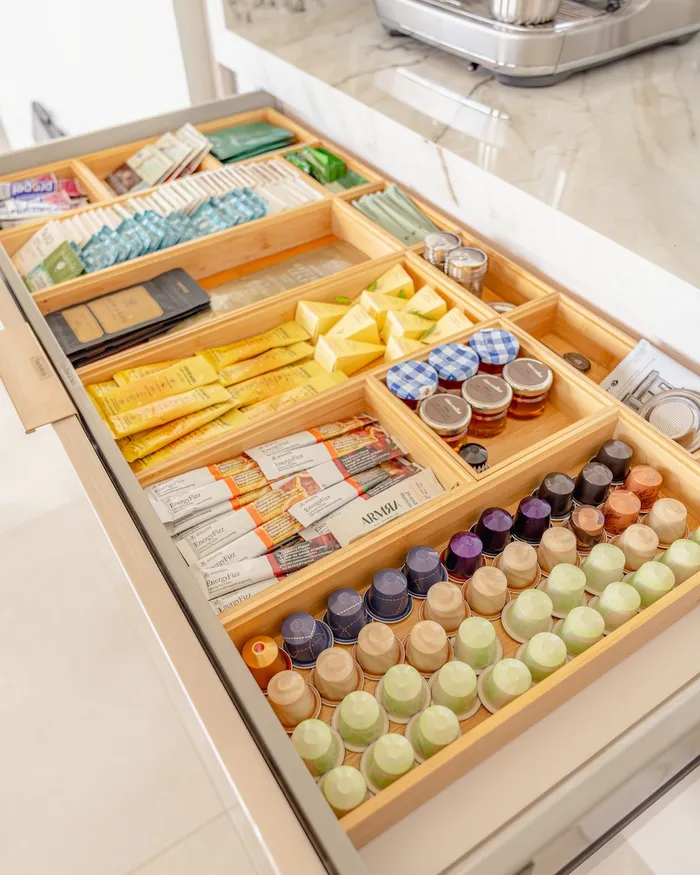
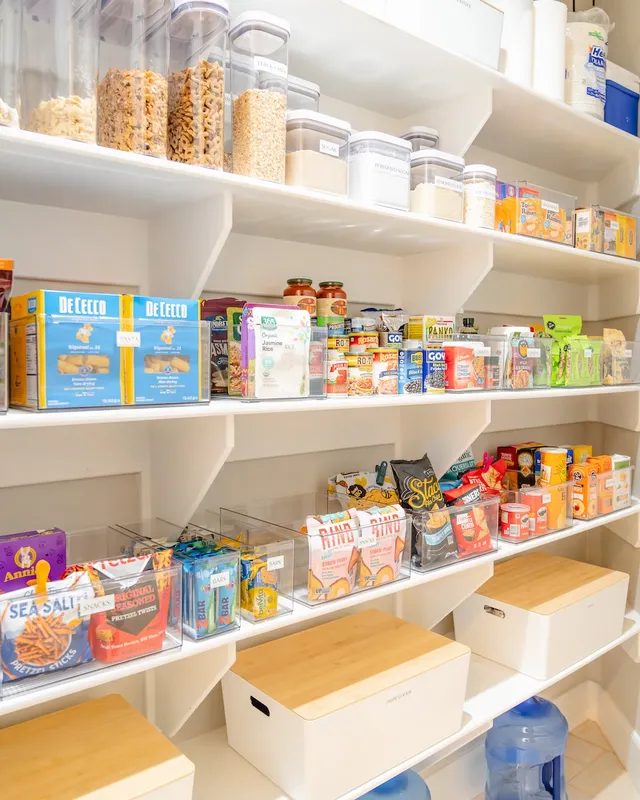
| Packets everywhere | Narrow clear bin, packets filed upright |
| Dead corner | 9-inch turntable for oils and vinegars |
| Unused floor | Rolling bin or two-tier wire basket |
Use slim, matching bins so every inch counts
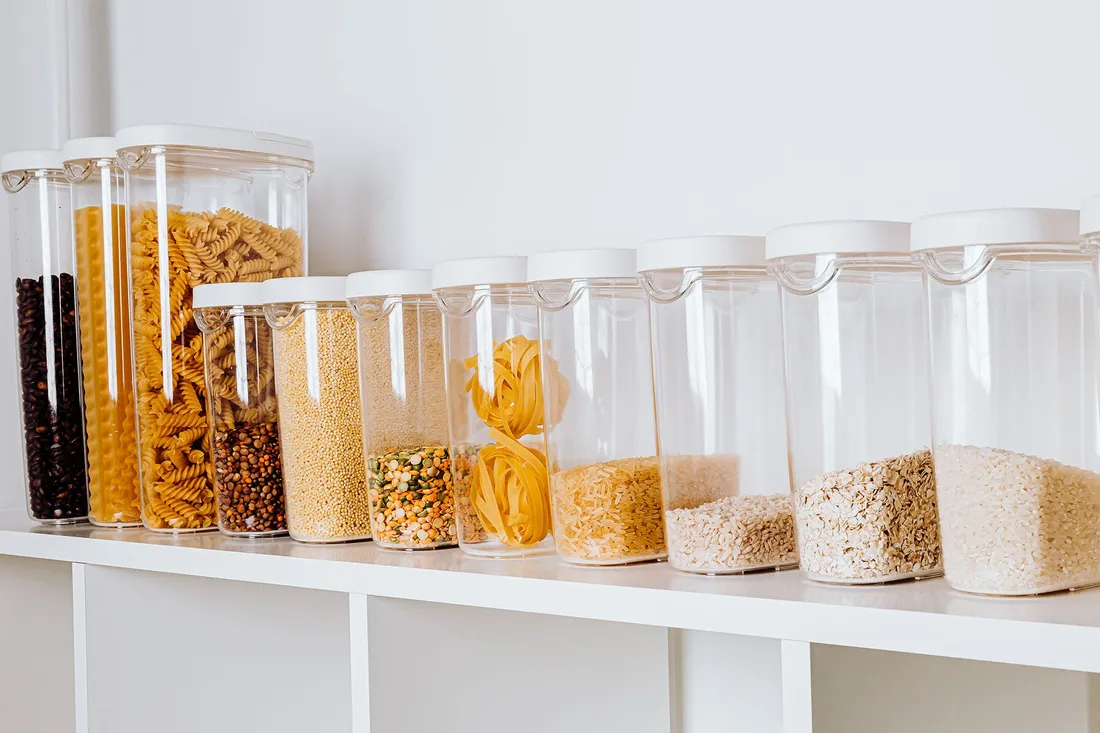
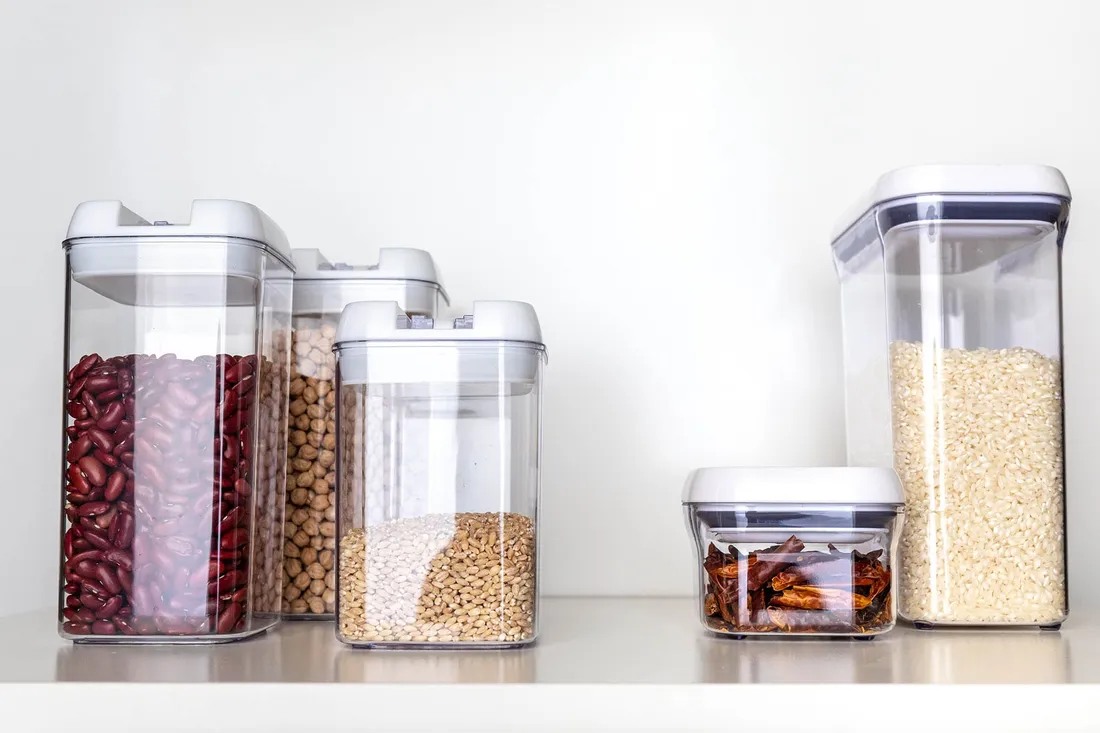
Round canisters waste the corners of a square shelf. Square or rectangular containers that butt up against each other fit more food in the same footprint. Narrow bins, 4 to 6 inches wide, can be pulled out like drawers.
File snacks and packets upright, like folders in a drawer. You will see every flavor at a glance instead of digging through a pile.
Keep a short list of rules for the household
A tight pantry stays organized only if new groceries go in where they belong. Agree on two or three habits, such as "new items go behind old ones," "empty boxes leave the pantry immediately," and "overflow goes to the backup shelf in the closet."
Our full guide to organizing a pantry of any size covers zoning, and the pantry labeling ideas page shows how to make those rules visible.