Map your kitchen into five zones first
Stand in your kitchen and identify the dishwasher, sink, range, refrigerator and your largest stretch of counter. Each of those points defines a zone, and every cabinet near it should serve that zone.
This is the fastest fix for a kitchen that feels like constant walking. When the plates live three steps from the dishwasher, unloading takes two minutes instead of ten.
| Zone | Nearby fixture | What lives there |
|---|---|---|
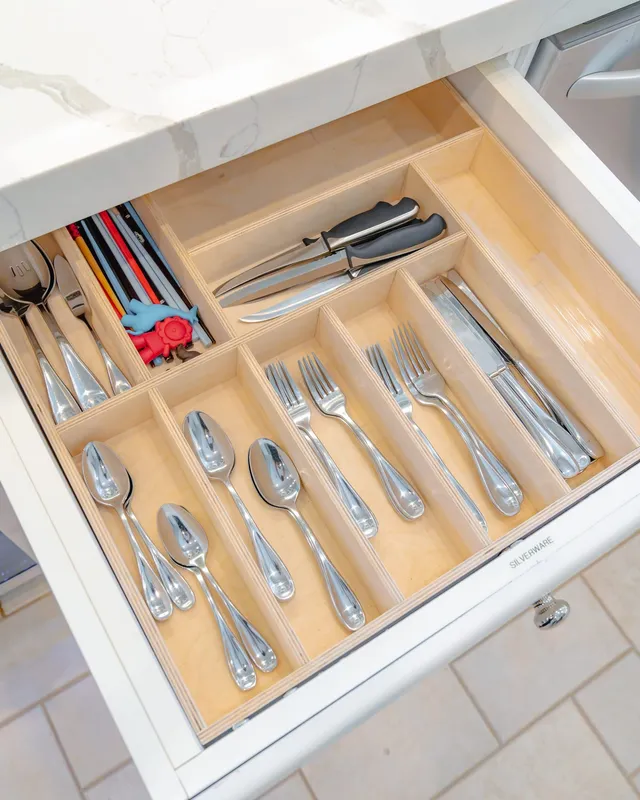
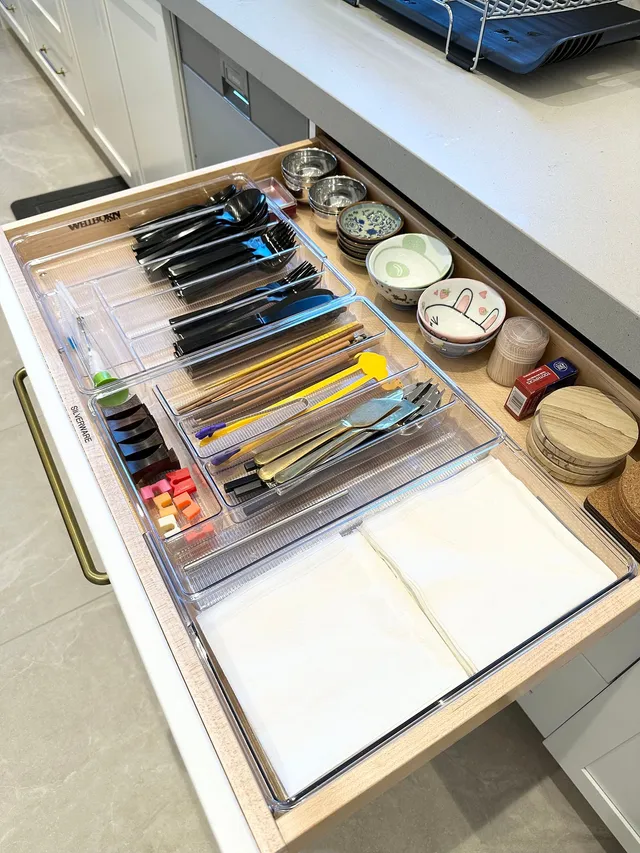
| Cleanup | Sink and dishwasher | Everyday dishes, glasses, flatware, dish soap |
| Prep | Main counter | Knives, cutting boards, mixing bowls, measuring tools |
| Cooking | Range and oven | Pots, pans, spatulas, oils, everyday spices |
| Food storage | Refrigerator | Food storage containers, wraps, bags |
| Serving | Island or dining edge | Platters, serving bowls, napkins |
Upper cabinets: fill the height with risers
Standard upper cabinets are about 12 inches deep with shelves that leave a lot of empty air above short stacks of plates. Wire or acrylic shelf risers create a second level, so salad plates sit above dinner plates and mugs sit above glasses.
Keep the heaviest items on the lowest upper shelf. The top shelf of a 42-inch upper is hard to reach without a step stool, so give it to holiday platters, the fondue set and other once-a-year items.
Step by step
- Empty one zone at a time
Clear the cabinets around the sink first; working zone by zone keeps the kitchen usable.
- Edit duplicates
Keep the quantity you actually use and set aside extras for donation or deep storage.
- Measure shelves
Note height, width and depth of each cabinet opening before buying risers or pull-outs.
- Load by frequency
Daily items on the most reachable shelves; occasional items high or at the back of pull-outs.
- Repeat for each zone
Move to prep, cooking, food storage and serving zones in turn.
Base cabinets: bring the back to the front
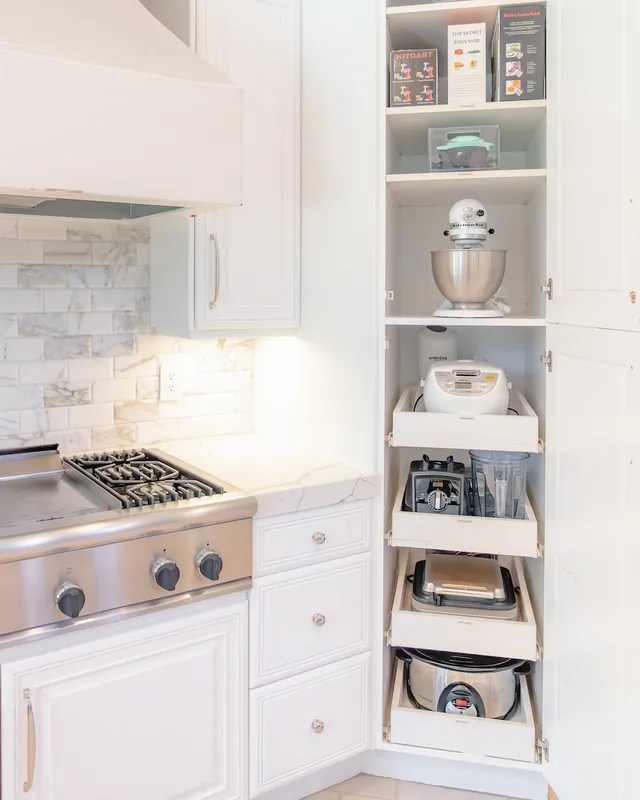
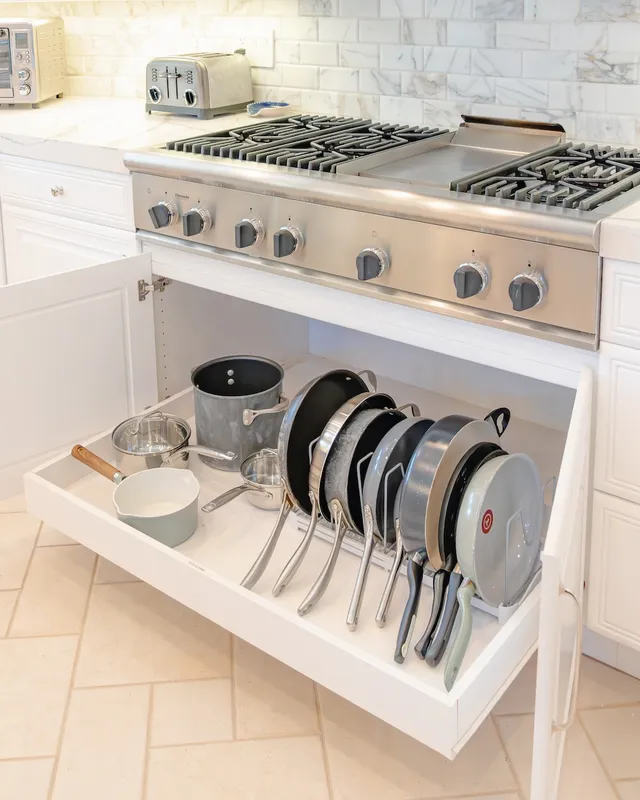
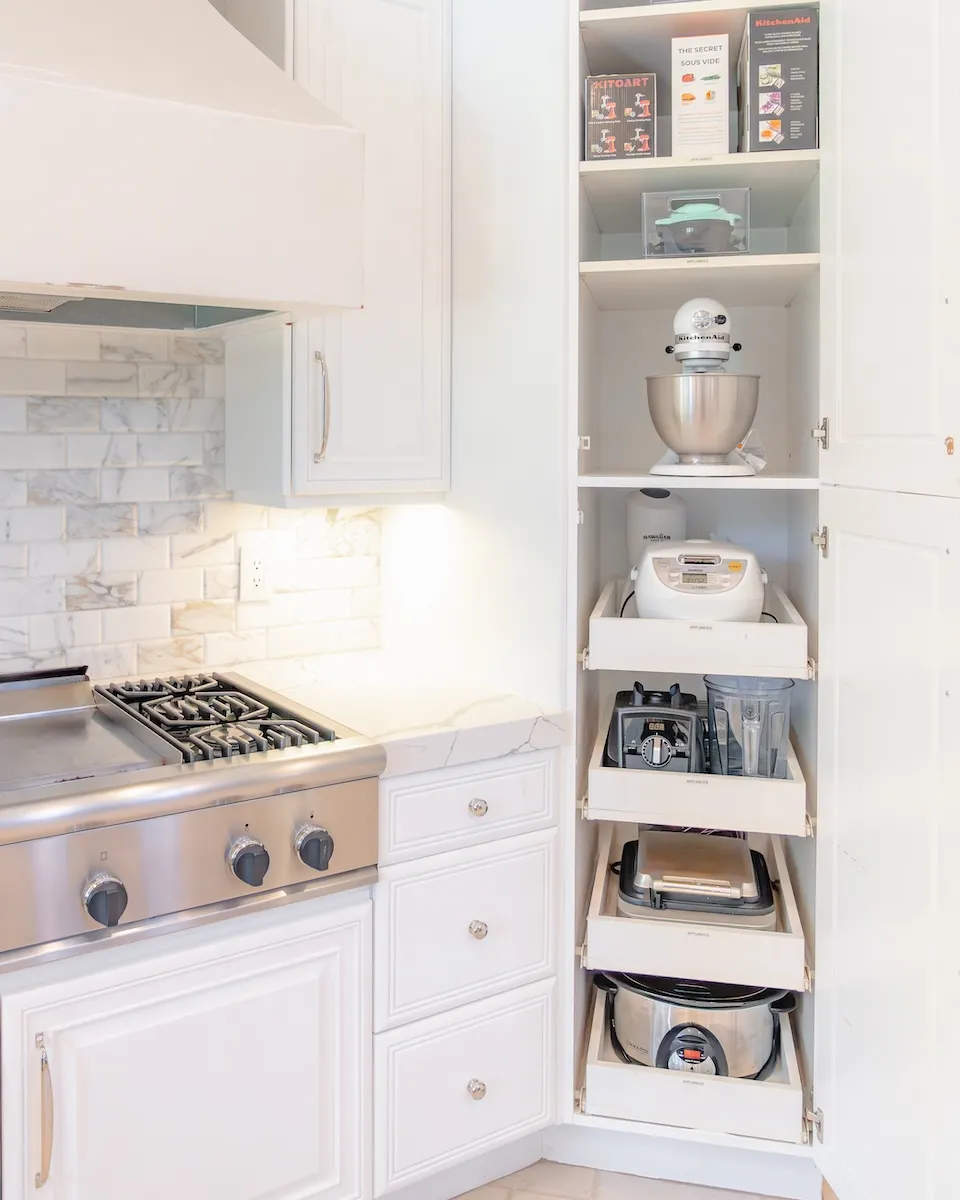
Base cabinets are usually 24 inches deep, and anything past the first row disappears. Pull-out sliding shelves, roll-out bins or simple clear bins you pull like a drawer solve this without any construction.
Store sheet pans, cutting boards, muffin tins and trays vertically using a file-style divider or tension rods. Vertical storage means you can slide out one pan without lifting four others. Corners need their own strategy, covered in our guide to organizing a corner cabinet.
Edit before you buy a single product
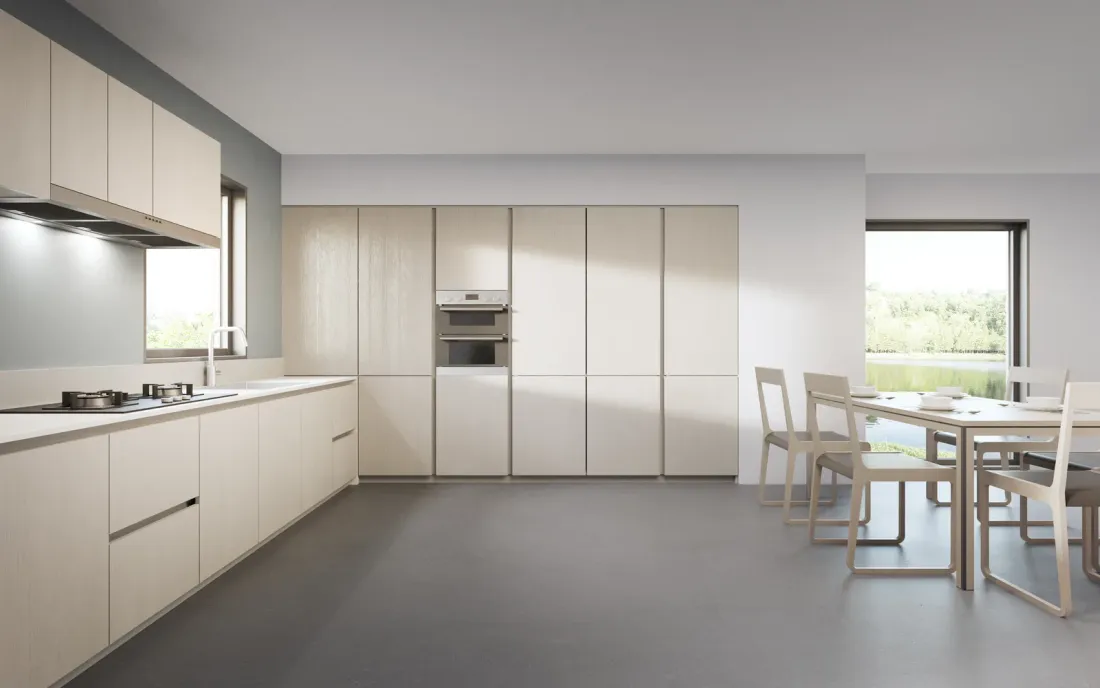
Most kitchens have more dishes and gadgets than the household uses. Count place settings against the people you feed on a normal week, and move extra entertaining pieces to a higher shelf or a hutch.
Single-use gadgets are the next edit. If the avocado slicer has not left the cabinet in a year, it can go to a donation option such as Goodwill of Southern Nevada or the Habitat for Humanity ReStore. You decide what stays; the goal is cabinets that close easily.
Plan for heat and dust near the range
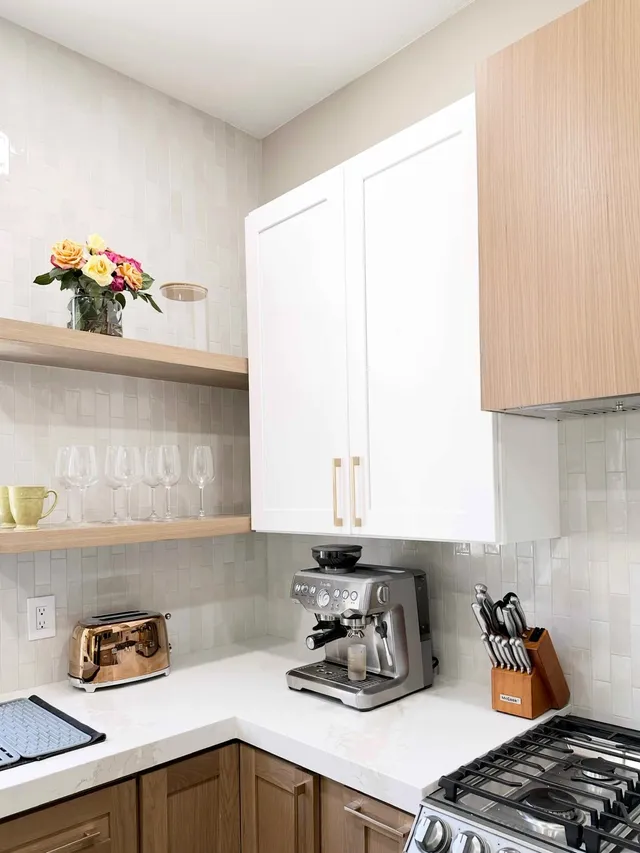
The cabinet directly above or beside the range gets warm, so it is a poor home for oils, spices or anything with chocolate. Move those a cabinet over.
Open shelving looks great in new-build Las Vegas kitchens, but fine desert dust settles fast. Keep only items you use every day on open shelves, so they get washed constantly, and keep the rest behind doors.