Count what you actually cook with
Most households rotate four to six pans: a large and small skillet, a saucepan or two, a sauté pan, and a pot for pasta or soup. Everything else is occasional or duplicate.
Pull every piece of cookware out and set aside anything warped, peeling or missing a lid that you have not replaced in a year. Duplicates in good condition can be donated; options in the valley include Opportunity Village and the Habitat for Humanity ReStore.
Lids are the real problem, so store them separately
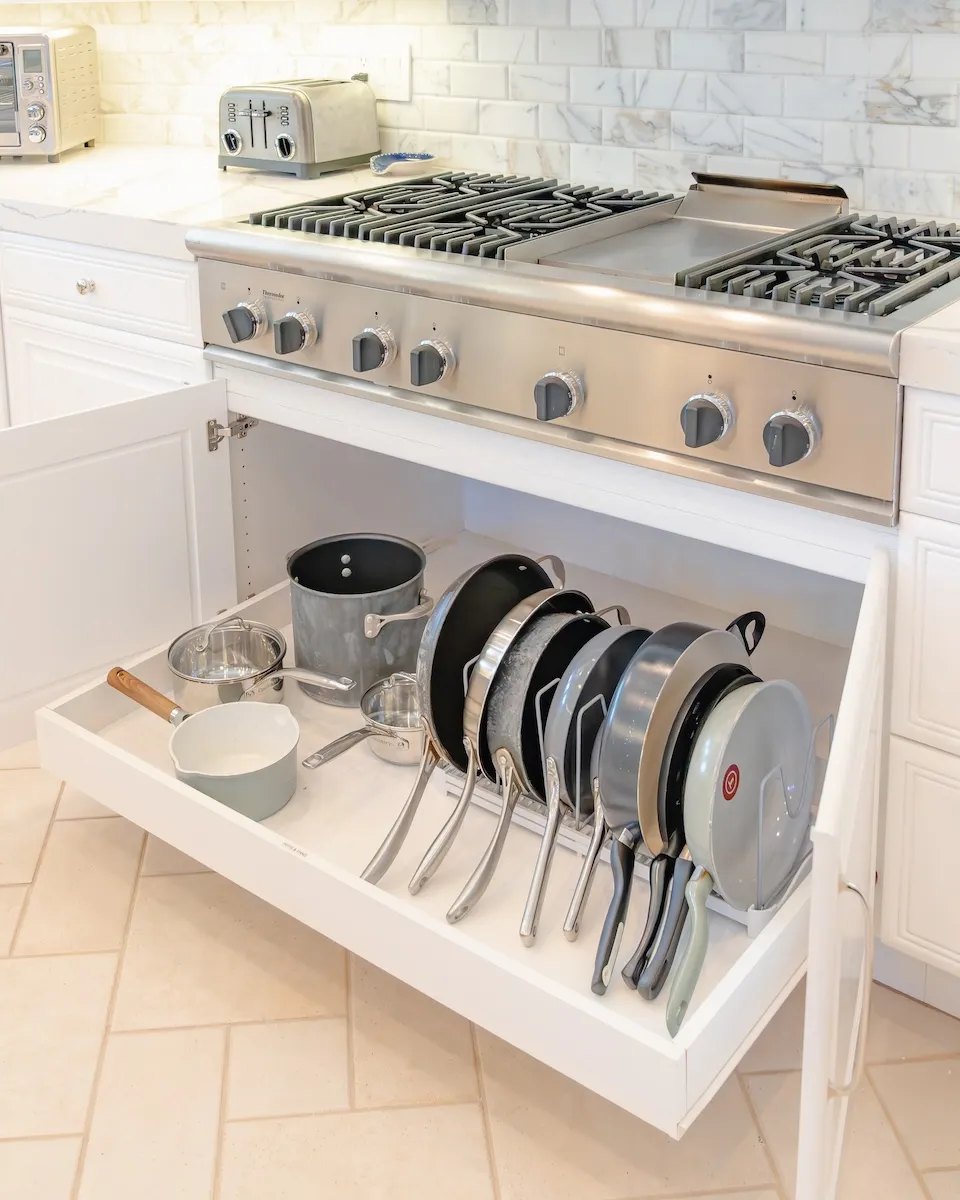
Lids stacked on top of pots turn every grab into a two-handed job. Give them their own home: a vertical lid rack in a drawer, a door-mounted lid holder inside a cabinet, or a file divider standing in the back of a pan drawer.
If a lid fits more than one pot, keep only one. Universal lids or a single splatter screen can replace several mismatched ones.
Step by step
- Pull out all cookware
Gather pots, pans, lids, baking dishes and roasters from every cabinet into one place.
- Edit to your rotation
Keep the pieces you use weekly plus a few specialty items; donate the rest.
- Match lids and decide their home
Pair each lid with a pot, then choose a separate lid rack or divider.
- Load nearest the range
Everyday pans in the closest drawer or cabinet, specialty pieces further away.
- Add protectors and racks
Install vertical racks, pull-outs or protectors where stacking happens.
Pick a storage method that fits your kitchen
There is no single right setup. Choose based on whether you have deep drawers, base cabinets or wall space.
- Deep drawers below the cooktop: the easiest option; pans nest or stand in dividers and you see them from above
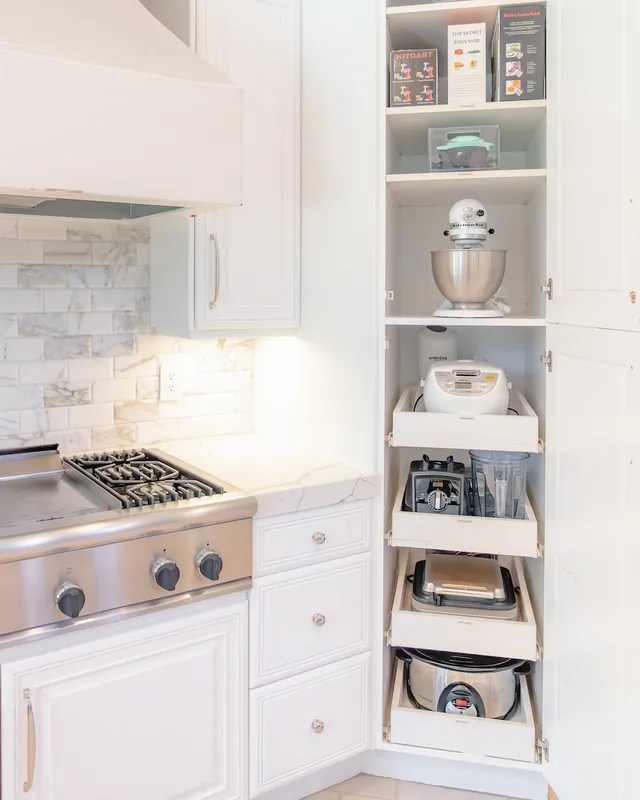
- Base cabinet with a pull-out shelf: slide the whole shelf forward instead of reaching into the back
- Vertical pan rack in a cabinet: skillets stand on edge like files, perfect for nonstick
- Wall rail or pot rack: frees cabinet space, though desert dust means pans you hang should be ones you use weekly
- Oven drawer: fine for sheet pans, but never for anything plastic or with silicone handles that dislikes heat
Protect surfaces when you stack
Nesting saves space, but metal on nonstick scratches it. Felt or silicone pan protectors between each piece prevent that and cost far less than replacing a pan.
Keep stacks to three pieces. Taller stacks mean the pan you want is always at the bottom, and the cabinet becomes noisy and frustrating.
Keep cast iron and heavy pieces low and dry
Cast iron and enameled Dutch ovens are heavy, so store them at waist height or lower, never on an upper shelf. A pull-out shelf takes the strain off your back.
Las Vegas air is dry enough that cast iron rarely rusts in a cabinet, but very hard water can leave mineral spots after washing. Dry pans fully on the stove and give cast iron a thin coat of oil before putting it away.