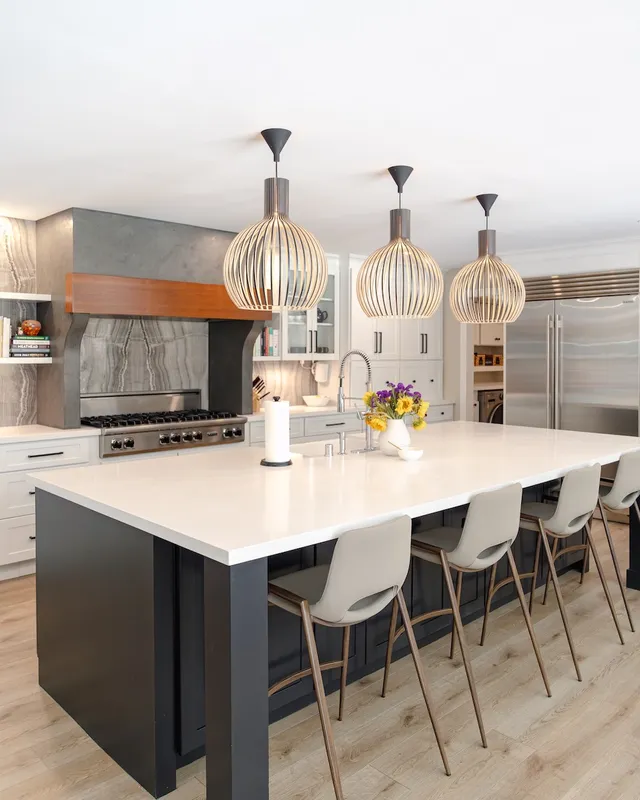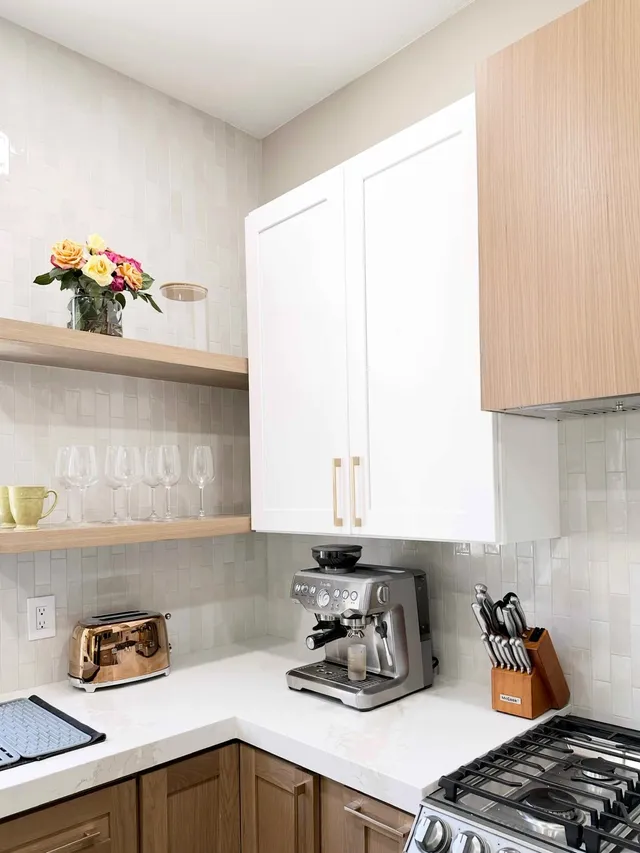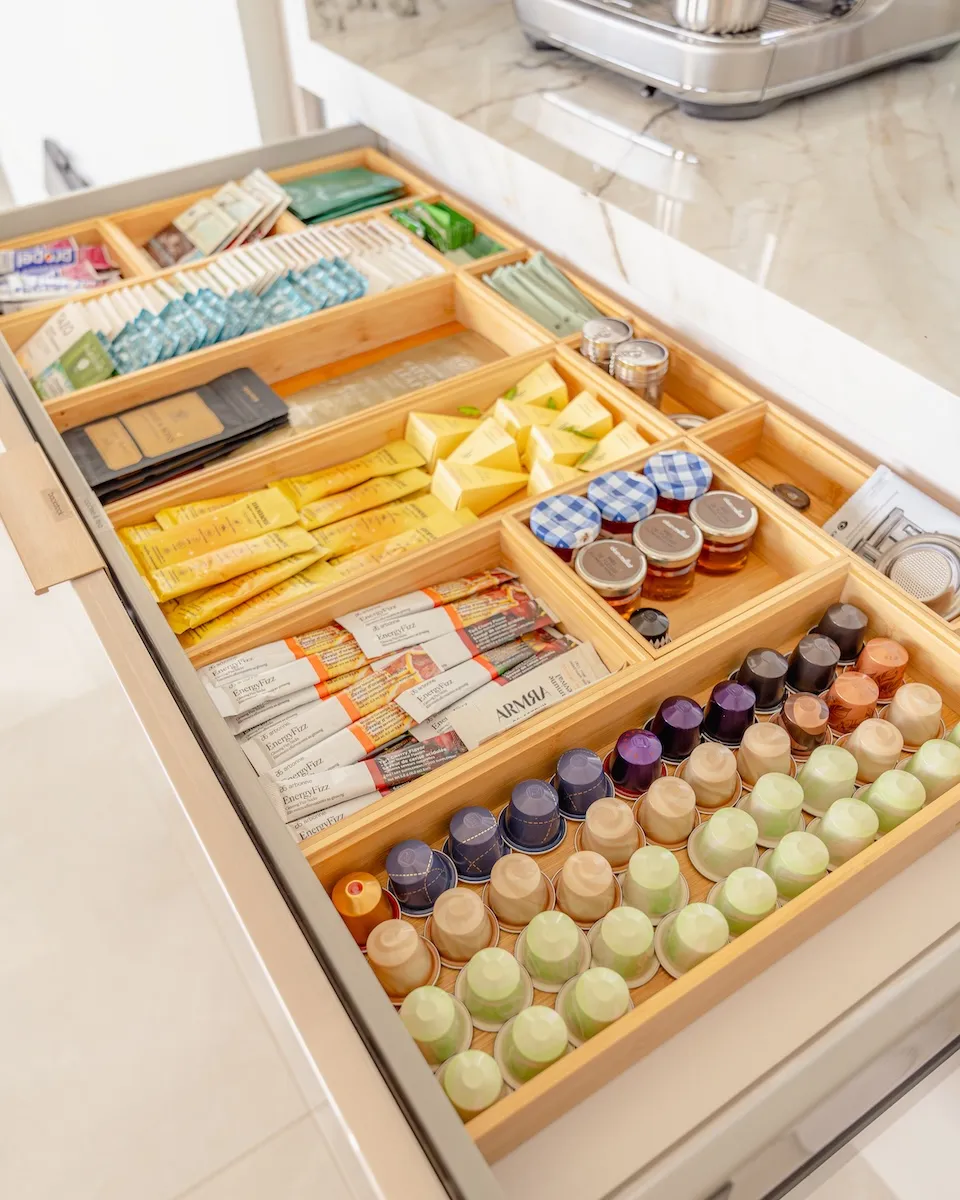
Assign a job to each face of the island
Islands are often the largest storage block in newer Las Vegas kitchens, especially in master-planned communities where open floor plans are common. They work best when every side has a defined role.
The working side, facing the range or main sink, is your prep zone. The back or seating side, if it has cabinets, is for low-frequency or social items. The ends can hold cookbooks, a trash pull-out or a wine rack.
| Island side | Good uses |
|---|---|
| Facing the range or sink | Knives, cutting boards, mixing bowls, measuring cups, baking tools |
| Seating side | Placemats, napkins, kids' craft or homework bin, chargers |
| End panels | Cookbooks, trash and recycling pull-out, towels |
| Under a prep sink | Hand soap, produce brush, small compost bin |
Make the island your baking and prep center
Because the island offers the biggest stretch of counter, it is the natural place to roll dough, chop and assemble. Store the tools for those tasks directly underneath so nothing travels.
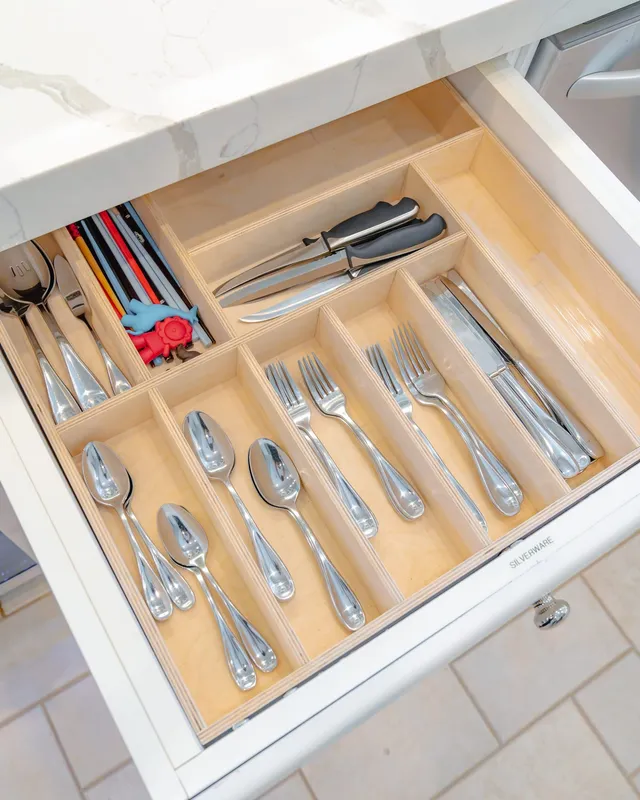
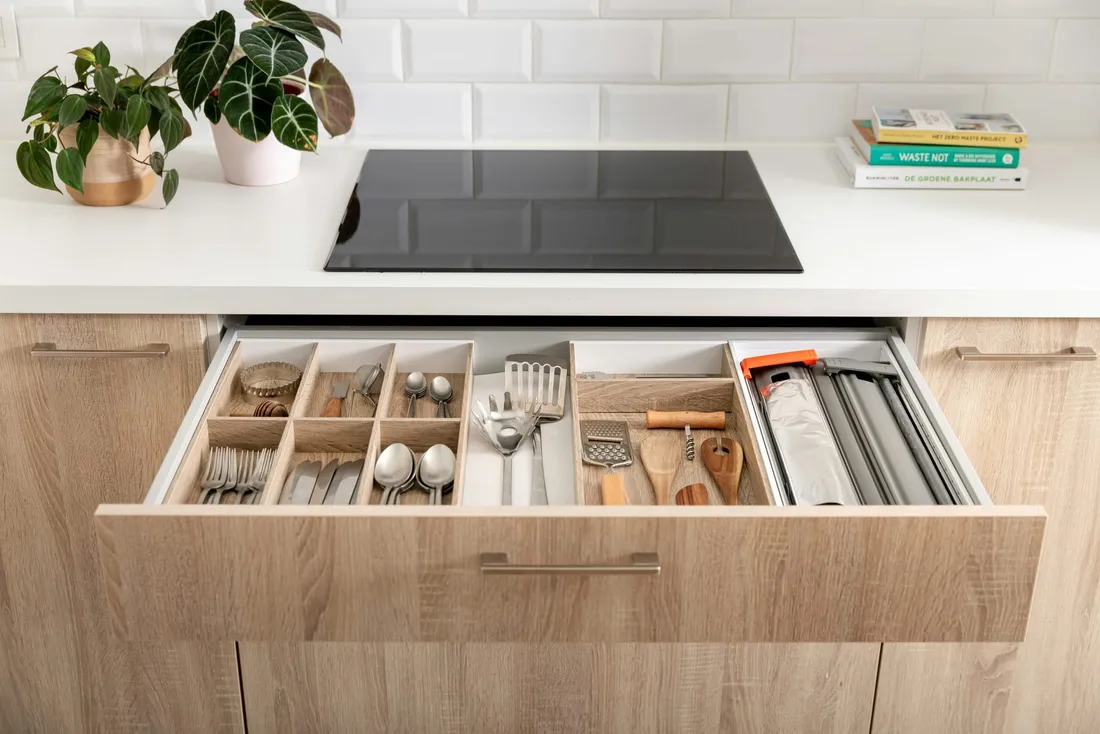
Deep island drawers suit mixing bowls, a food scale and measuring tools. Sheet pans and cutting boards stand upright in a vertical divider. See our guide to deep kitchen drawers for divider ideas.
Step by step
- Clear the island completely
Remove everything from the counter and interior storage.
- Note what faces where
Identify the working side, seating side and ends.
- Assign jobs to each side
Match each cabinet and drawer to a zone such as prep, baking or seating.
- Load and divide
Use drawer dividers and vertical racks for tools and boards.
- Choose one counter tray
Pick the few everyday items that stay out and contain them.
Keep the countertop almost empty
An island counter is valuable because it is open. Choose one tray or board for the few things that earn a spot: a fruit bowl, a salt cellar and a small vase, for example. When everything sits on that tray, wiping the counter takes seconds.
Fine desert dust settles on anything left out, which is another reason to keep counter items few and easy to lift.
Stop the island from becoming a drop zone
Islands collect mail, backpacks, keys and shopping bags because they are the first flat surface people see. The fix is not more discipline; it is a better landing spot nearby. A wall pocket, a drawer in the mudroom or a basket by the garage door gives those items a home.
Our guide to mudroom and drop zone organization covers that landing spot in detail.
Plan the seating side for how your family uses it
If kids do homework at the island, a single bin of pencils, paper and a charger in a seating-side cabinet keeps supplies close without spreading across the counter. If you host often, store coasters, cocktail napkins and small serving plates there instead.
Whatever lives on that side should be easy to put away at the end of the day, so the island resets to a clear surface every night.