Start with measurements and a quick sketch
New closets vary more than people expect: one rod or two, a deep top shelf or a narrow one, a window, an attic access panel. Measure the length of each rod, the height between rod and floor, and the depth of every shelf.
A rough sketch tells you how much long-hang space you have for dresses and coats versus double-hang space for shirts and pants. That one detail shapes the whole layout.
Arrange zones around how you get dressed
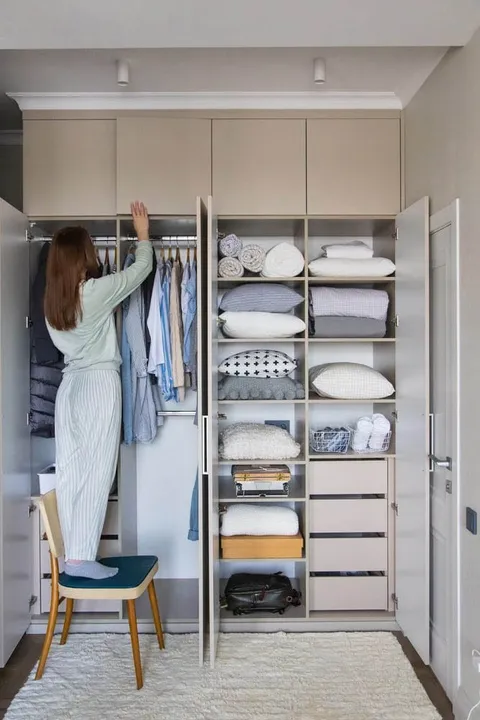
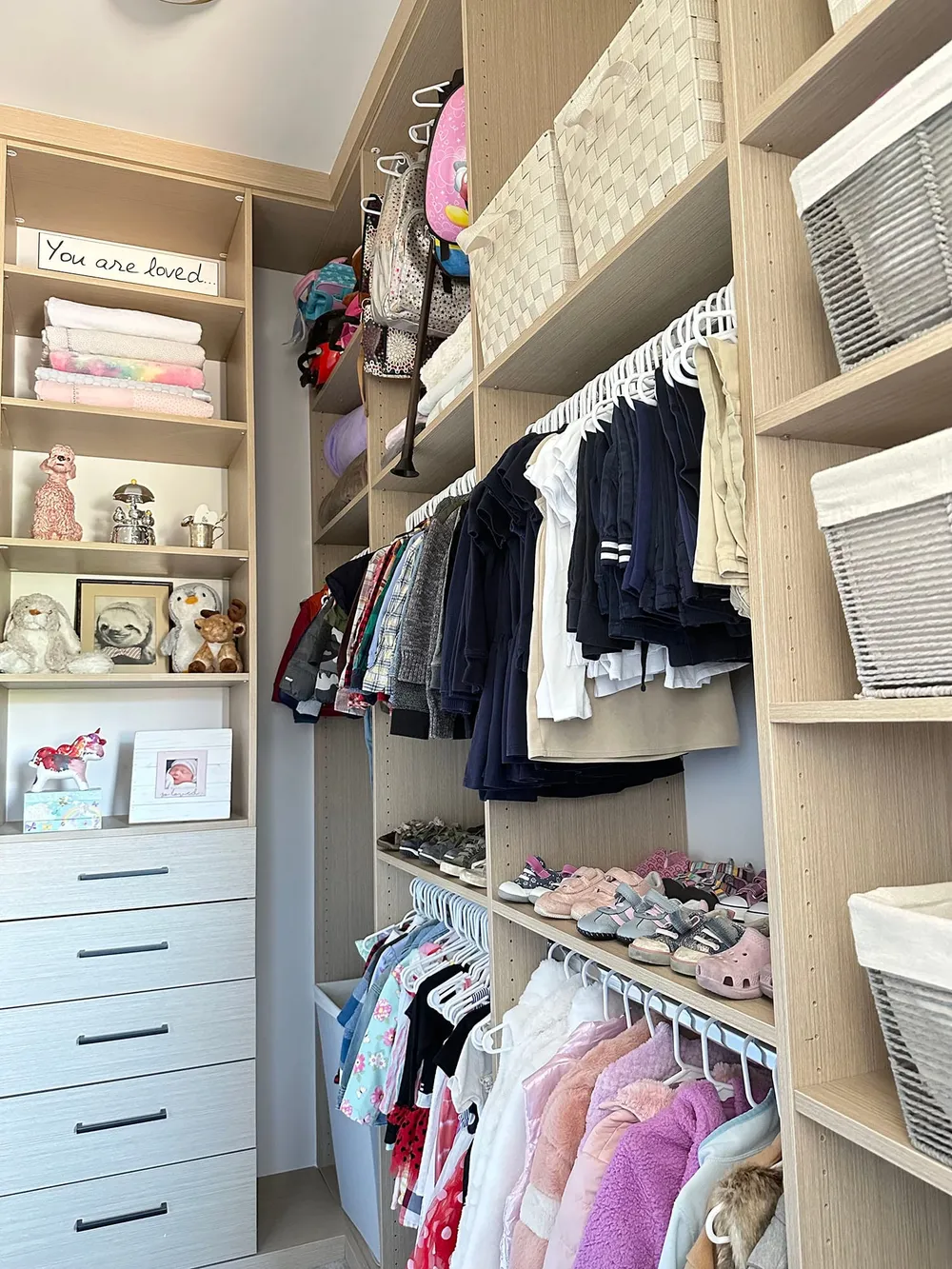
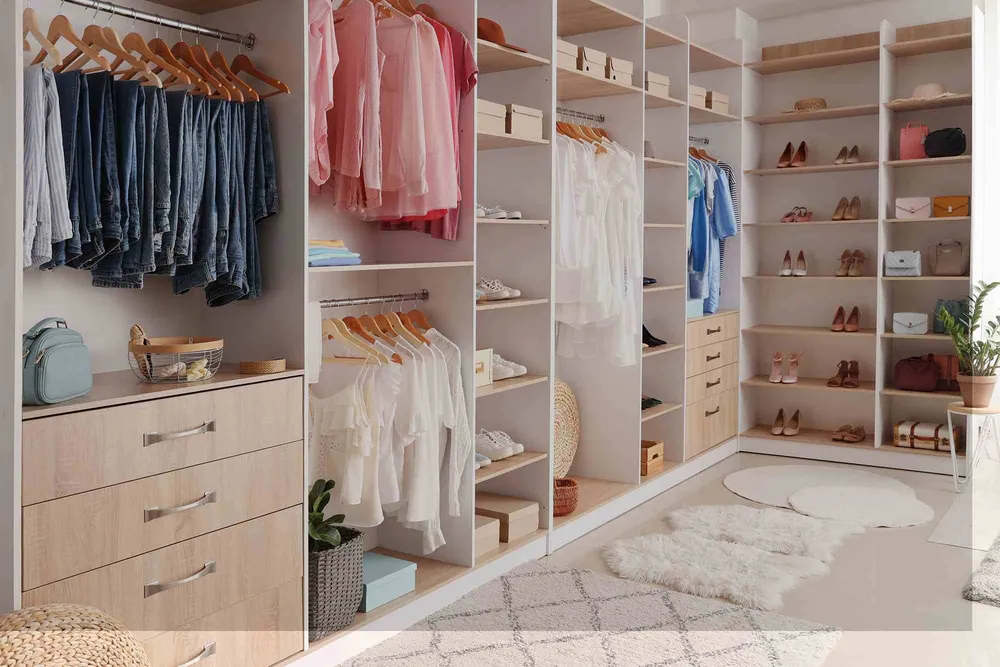
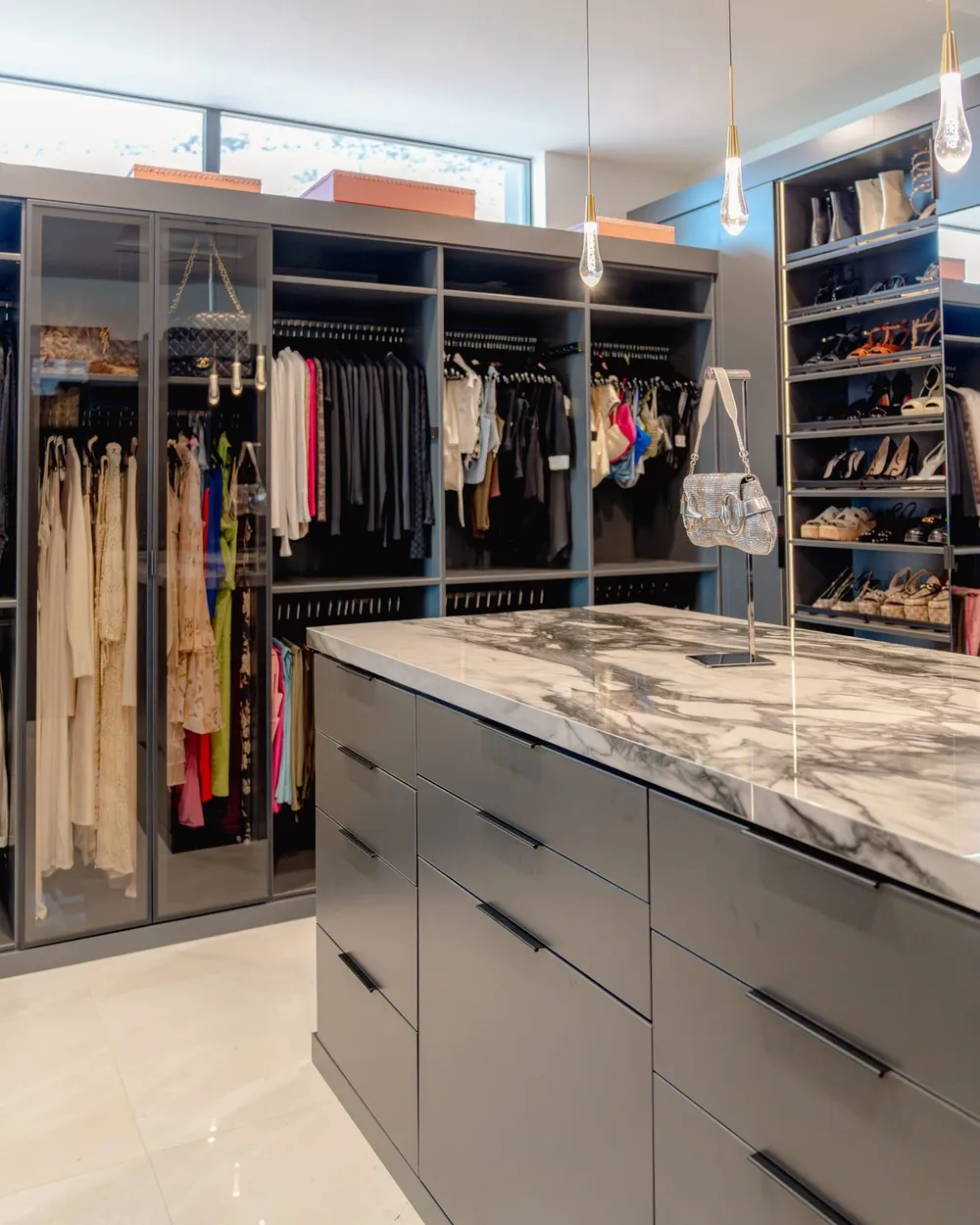
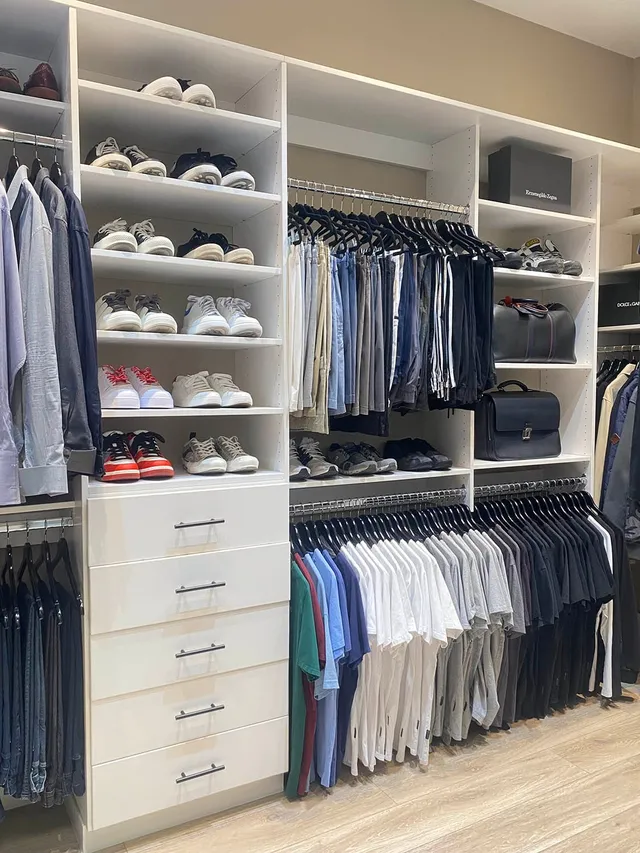
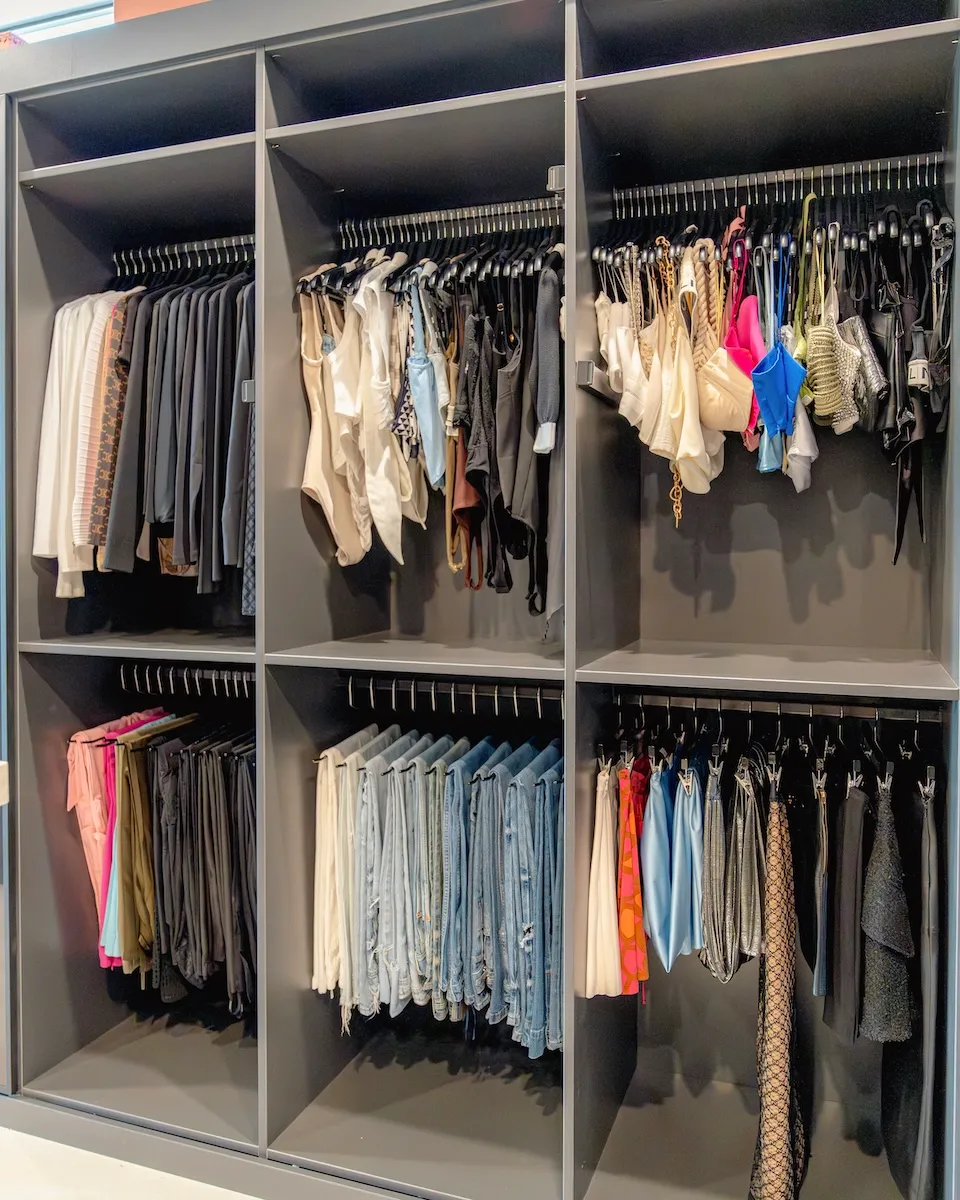
The best closet layout follows your routine. Everyday clothes go in the prime zone between shoulder and hip height; occasional and formal pieces move higher or to the ends; off-season clothing goes on the top shelf or in labeled bins.
Couples sharing a closet usually do best with clear sides or sections rather than mixing categories. If that is your situation, our guide on how to share a closet as a couple has layouts that keep the peace.
- Prime zone: work clothes, everyday tops, jeans
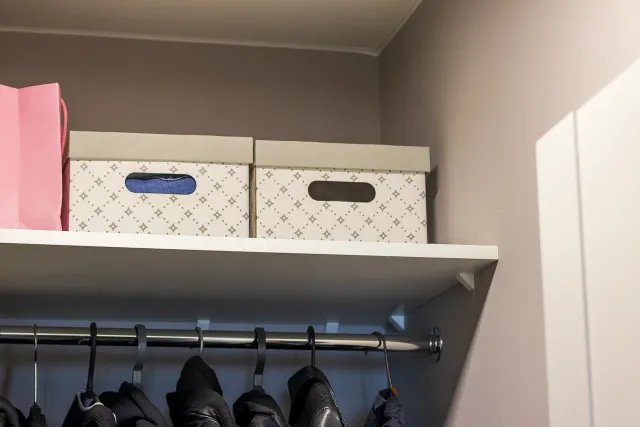
- Upper shelf: off-season, handbags in dust bags, extra bedding
- Long-hang end: dresses, coats, suits
- Floor: shoe racks, a laundry hamper, a slim drawer unit if needed
Step by step
- Measure rods, shelves and floor space
Note long-hang and double-hang areas and shelf depth.
- Clean the closet
Wipe shelves, vacuum the floor and check the light works.
- Hang clothes by category
Use matching hangers and put daily items in the prime zone.
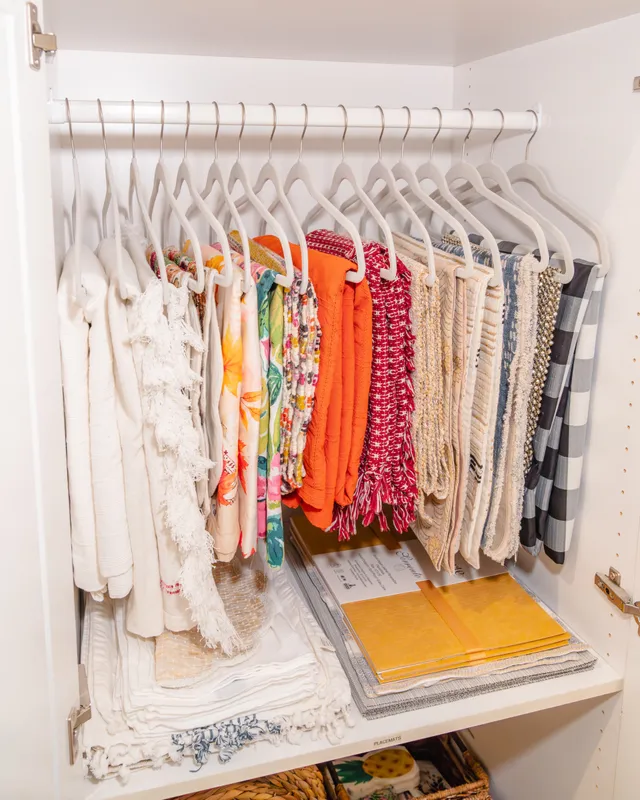
- Fold and stack the rest
Knits and denim on shelves with dividers, off-season in labeled bins up high.
- Add shoes and accessories
Racks or clear boxes for shoes, and trays or hooks for belts and bags.
- Adjust after two weeks
Move anything you keep reaching past to a better spot.
Switch to matching hangers while the rods are empty
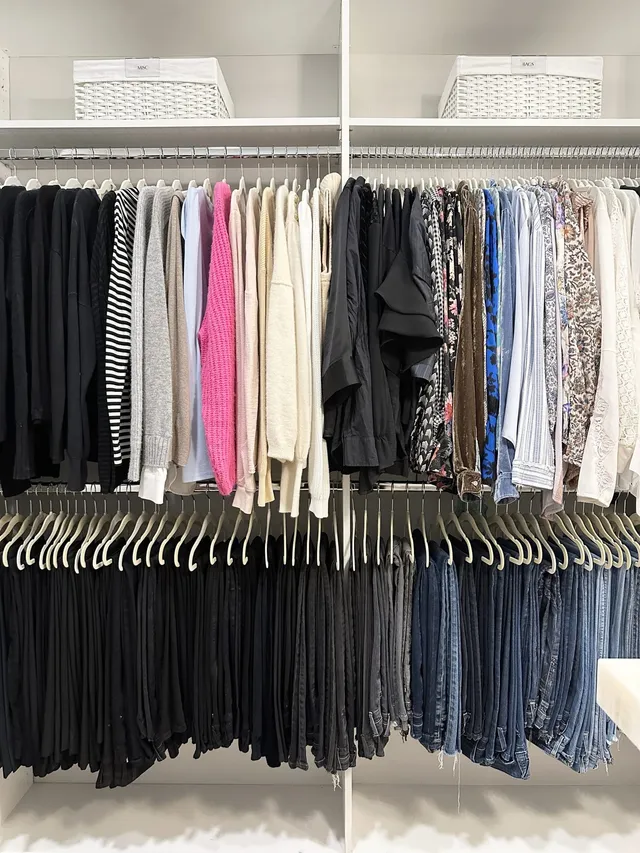
Moving day is the easiest moment to swap mismatched wire and plastic hangers for one consistent style. Slim velvet or wood hangers save space and make a closet look calm at a glance.
Hang by category first, such as all shirts, then all pants, and then by color within each category if that helps you see what you own.
Builder-grade closets need a few smart additions
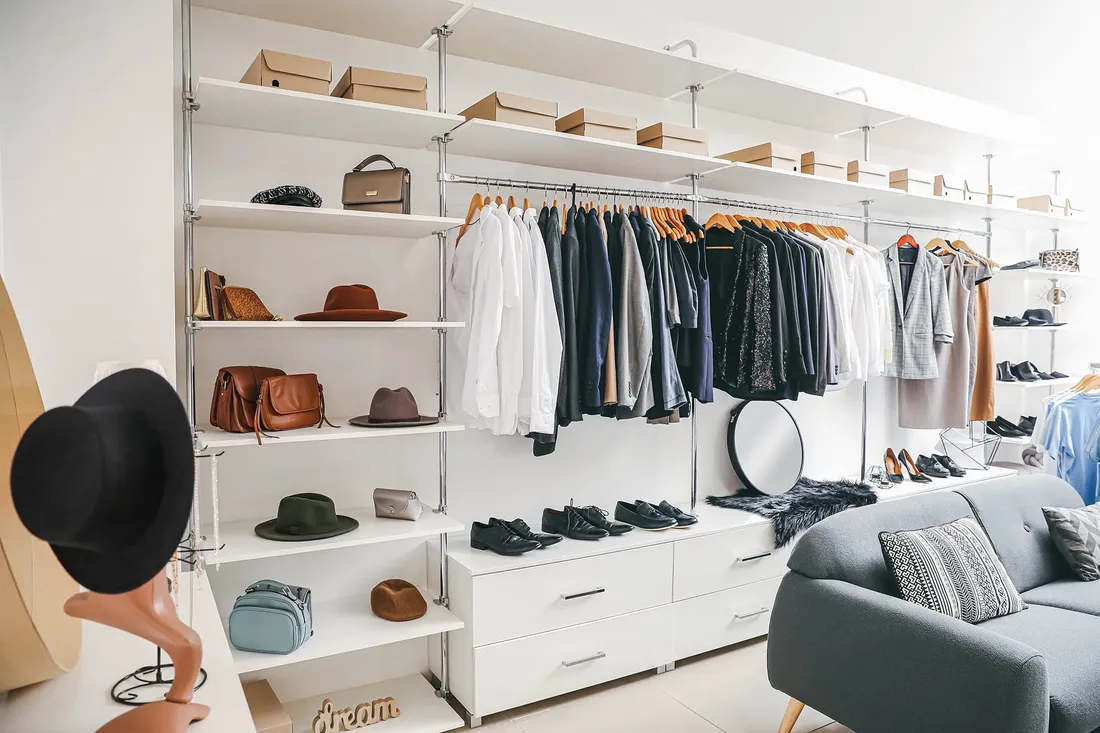
Many new homes in the Las Vegas Valley come with a single wire shelf and rod. Shelf dividers keep folded stacks upright, a second rod hung below the first can double short-hang space, and clear shoe boxes protect pairs from the fine dust that drifts in through vents.
If you plan to install a custom system later, these simple additions bridge the gap. Live with the closet for a season first; it will tell you what kind of storage you really need.
Plan for a light seasonal swap, not a heavy one
Las Vegas winters are short and mild, so most wardrobes need only a small swap each year. Keep a single labeled bin or two for heavier sweaters and coats on the top shelf rather than devoting a whole section to them.
Avoid storing off-season clothes in the garage, where summer heat can damage fabrics, leather and embellishments. Our page on seasonal closet swaps in Las Vegas explains the timing.