Measure what you each own before drawing a line
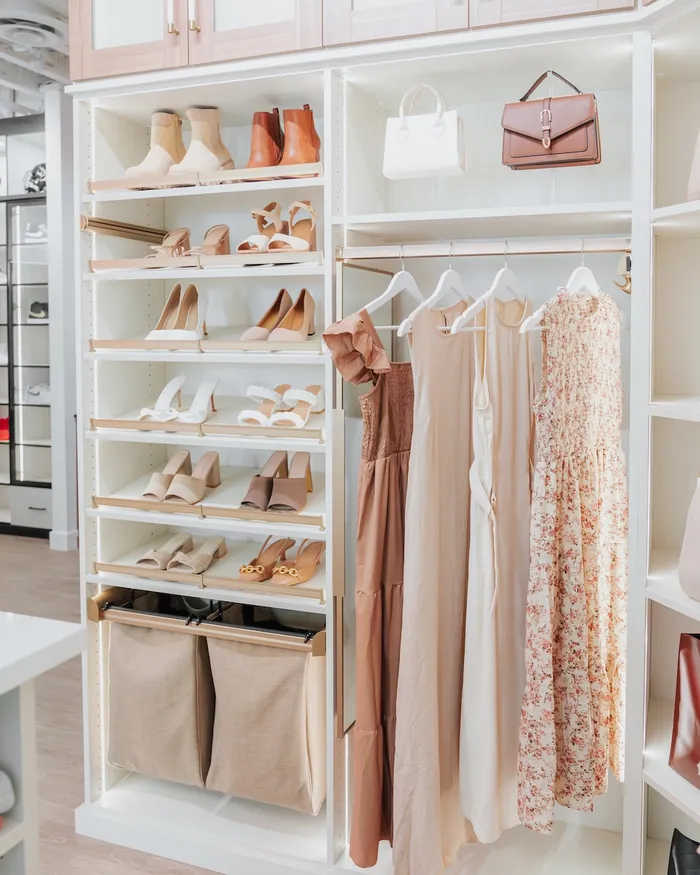
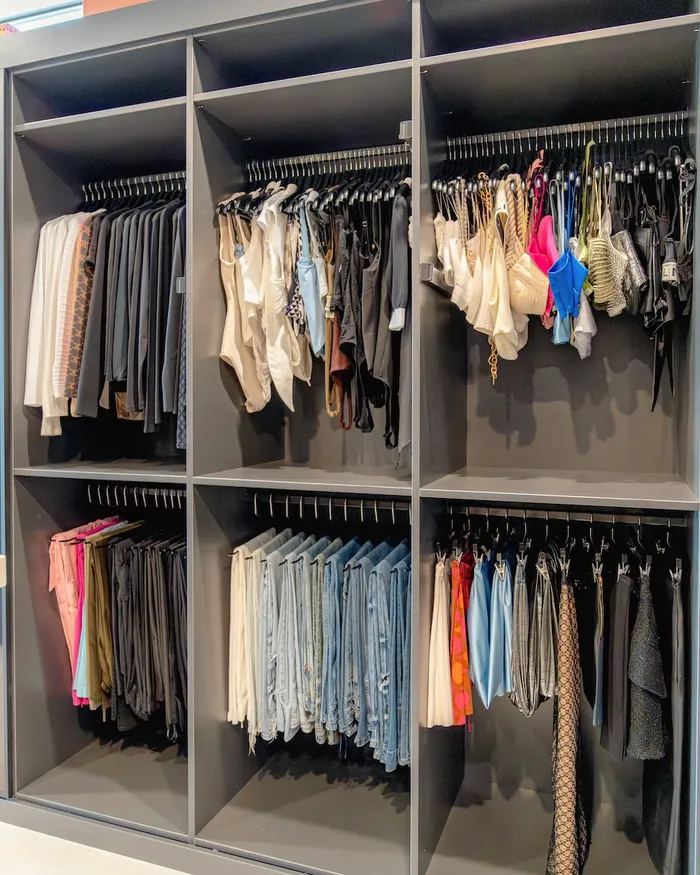
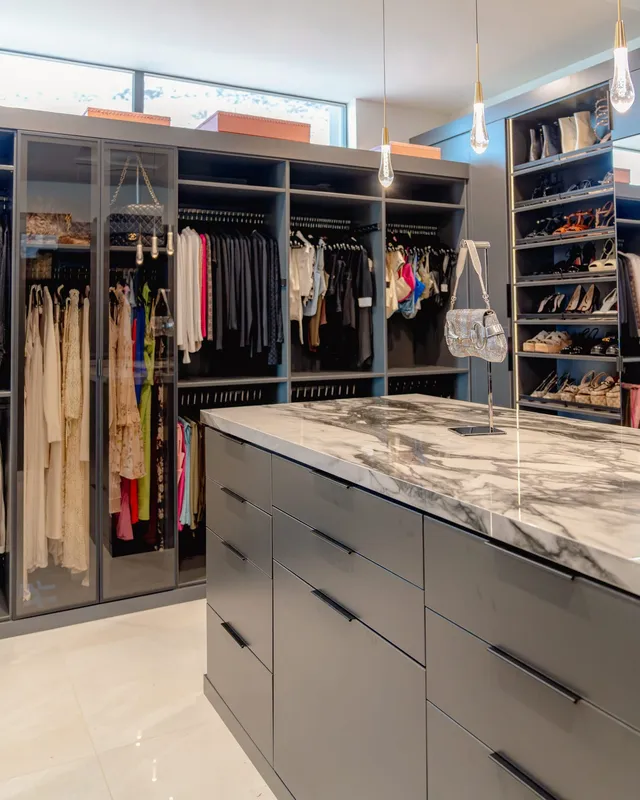
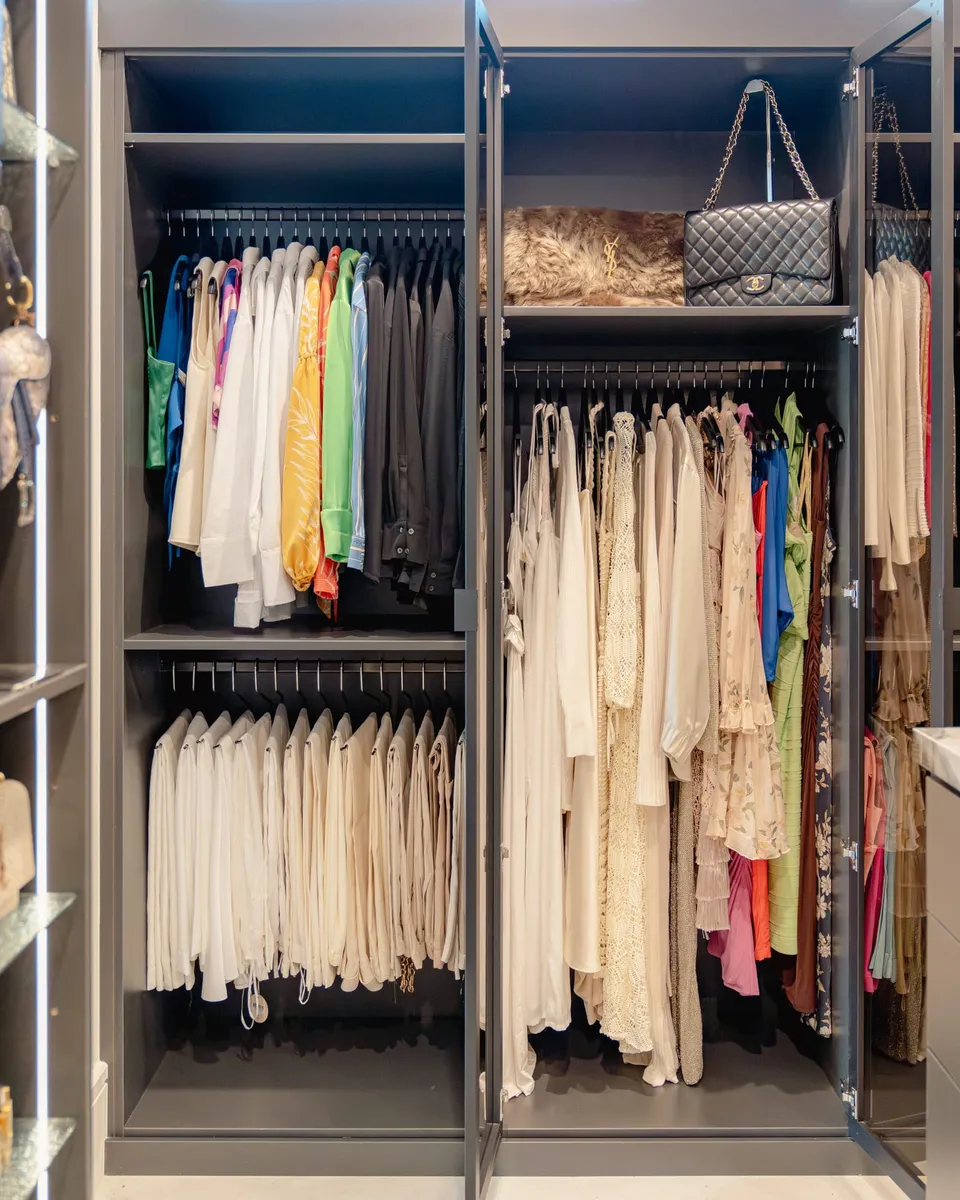
A fair split is rarely an equal one. One partner may own 40 hanging pieces and six pairs of shoes; the other may have 140 garments, long dresses and a handbag collection. Count hanging items, folded stacks and shoe pairs for each person before deciding who gets which wall.
Write the numbers down. It takes the emotion out of the conversation and turns it into a layout question: how many feet of rod and how many shelves does each wardrobe need to fit without cramming?
| Item type | Rough space it needs |
|---|---|
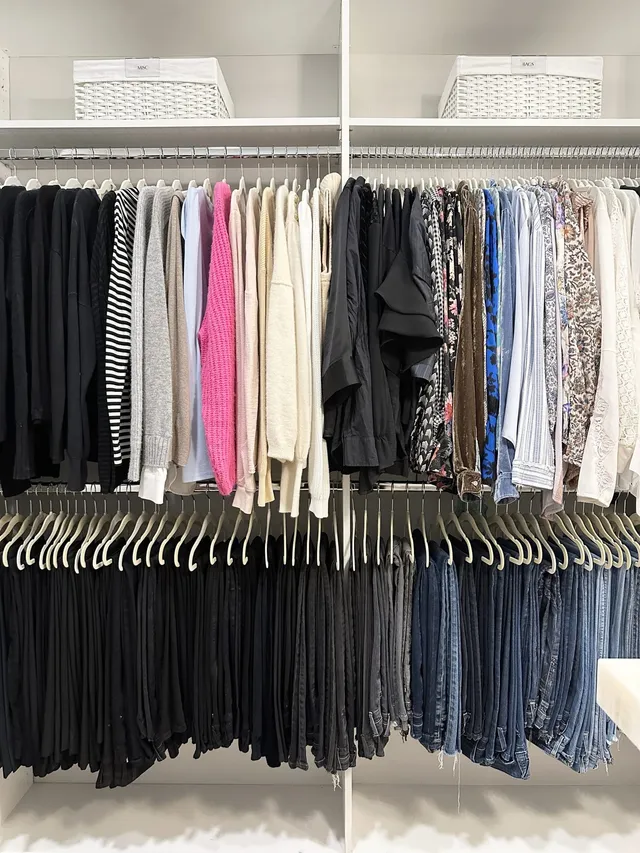
| Shirts and blouses on slim hangers | About 1 in of rod per piece |
| Dresses and long coats | A long-hang rod near 66 to 70 in high |
| Folded jeans or sweaters | Stacks of 6 to 8 on a 12 to 14 in wide shelf section |
| Shoes, flats and sneakers | About 7 to 9 in of shelf width per pair |
Give each person a prime zone
The most valuable space in any shared closet is the stretch between hip and shoulder height closest to the door. Split that first, so both of you can reach daily clothes without stepping around the other in the morning.
If one person gets ready earlier, put their daily wear closest to the entrance and the light switch. It is a small courtesy that matters at 5:30 a.m. before a shift or an early tee time.
Step by step
- Inventory both wardrobes
Count hanging pieces, folded items and shoe pairs for each person.
- Edit separately
Each partner decides on their own clothes; nobody donates the other person's things.
- Map the room
Assign prime zones, long-hang space, shoe shelves and a neutral zone on a quick sketch.
- Set up and label
Load each side, label shared bins and place the hamper where both can reach it.
- Check in after two weeks
Adjust the split if one side is still overflowing.
Create a neutral zone for shared things
Luggage, garment bags, keepsake boxes, holiday outfits and the spare blanket belong to the household, not to one side. Put them on the highest shelves or at the far end of the room in clearly labeled bins.
A shared hamper with two compartments, or two matching hampers, also lives in the neutral zone. When the laundry has an obvious home, it stops collecting on the bench or floor.
Agree on simple closet rules
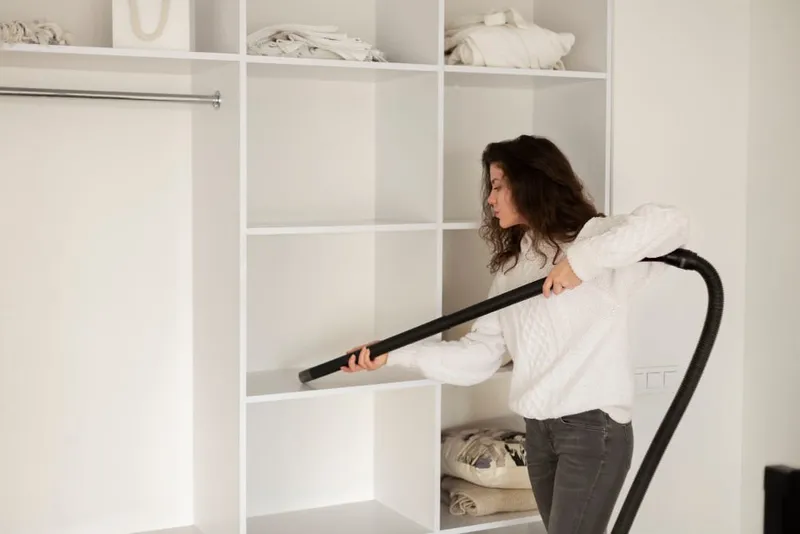
Rules work when they are few and specific. Rules that tend to work for two people sharing one closet: nothing stays on the floor overnight, new purchases mean one piece leaves, and each person resets their own side once a week.
Respect differences in style. One partner may prefer folded stacks, the other bins. As long as each side stays within its boundary, the system holds. Matching hangers across both sides keeps the whole closet looking calm even when habits differ.
- Same hanger style on both sides for a unified look
- Labels on shared bins only, so it is clear what is common property
- A one-in, one-out habit for clothes and shoes
- A spot for the clothes you will wear again before washing, such as a hook or valet rod