Shape is the first thing that fails
Most handbag damage is slow collapse: corners crease, sides cave in and the base sags. A bag that sits empty and slouched for a season can hold that crease permanently.
Fill each bag gently with acid-free tissue, a purpose-made bag pillow or a clean, soft cloth. Avoid newspaper, which transfers ink, and avoid overstuffing, which stretches seams. You want the bag to look the way it did in the store, no fuller.
Store bags upright, never hanging by the handles
Handles and straps are designed to carry a bag's weight for a few hours, not to hold it for months. Hanging a structured leather bag on a hook stretches the handle attachments and can distort the top line.
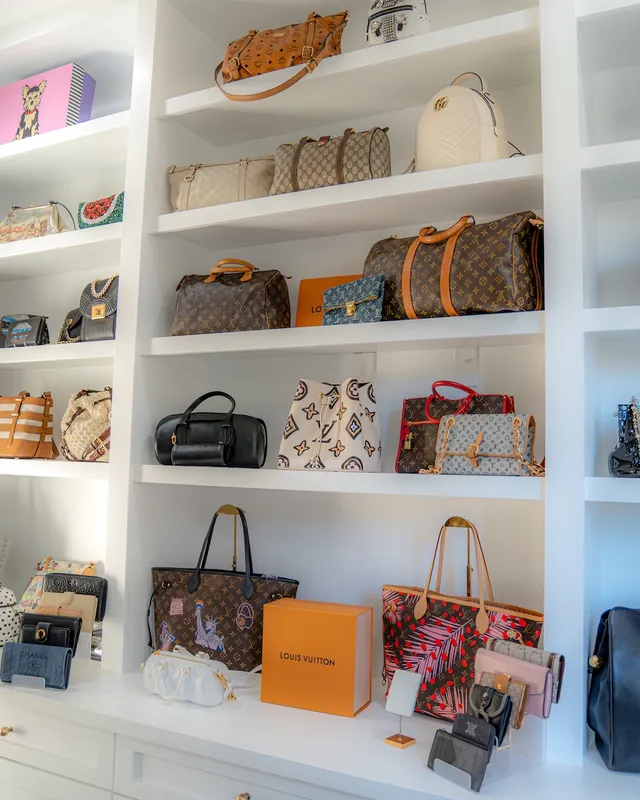
Stand bags upright on shelves with a little air between them. Shelf dividers or acrylic sleeves stop them from leaning into each other. Totes and slouchy hobo bags can sit on a lower shelf; small crossbody bags and clutches fit well in a shallow drawer with dividers, lying flat.
- Structured top-handle bags: upright, stuffed, in a dust bag, on a shelf
- Slouchy or soft leather: upright with light stuffing, or flat if very soft
- Clutches and evening bags: flat in a lined drawer or labeled box
- Chain straps: tucked inside, wrapped in tissue so metal does not scratch leather
- Straw and raffia: on a high shelf away from humidity, stuffed to keep shape
Step by step
- Empty every pocket
Remove receipts, pens, makeup and gum, which leak or stain over time.
- Clean and condition
Wipe the exterior and lining, then condition leather if it looks dry.
- Stuff to shape
Fill with acid-free tissue or a bag pillow until the bag holds its original form.
- Bag and shelve
Place in a breathable dust bag and stand upright on a shelf with space around it.
Las Vegas heat and light are real risks
Dry desert air pulls moisture from leather, which can lead to dulling and cracking over time. A quality leather conditioner applied two to four times a year, tested first on a hidden spot, keeps most bags supple.
Never store handbags in the garage, an attic or a car trunk; summer temperatures there can soften glues and warp hardware. Sunlight from a closet window or skylight fades dyes quickly in the desert, so close blinds or keep bags on a wall that does not catch direct light.
Dust bags beat plastic
Store each bag in its original cotton or flannel dust bag if you have it, or a plain breathable cotton bag if not. Plastic bins and bags trap any trace of moisture and can cause leather to stick or patent finishes to transfer color.
If you like to see your collection, clear acrylic display boxes or glass-front cabinets work, as long as they are out of direct sun. For a dedicated display wall, our handbag storage organization service plans shelving, lighting and rotation around your collection.
Rotate and check your bags each season
Bags you do not carry for months benefit from a quick check every season. Take each one out, look for dryness, color transfer or hardware tarnish, refresh the stuffing and put it back.
This is also a good time to edit. Bags that have not been carried in two years are good candidates for consignment or donation, which frees space for the ones you love.