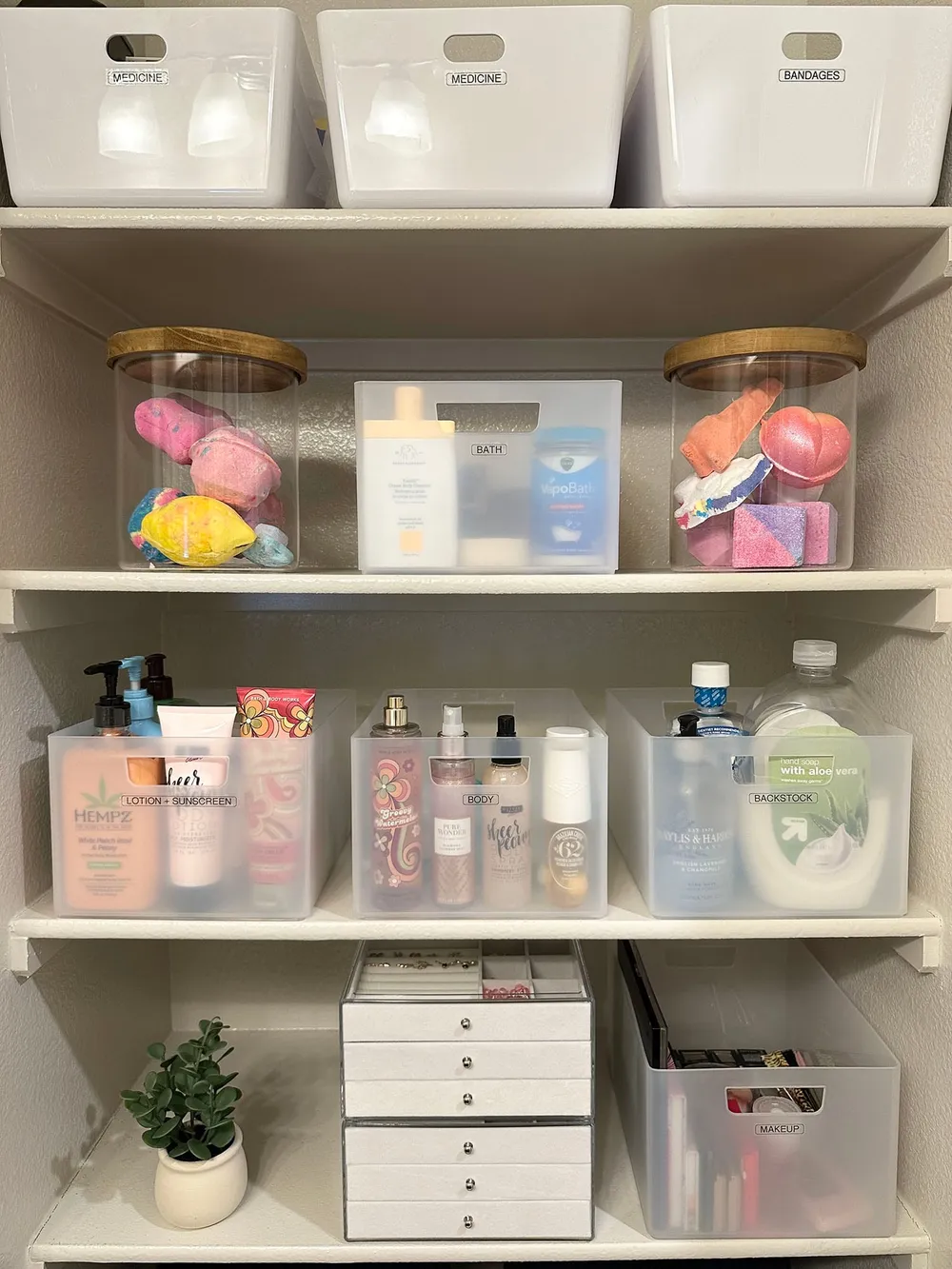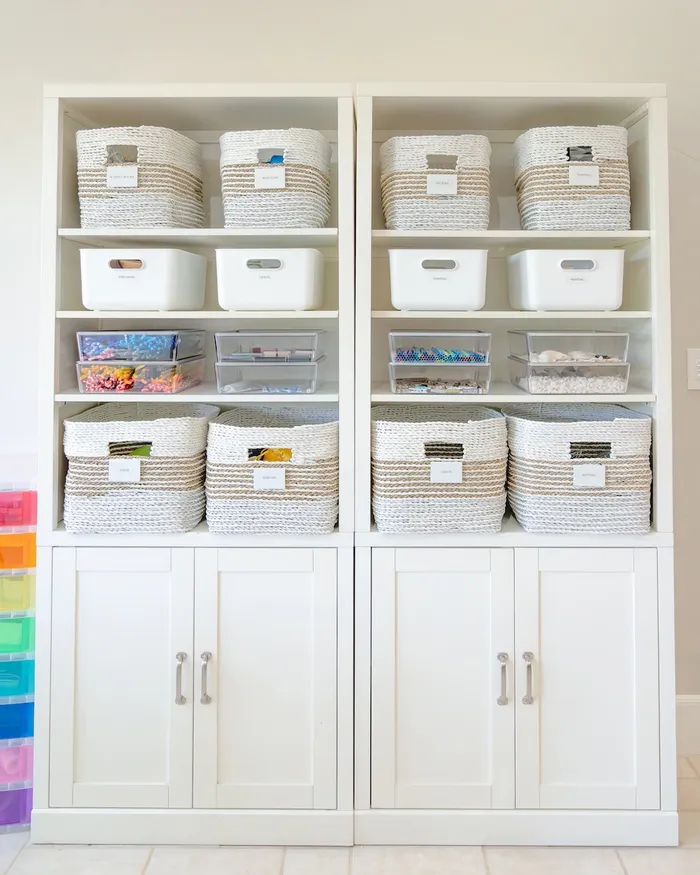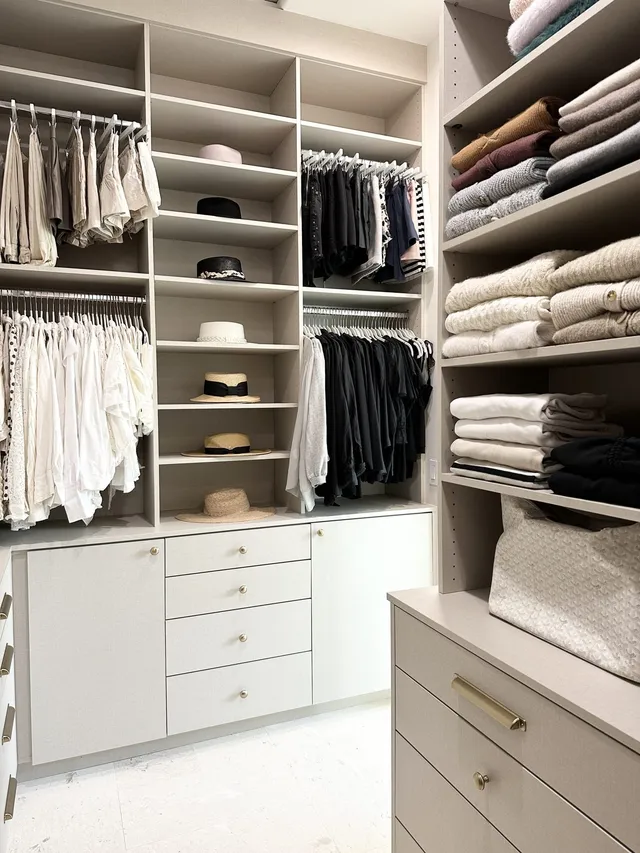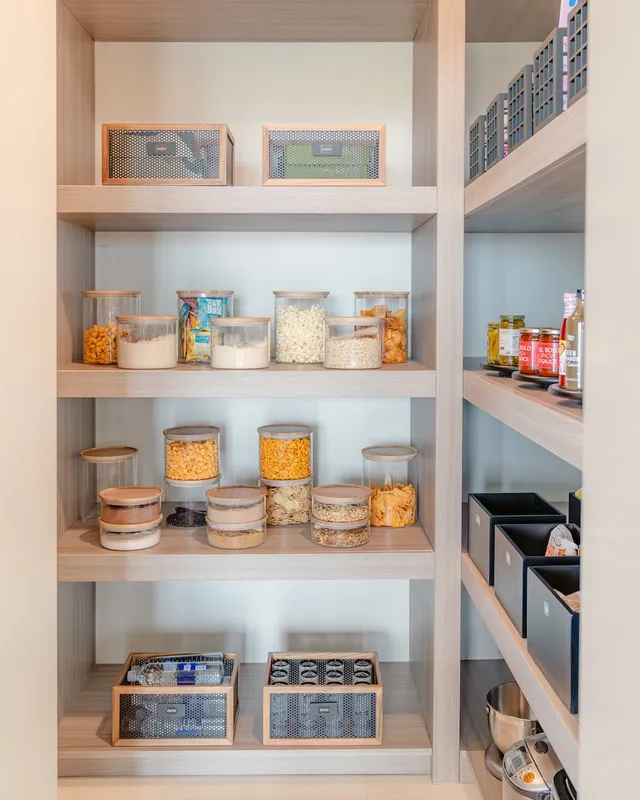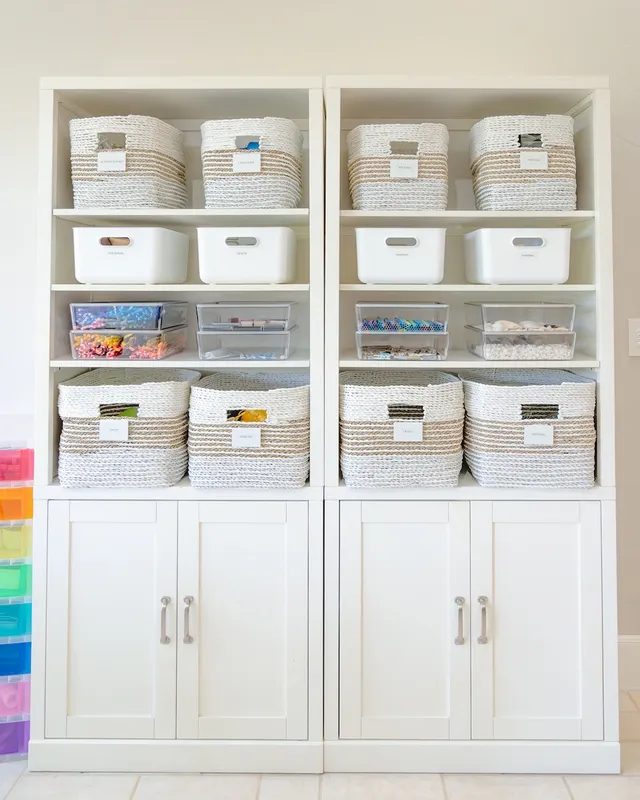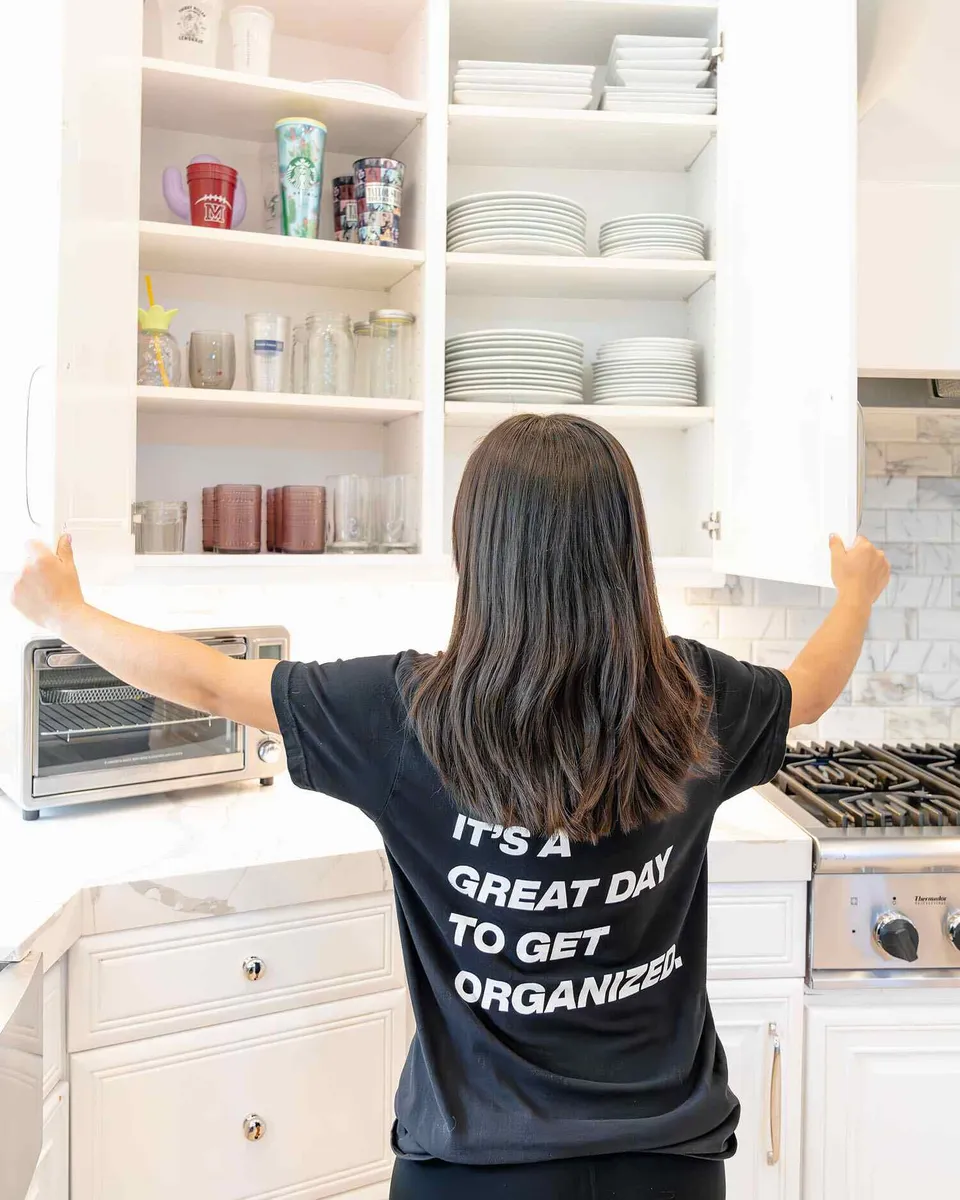
An organizer turns a pile of belongings into a working system
The heart of the job is design. An organizer looks at what you own, how you use the space and who else uses it, then decides where each category should live so daily routines feel easy.
The result is not just a neat room. It is a set of zones, containers and labels that make it obvious where things go back, which is why an organized space can stay that way.
The tasks, in the order they usually happen
Every project is a little different, but most follow this sequence.
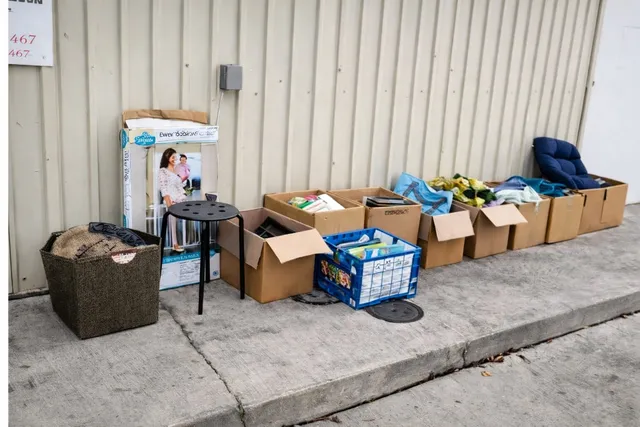
Throughout the process, the organizer keeps the space workable. Empty boxes and packaging are broken down, items for donation are bagged and labeled, and anything you want to sell is set aside so it does not drift back into the room.
| Stage | What happens |
|---|---|
| Assess | Learn your goals, routines and pain points |
| Empty and sort | Pull items out and group by category |
| Edit | You decide what to keep, donate, sell or discard |
| Plan | Map zones based on frequency of use and reach |
| Install | Add bins, dividers, risers and other products where helpful |
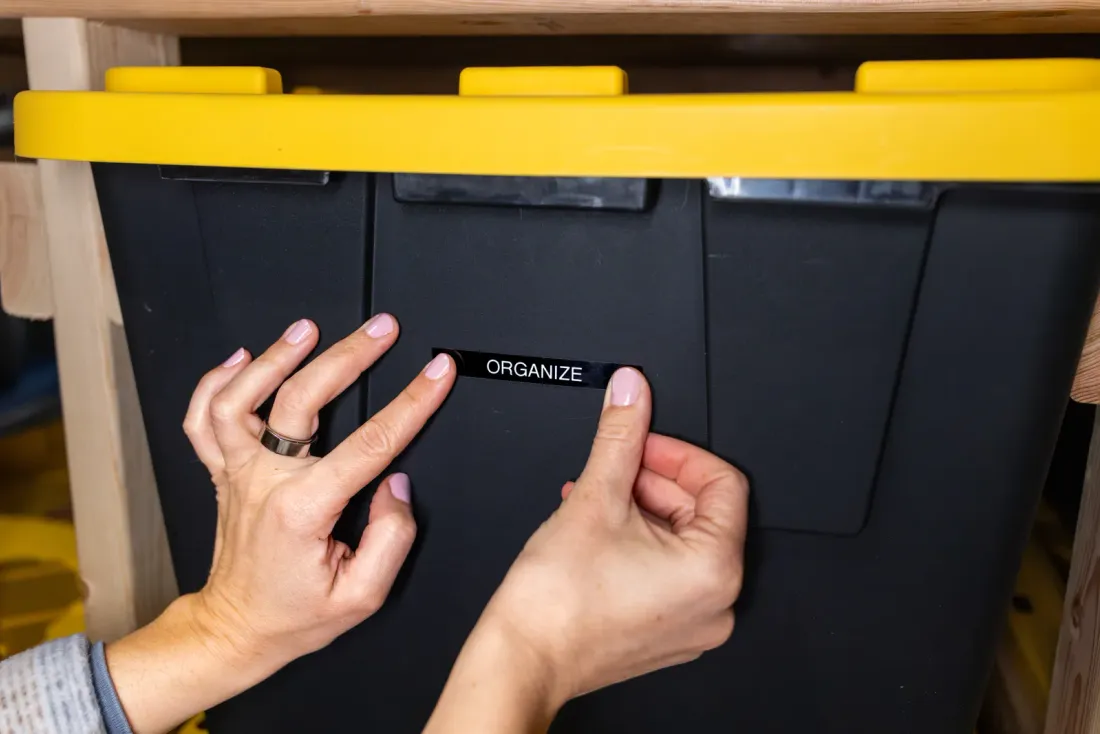
| Label | Mark categories so everyone can reset the space |
| Finish | Style the space, remove packaging and prep donations |
What the decluttering part looks like
Decluttering is guided, not imposed. The organizer holds up items, asks short questions about use and value, and keeps the pace steady so you avoid decision fatigue. You make every keep, donate, sell and discard call.
Sensitive categories, like a loved one's belongings or children's keepsakes, get extra time and care. The goal is a home that supports you, not an empty one. Sorted Spaces approaches this with empathy and without judgment, and the decluttering services page explains more.
Spaces and situations organizers commonly handle
Residential organizers work across the whole home and through big life transitions. In the Las Vegas Valley that often includes new-construction move-ins, relocations from out of state, downsizing to a 55+ community, and second homes for part-time residents.
Garages are a big local category too, organized in the cool season from mid-October through April. See the full list on our home organizing services page.
- Kitchens, pantries and coffee stations
- Closets, nurseries, kids' rooms and playrooms
- Bathrooms, laundry rooms and linen closets
- Home offices and paperwork
- Garages, casitas and storage areas
- Packing before a move and unpacking after
What a professional organizer does not do
Clear boundaries help you plan the right vendors. Organizers do not deep clean, transport belongings across town, haul junk to the dump or build custom carpentry. Those jobs belong to cleaners, movers, junk removal companies and closet installers.
A good organizer can coordinate with those vendors so the project flows. For how the roles split, compare organizer vs cleaning service and organizer vs moving-company unpacking.