Heat is the first thing we plan around
Wine is the item in a Las Vegas home most likely to be quietly damaged by where it is stored. A rack above the refrigerator, a bar cabinet on a sunny west wall, or cases stacked in a garage that tops 130 degrees in summer can all cook a bottle. Before we organize anything, we look at where bottles are sitting and recommend moving anything worth aging into a wine fridge, a temperature-controlled room or the coolest interior closet.
We are organizers, not cellar engineers, so if a wine room's cooling unit seems off we will point it out and suggest you have it checked. What we handle is everything inside: the layout, the grouping and the habits that keep bottles where they should be.
How we organize a wine collection
The right grouping depends on how you drink and buy. Some clients want bottles by region or varietal, others by drink-now versus cellar, and others by price point so the everyday bottles never get confused with the special ones. We ask before we touch a rack.
- Count and sort every bottle, including cases still in boxes
- Group by the system you choose: region, grape, readiness or occasion
- Place drink-soon bottles at the most reachable height
- Add discreet rack tags or a simple inventory list if you want one
- Return stemware, decanters and openers to a single adjacent zone
Home bars and liquor cabinets need a working layout
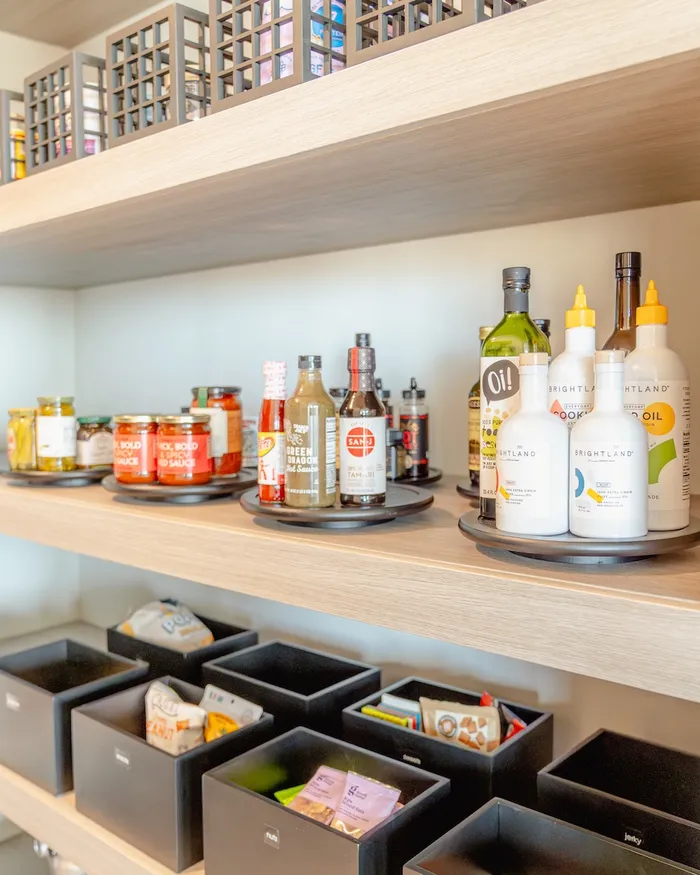
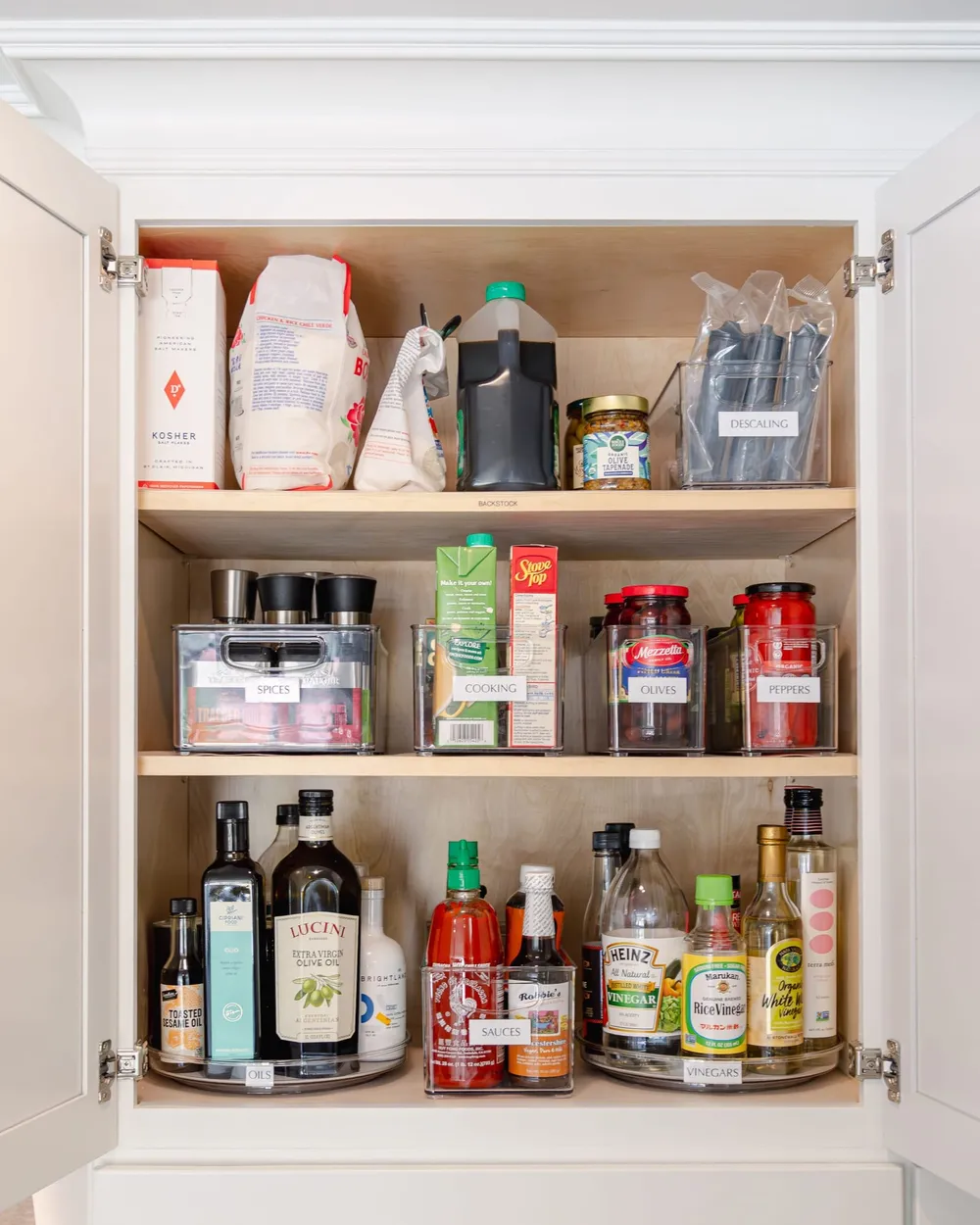
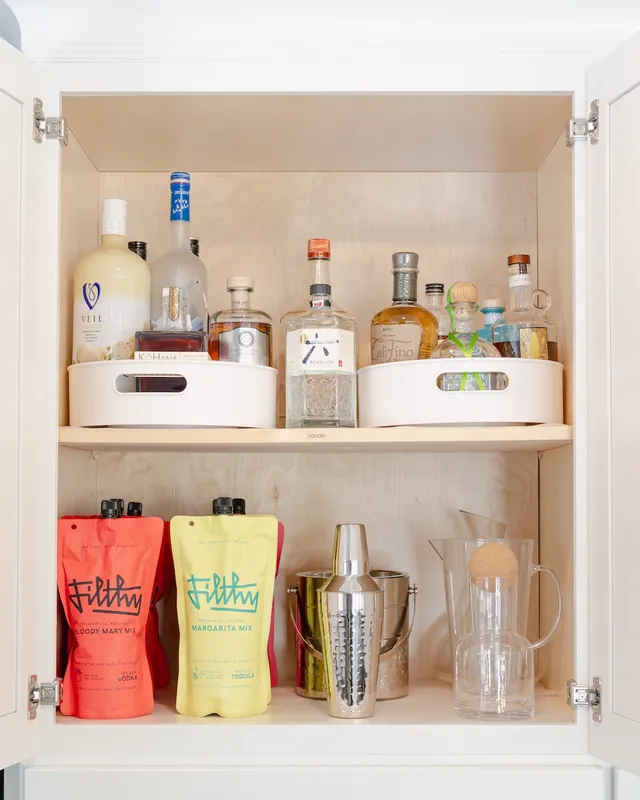
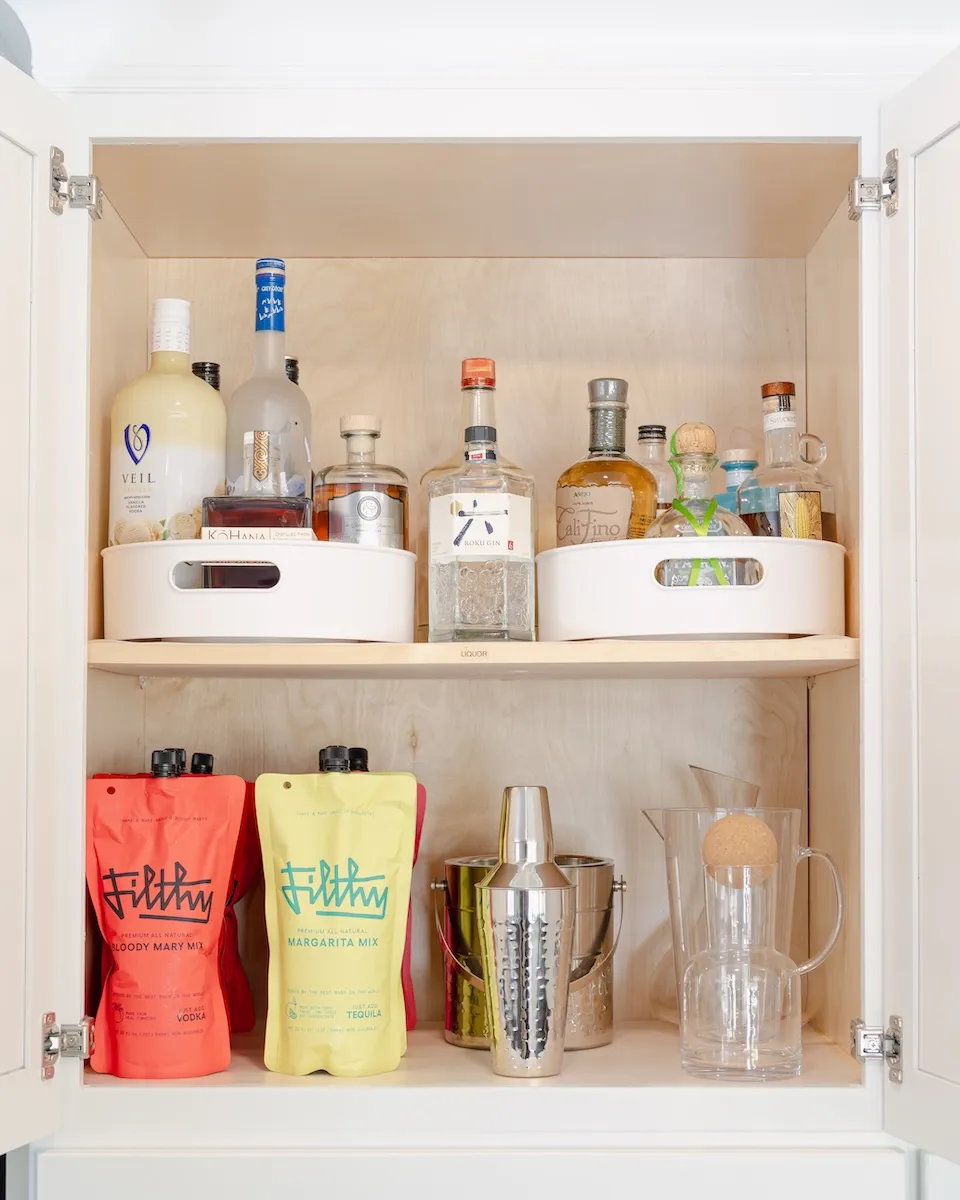
A home bar works when you can make a drink without opening four doors. We put the bottles you pour most on the front row, group spirits by type, and keep bitters, syrups and garnishes together on a tray or turntable. Bar tools go in a single drawer with dividers so the jigger and strainer are never hiding.
Glassware gets edited too. Many bars hold more novelty glasses than the household uses; we help you keep a matched working set and move party-quantity glassware to a higher shelf or the butler's pantry. Open bottles of liqueur that have crystallized or separated are worth a second look, and the decision to keep them is yours.
| Bar zone | What goes there |
|---|---|
| Front shelf | Daily pours and the house cocktail spirits |
| Back or upper shelf | Special bottles and backup stock |
| Tray or turntable | Bitters, syrups, small mixers |
| Top drawer | Jiggers, strainers, openers, picks |
| Under-counter fridge | Mixers, sparkling water, white and sparkling wine |
| Upper cabinet | Party-quantity glassware and seasonal bar items |
Las Vegas homes often have more than one bar
Between kitchen islands with wine fridges, butler's pantries, outdoor kitchens, game rooms and casitas, it is common here to find three or four places where alcohol lives. We map them so each has a job: the outdoor bar holds unbreakable drinkware and canned drinks, the indoor bar holds the spirits, and the wine fridge holds bottles ready to open.
In guard-gated and golf communities where homes are built for entertaining, that clarity matters most right before a party, when someone other than you may be pouring.
Cost for bar and wine organizing
A liquor cabinet or small bar typically fits within the starting tier, around $600 for four hours. A wine room with several hundred bottles, or a project that covers every drink zone in the house, is usually a full-day job starting around $1,200. Products like rack tags, drawer dividers and trays are added only when needed, and we handle returns of anything unused.