Get the storage conditions right first
Wine needs stable conditions more than anything else. The commonly cited guideline is around 55°F, with moderate humidity, darkness and no vibration. Temperature swings are worse than a steady temperature that is slightly warm.
In Las Vegas, that rules out the garage, which can get far hotter than outside in summer and will damage wine quickly. An interior closet away from exterior walls is the best non-refrigerated option for short-term storage, but a wine fridge or climate-controlled wine room is the right home for anything you plan to age.
| Factor | Aim for | Avoid |
|---|---|---|
| Temperature | Cool and stable | Garages, attics, sunny walls |
| Light | Dark or UV-filtered | Direct sun or bright display lights |
| Position | Corked bottles on their side | Upright for long periods |
| Vibration | Still | On top of the fridge or near laundry |
Sort into drink-now and cellar
The first split is about timing. Put bottles you plan to open in the next few months in an easy-reach drink-now section. Put bottles you are aging in a separate cellar section, ideally in a wine fridge or climate-controlled area.
This simple split stops special bottles from being opened by accident and keeps everyday wine accessible.
Organize within each section
Within each section, sort by type, then by region, producer or vintage, depending on how you think about wine. Most home collections do well with red, white, sparkling and dessert as the main groups.
Use neck tags or shelf labels so you can read a bottle without pulling it out. Store bottles label-up so you can see them at a glance.
- Main groups: red, white, sparkling, dessert
- Within groups: region or producer
- Within producers: vintage, oldest first
Keep a simple inventory
A short inventory helps you track what you have, where it is and when to drink it. A spreadsheet or wine app works well; include the wine, vintage, location and a drink-by window.
Update it when bottles come in or go out. A quick quarterly review shows what is ready to open. If you buy by the case, note how many bottles remain from each one; it helps you spread a vintage across the years rather than finishing it all at once.
Choose racks and storage that fit your space
Wine racks that hold bottles horizontally keep corks moist. Wall-mounted racks, modular cubes and wine fridges all work for different sizes of collections.
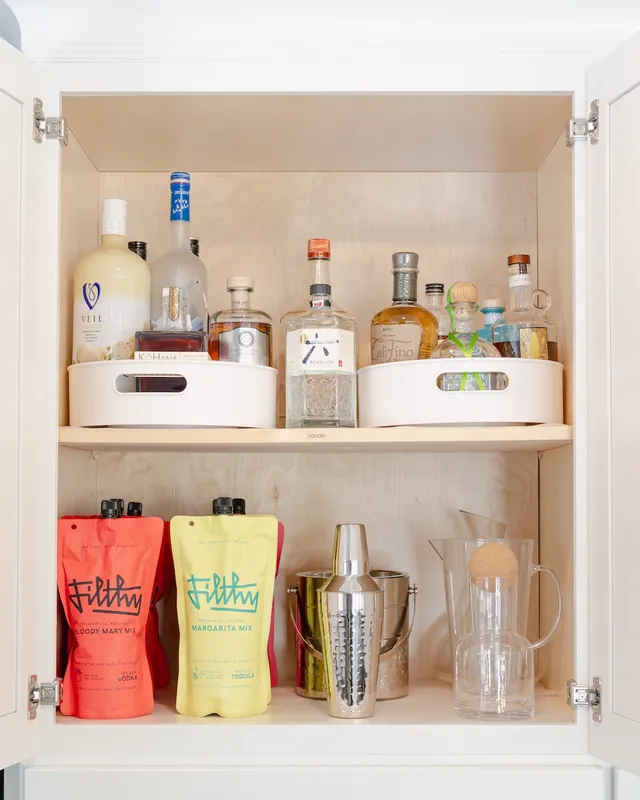
Bar cabinets are fine for spirits but not for long-term wine storage; the bar cabinet guide covers that side. Our bar and wine storage service helps set up racks, labels and inventories.