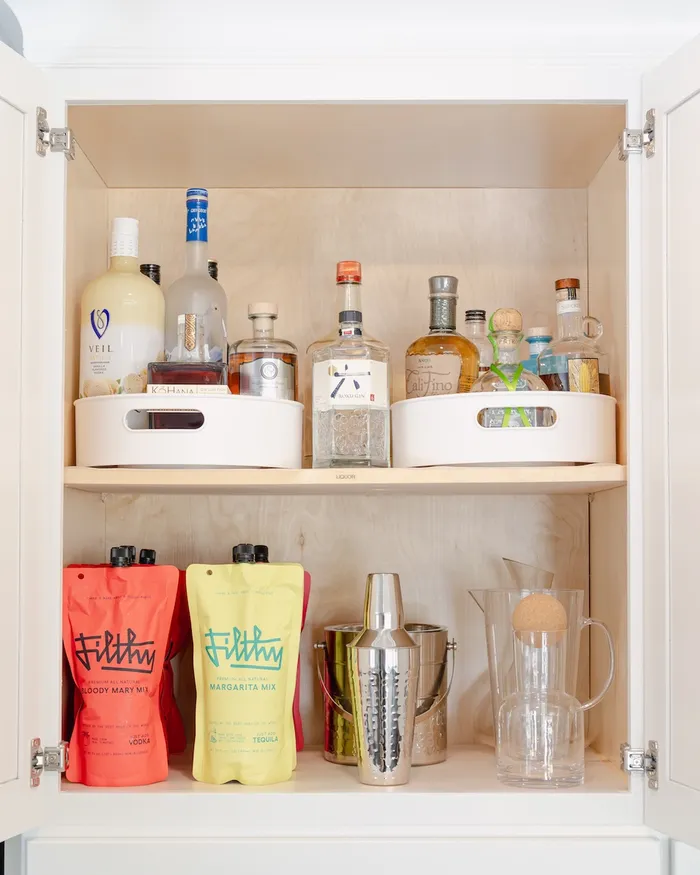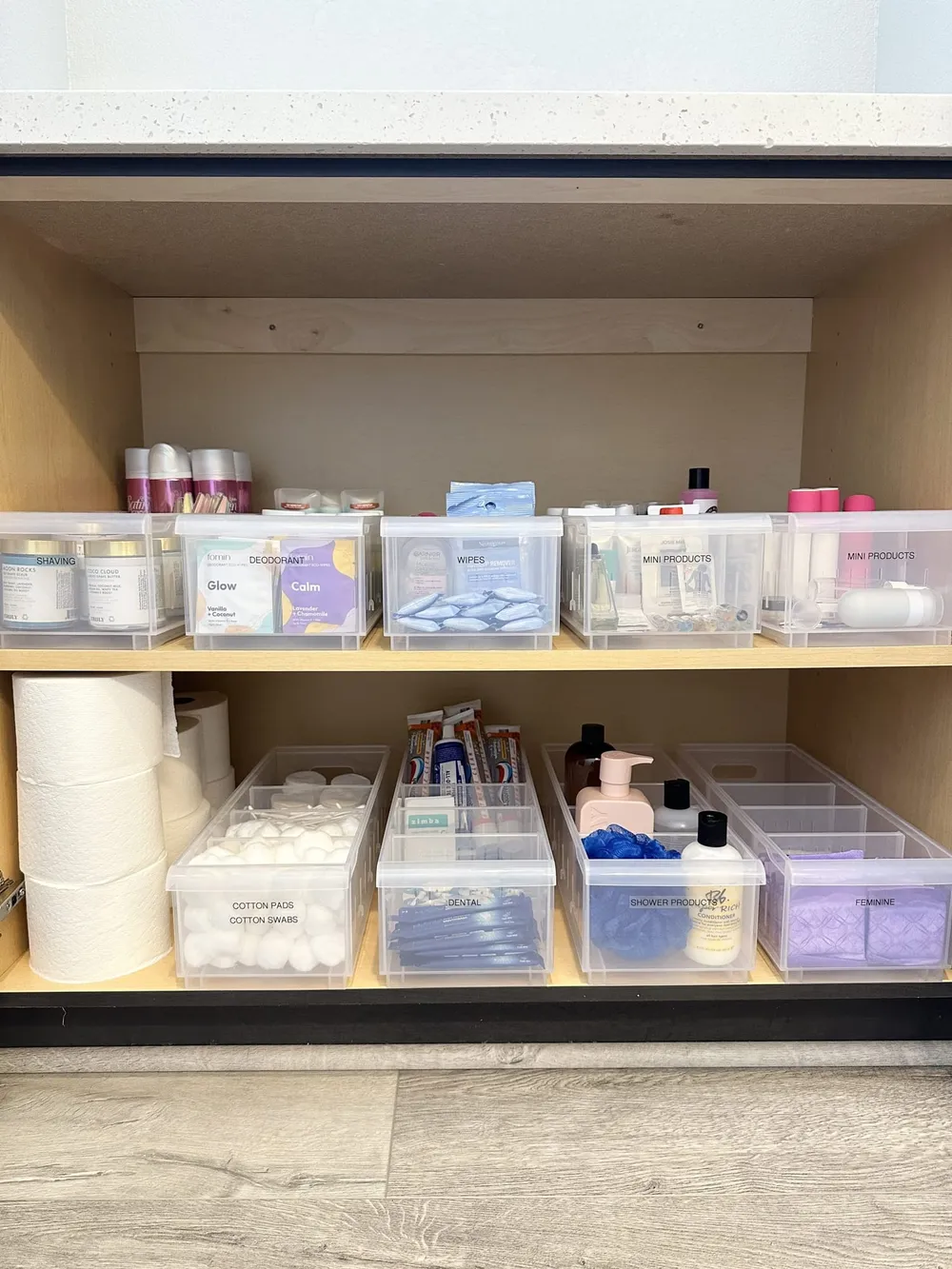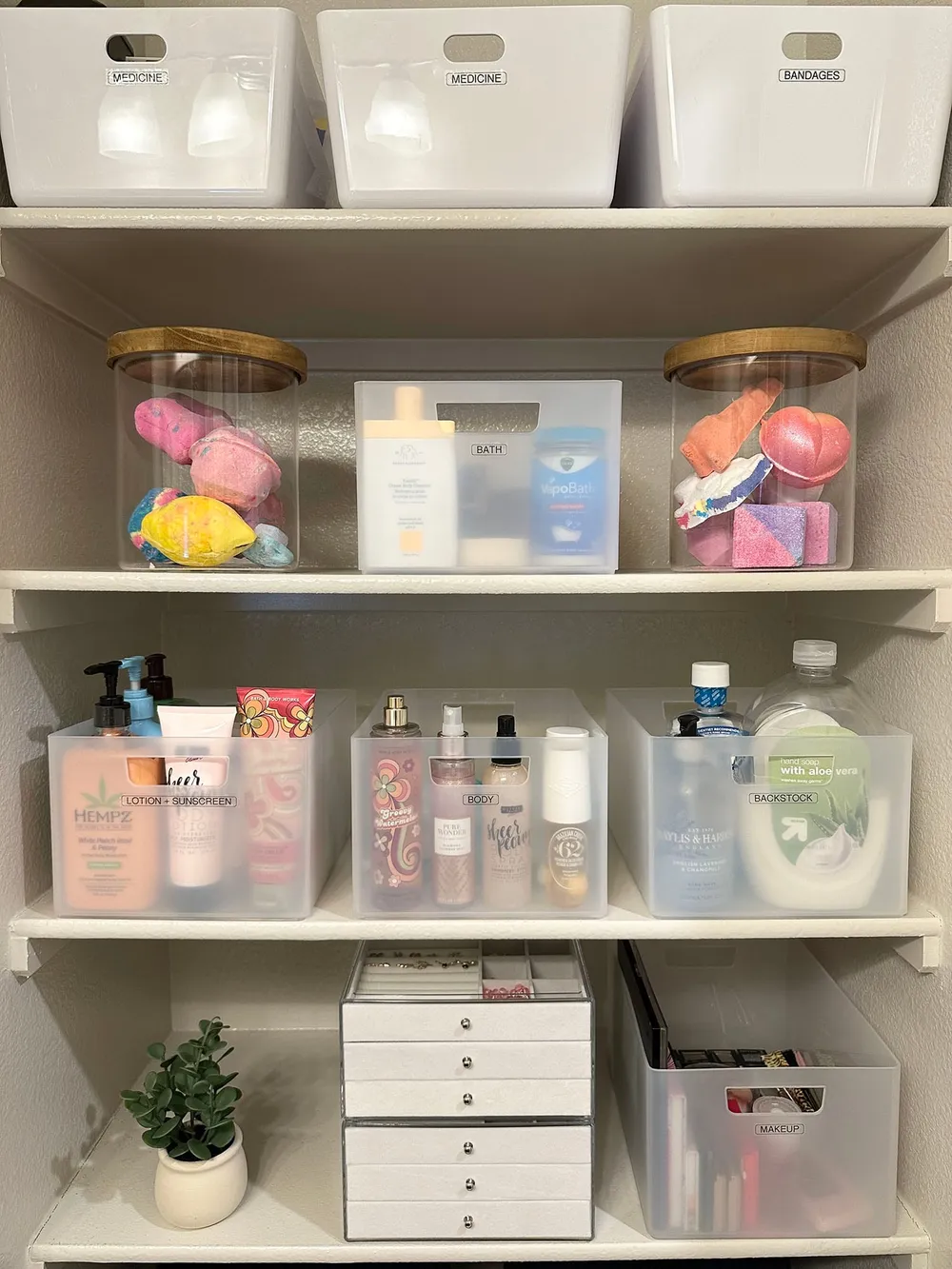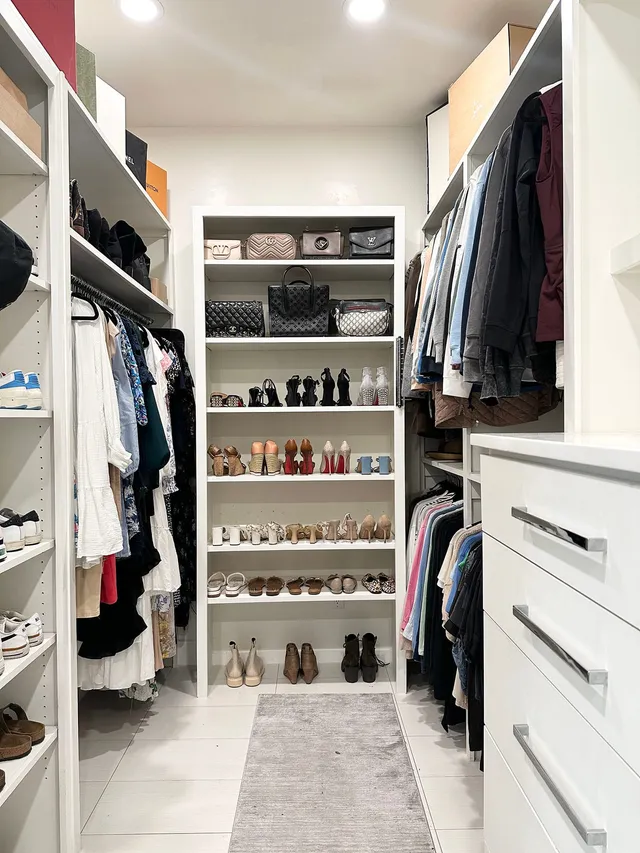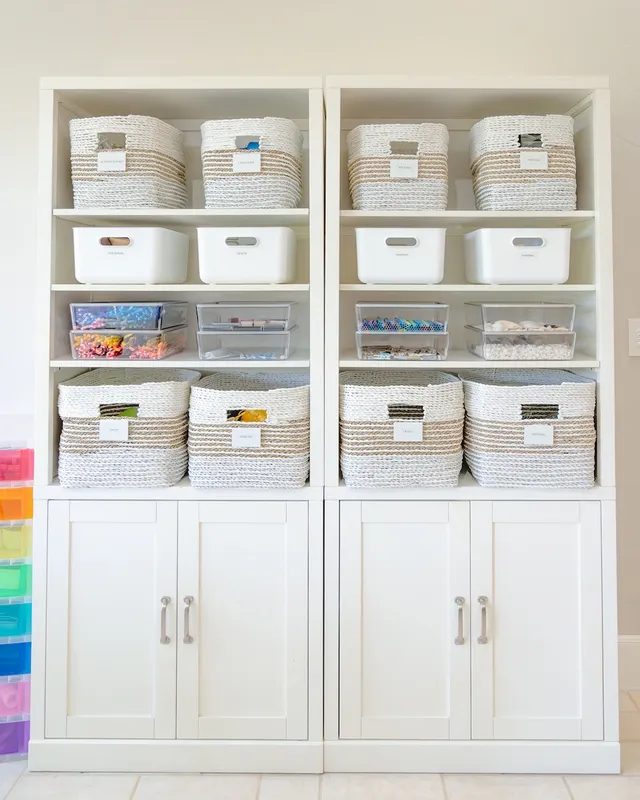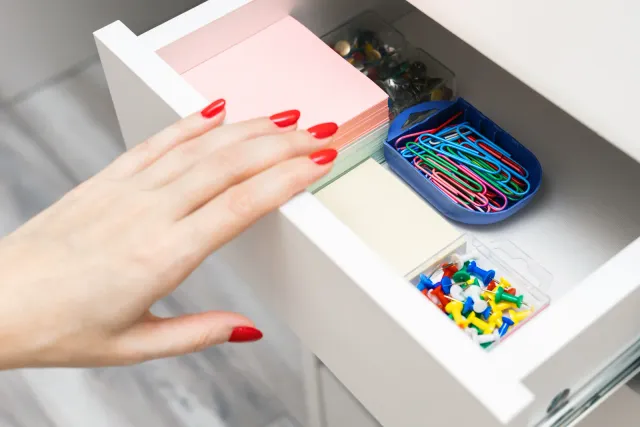
A working supply room is built around who pulls what, and how often
The fastest supply rooms put the ten or twenty items people grab every day right by the door, at a height nobody has to stretch for. Bulk cases, seasonal items and the one box of binder clips from three managers ago go higher, lower or further back. We start every project by asking your team what they reach for and what they can never find.
From there we draw zones on paper before anything moves. A law office might zone by paper, printing, mailing and kitchen overflow. A property office might zone by leasing materials, maintenance consumables and event supplies. The categories come from your business, not from a template.
What a Sorted Spaces supply room project includes
The work is hands-on from the first hour. Our organizers pull everything out, group it, and show you what you actually own before anyone buys a single bin.
- Full sort of every shelf, cabinet and floor box, with duplicates and expired items set aside for your review
- Zone plan based on daily, weekly and occasional use
- Sourcing of bins, shelf dividers, label holders and risers sized to your shelving, with unused products returned for you
- Clear labels on every bin and shelf edge, written so a new hire can follow them
- Par level notes on the labels for the items you reorder most
- A one-page restock sheet your office manager can keep or hand off
- Coordination of donations for surplus supplies you no longer need
How the project runs
- Tell us about the room
Share photos, rough dimensions and what keeps going wrong: overbuying, lost items, or a room only one person understands.
- Get a plan and time estimate
We recommend team size, hours and whether products are needed, using the same transparent pricing we publish on our professional organizer cost page.
- Organizing day
We sort, zone, contain and label, then walk your point person through the finished room and the restock sheet.
Par levels keep the room from sliding back into chaos
A par level is the quantity at which an item goes on the reorder list, and writing it right on the label is what keeps a room organized after we leave. Instead of someone noticing the last toner cartridge on a Friday afternoon, the label tells them it was time to order two boxes ago.
We set starting numbers with you based on how quickly things move and how long your vendors take to deliver. You adjust them after a month or two of real use. If you want the reasoning in more depth, our guide to supply closet par levels walks through the math.
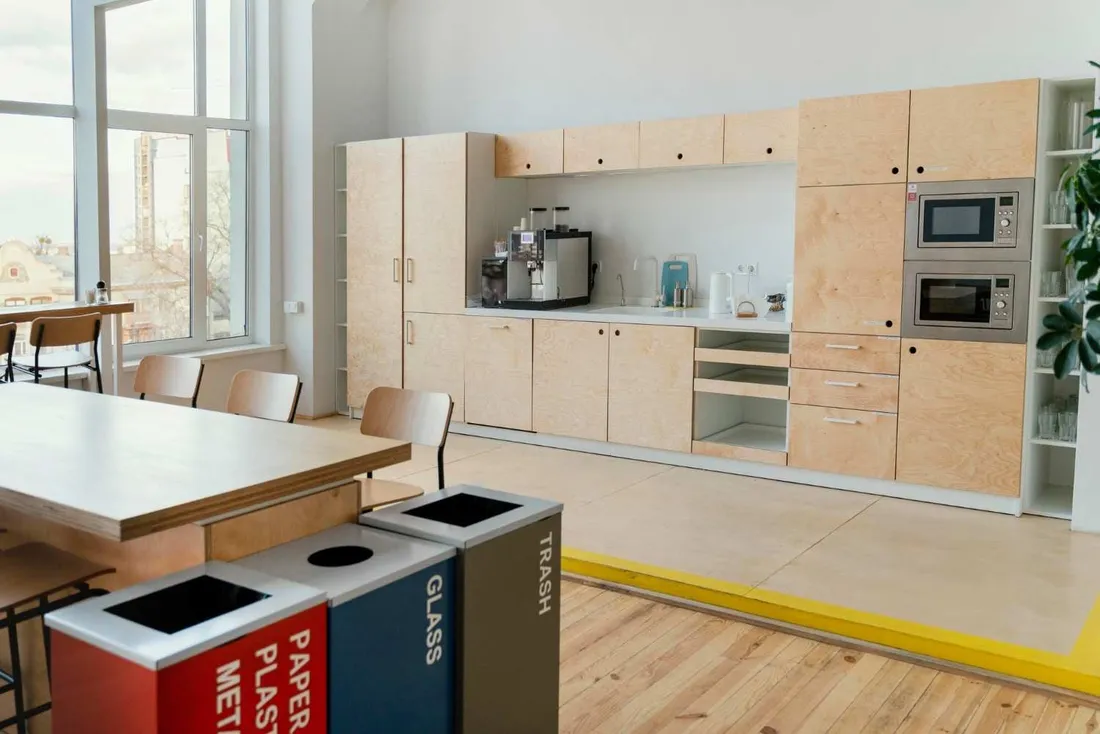
Las Vegas heat and dust change what belongs in the room
Supply rooms in the valley deal with conditions that offices in milder cities don't. Deliveries left in a hot vestibule or a warehouse bay in July can warp adhesive labels, dry out markers and soften anything with wax or glue. We flag items that should sit in the coolest interior space you have, away from exterior walls and roll-up doors.
Fine desert dust also settles on open shelving faster than most people expect. Lidded bins for paper goods, envelopes and anything that goes to clients keep the room looking clean between deep cleanings, which your janitorial team still handles. For a closer look at the shelf-by-shelf method, see how to organize an office supply room.
We plan the work so your office keeps running
Most supply rooms can be finished without closing the business. We stage items in an empty conference room or hallway corner, work section by section, and keep the most-used supplies accessible the whole time. Larger rooms or multi-closet projects can be split into phases across more than one visit.
Timing is set at the free consultation. Tell us your busiest hours, when deliveries arrive and which days the room absolutely has to be usable, and we build the schedule around that. We are a team of organizers, so we don't build shelving or move heavy furniture; if you need new shelving installed, a handyman or your facilities contact handles that before we arrive.