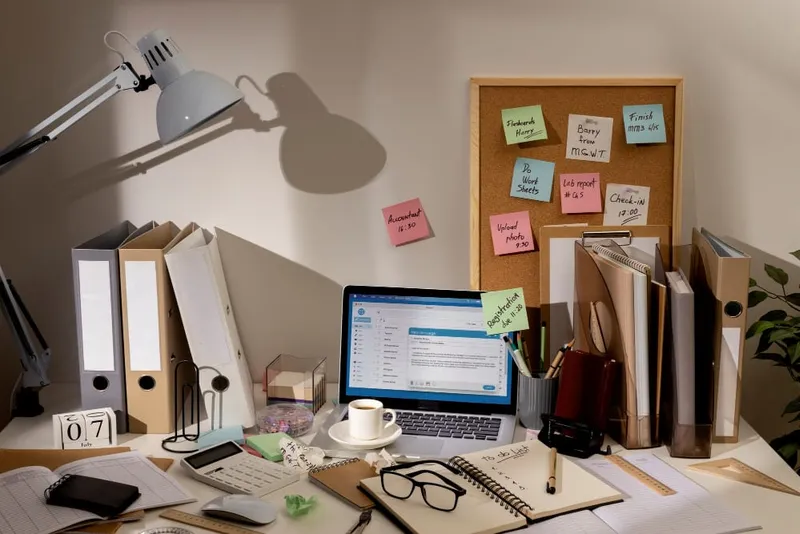
Start with the shared spaces, because that is where offices lose the most time
Private desks matter, but the real friction in most offices lives in rooms everyone uses and nobody owns: the file room, the copy area, the closet behind reception and the corner where old monitors go to wait. When those spaces have no system, every employee invents their own.
We walk the office with you and rank spaces by how much daily frustration they cause. Usually the order is supply storage, files and paperwork, the front desk, then individual workstations. You choose where we begin.
What we organize in a typical office
Every office is different, so the scope comes from your walkthrough. These are the areas we are asked about most:
| Area | What we set up |
|---|---|
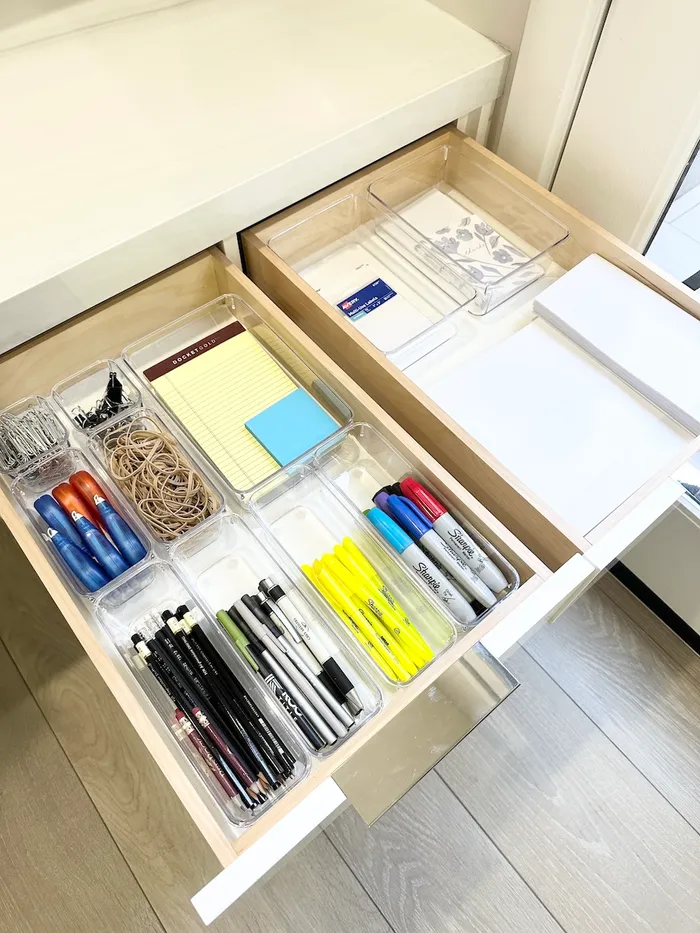
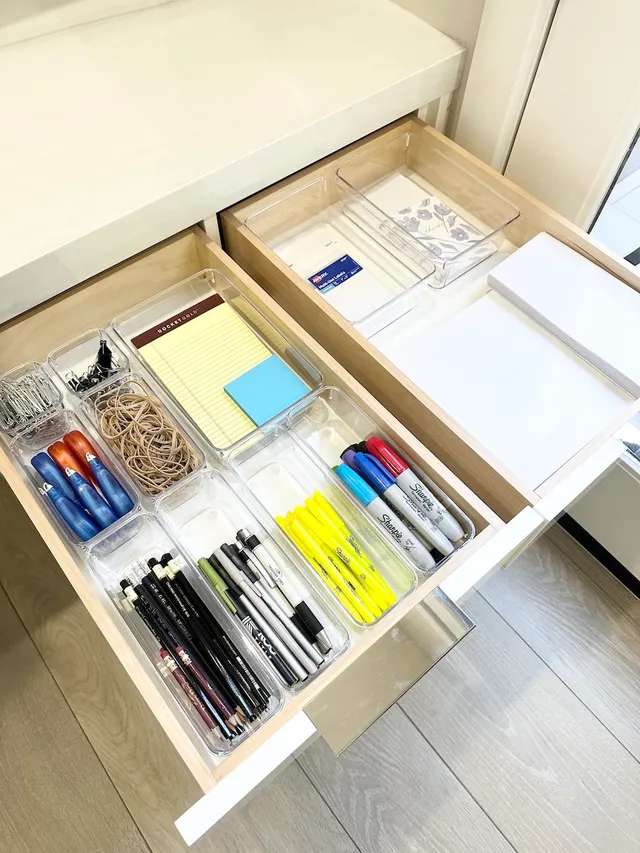
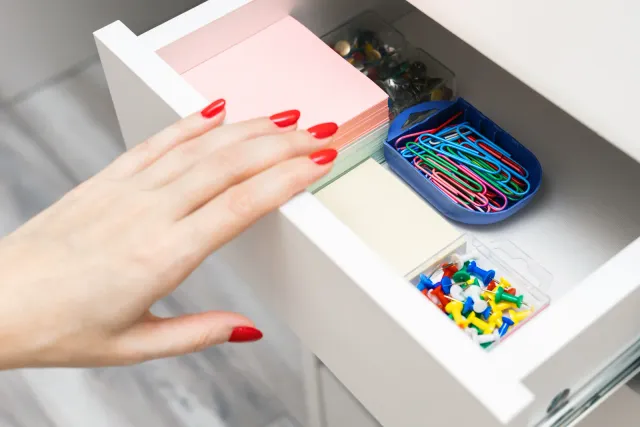
| Reception and front desk | Drawer dividers, visitor supplies, a clear surface and a hidden home for packages and mail |
| File storage | Active, reference and archive zones; labeled drawers and boxes; a spot for shredding to collect |
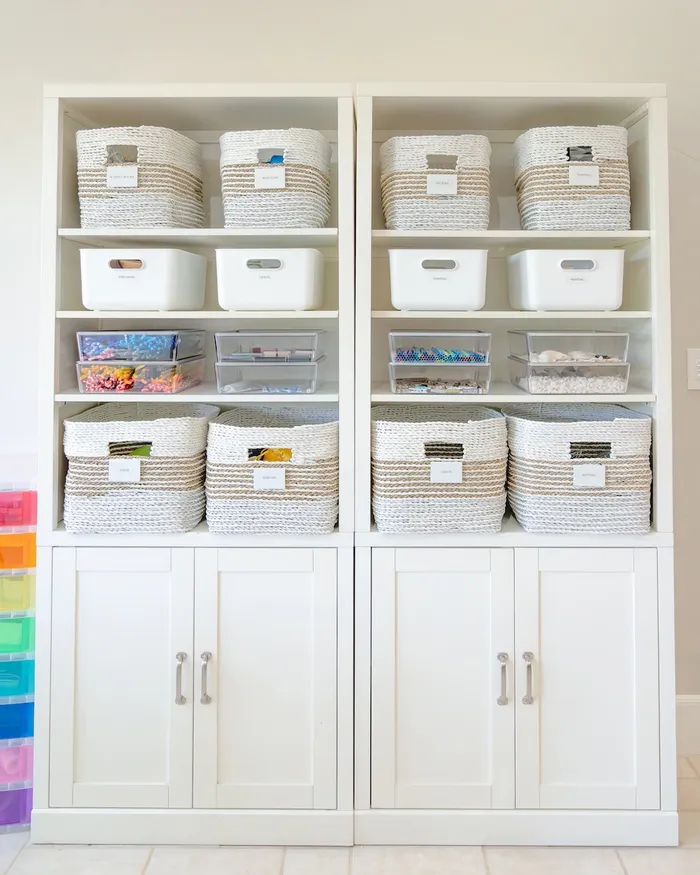
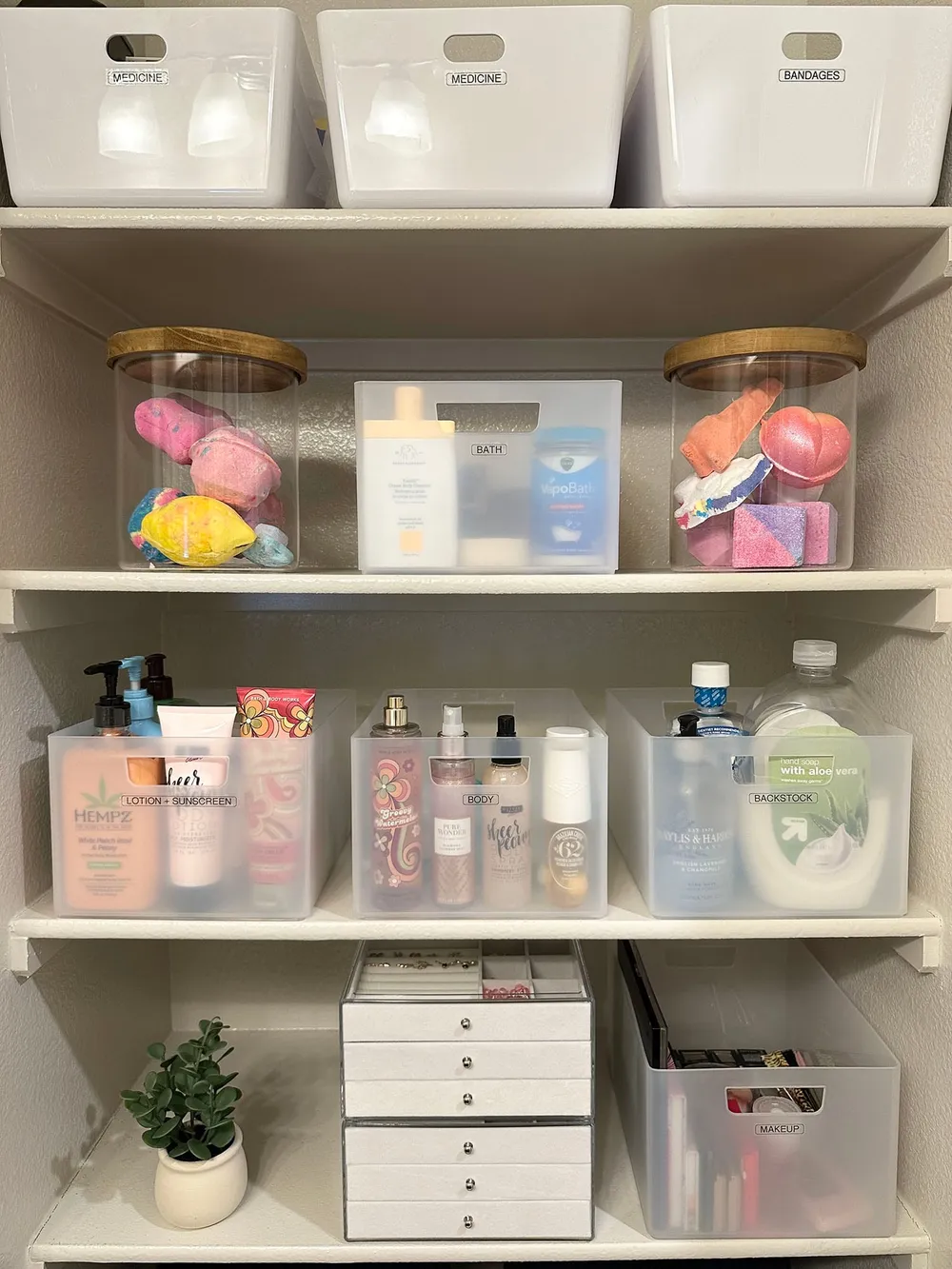
| Supply closet | Zones by use, labeled bins and par levels on shelf labels |
| Workstations | Desk drawers and shared cabinets sorted with each person's input |
| Conference and training rooms | Cords, presentation gear and meeting supplies in labeled bins |
| Breakroom | Shared kitchen cabinets, coffee and snack storage |
Scheduling around business hours is part of the plan
Office projects work best in phases so your team never loses access to everything at once. We usually start with a room that isn't needed that day, finish it completely, then move on. That way people see progress by lunch and the office is never torn apart.
At the consultation we ask about your peak hours, client visits, payroll days and anything else that can't be interrupted. We build the visit around those. For a sense of how a session unfolds hour by hour, read what to expect on organizing day.

Paper and files need decisions from you, not from us
We can group paperwork, label folders and build a filing layout, but your business decides what must be kept, for how long and where. If you have retention policies or advice from your accountant or attorney, we follow them. If you don't, we set aside anything uncertain in a clearly labeled box for you to review.
Sensitive documents stay in the office. We do not remove, scan or shred files ourselves; a shredding service or your own staff handles that. Our job is to make the system visible and easy to maintain.
Desert offices get extra attention on dust, deliveries and storage rooms
Many valley offices sit in flex or industrial-style buildings with a back storage room or roll-up door, and those rooms get hot in summer. Toner, adhesives, printed marketing pieces and electronics last longer in an interior closet. We help you decide what belongs where so heat-sensitive items stop living by the loading door.
Open shelving collects fine dust quickly here, so we lean on lidded containers for anything client-facing. Smaller teams can also compare notes with our guide on how to organize a small office, which covers the do-it-yourself version.