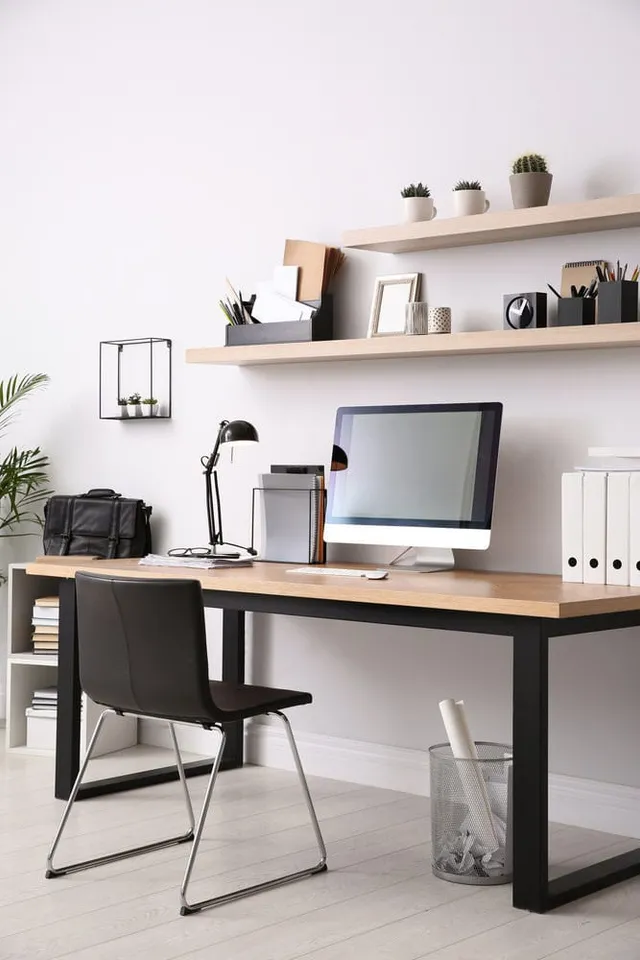
An organized home office separates active work from everything else
The desk surface is for what you are working on today. Everything else belongs in a defined place: reference files in a drawer, supplies in a cabinet, archives somewhere quieter, and personal paperwork away from work. When the boundaries are clear, the desk stays clear.
We set up three layers. Daily tools within arm's reach, weekly materials a step away, and rarely used records stored and labeled. That structure works whether you have a dedicated room, a loft nook or a corner of the casita.
What we organize in a home office
A home office session usually covers:
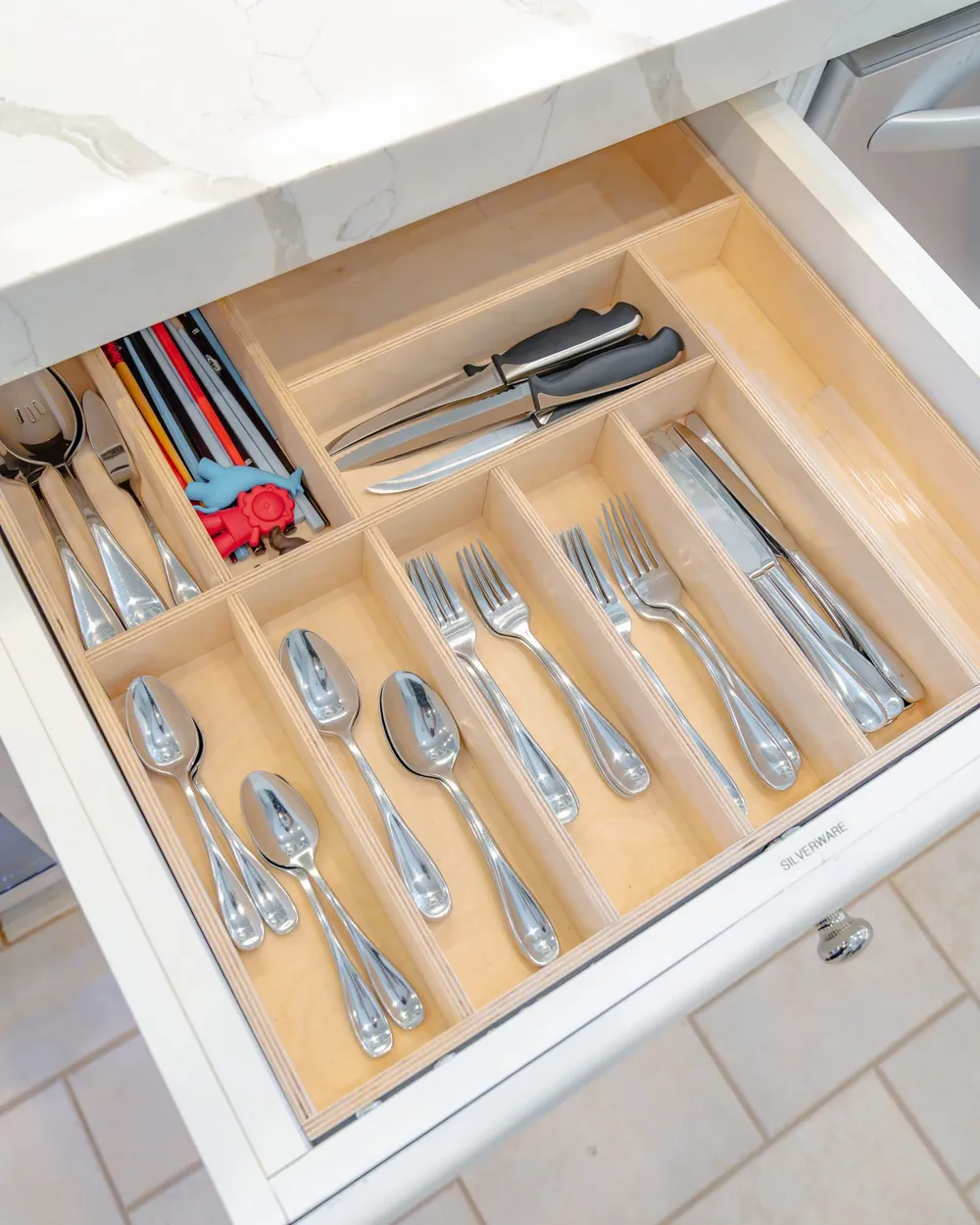
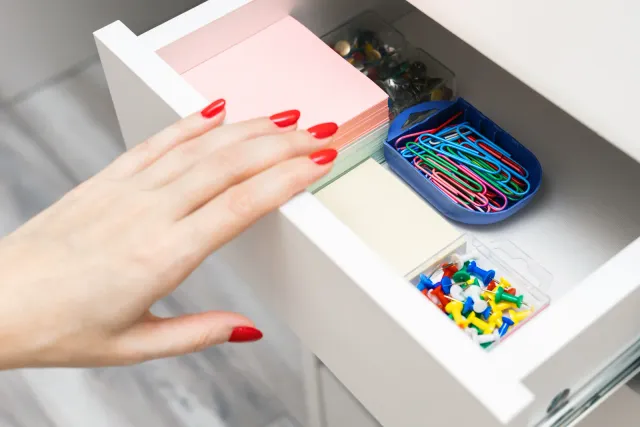
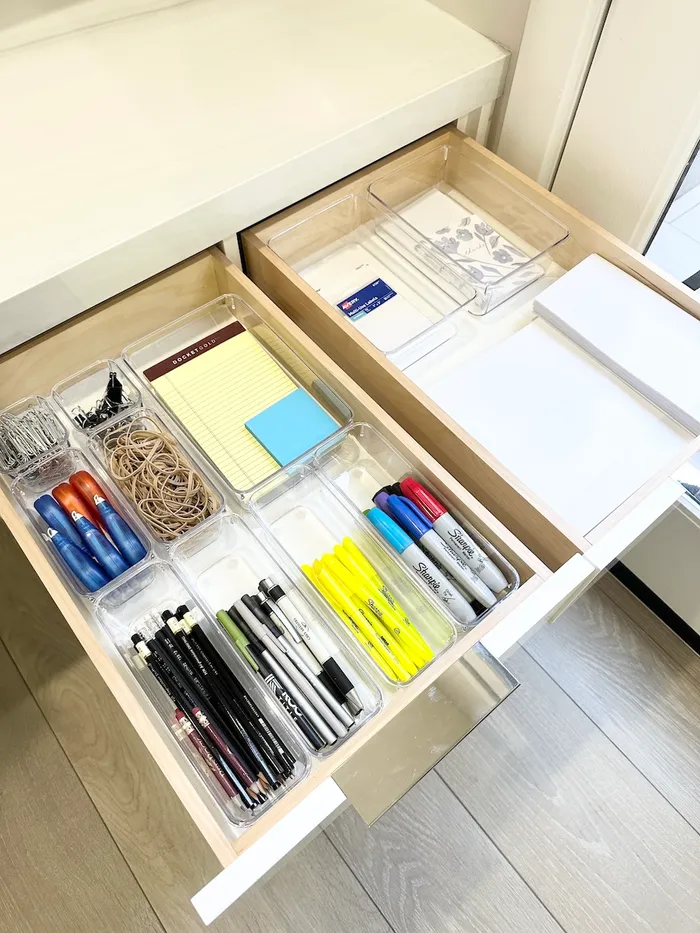
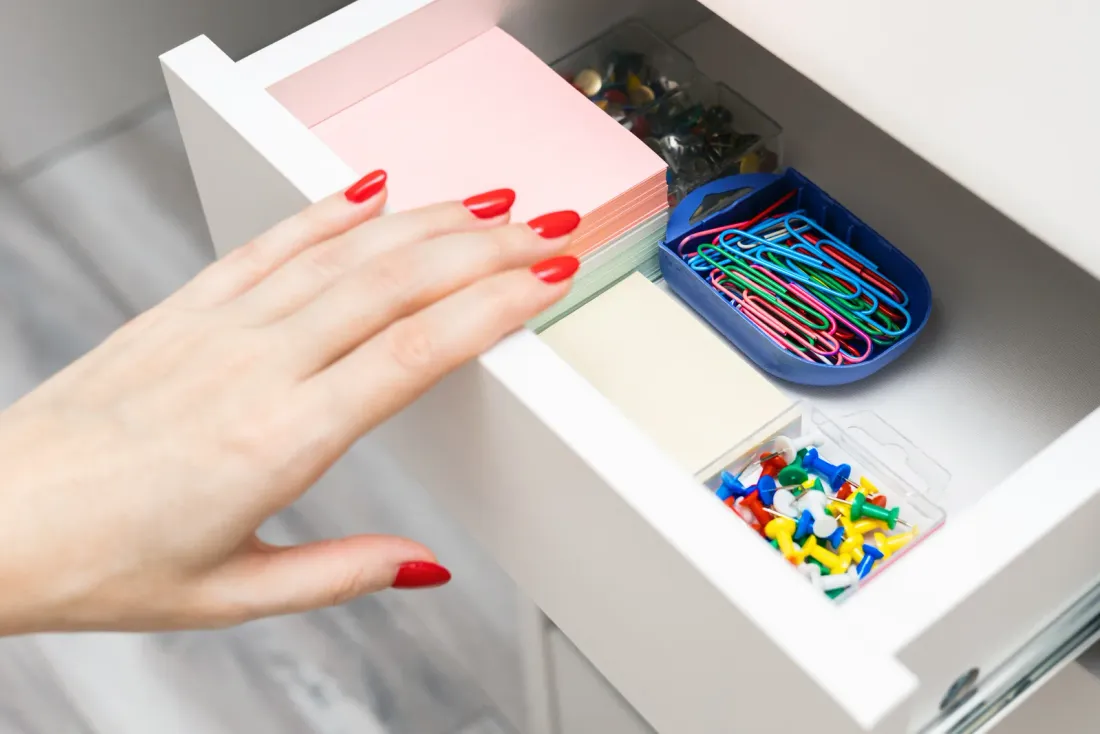
- Desk surface and drawers, with dividers sized to what you use
- Paper backlog sorted into action, reference, archive, shred and recycle
- A file system you can maintain; see paperwork and home file organization
- Cords, chargers and tech accessories labeled and contained; see organizing cords and chargers
- Office supplies stocked in one place with simple restock levels
- Bookshelves and display shelves edited and styled
- Shared storage for a second person or for kids' school supplies
Paper is usually the heart of the project
Most home offices are not cluttered with furniture. They are buried in paper: mail, receipts, school forms, medical statements, tax records and manuals. We sort it with you into simple categories and set up a system that matches how you handle bills and records, whether that is mostly digital or still paper-based.
You decide what to keep and for how long. We do not give tax or legal advice about retention, but we help you separate what you need to keep from what can be shredded and make sure important documents have a protected, labeled home. Our guide on organizing important documents offers a starting point.
Las Vegas offices: casitas, lofts and heat
Plenty of homes here turn a casita, a bonus loft or a downstairs bedroom into an office. Casita offices are quiet but often lack built-in storage, so we plan furniture and containers to suit. Lofts in two-story homes are open to the house, so we keep work materials behind doors to separate work from family life.
Heat and sun matter for electronics and paper. We keep printers, hard drives and archived photos out of rooms that bake in afternoon sun, and we never store records in the garage, where summer heat damages paper. Fine desert dust is another reason to use lidded file boxes for archives.
Home-based businesses and busy professionals
If you run a business from home, the office may also hold inventory, shipping supplies or samples. We create separate zones for business stock and personal life so neither swallows the other. See home-based business organization for more.
Busy executives and physicians often want the office done quickly and quietly. We can work while you are at the office and leave decisions about papers in a clearly marked tray for you to review.
Home office organizing cost
A typical home office fits in a four-hour session starting around $600. Offices with a large paper backlog, a home business inventory or a shared office for two people may need a full day starting around $1,200 with an eight-hour minimum. Products such as file boxes, drawer inserts and cord organizers are added only with your approval.