A family system only works if the youngest person can use it
Most family homes do not lack storage; they lack storage the kids can use. If a three-year-old cannot see where the blocks go, the blocks end up on the floor. If a ten-year-old's hoodies live on a shelf above their reach, they live on the bed instead.
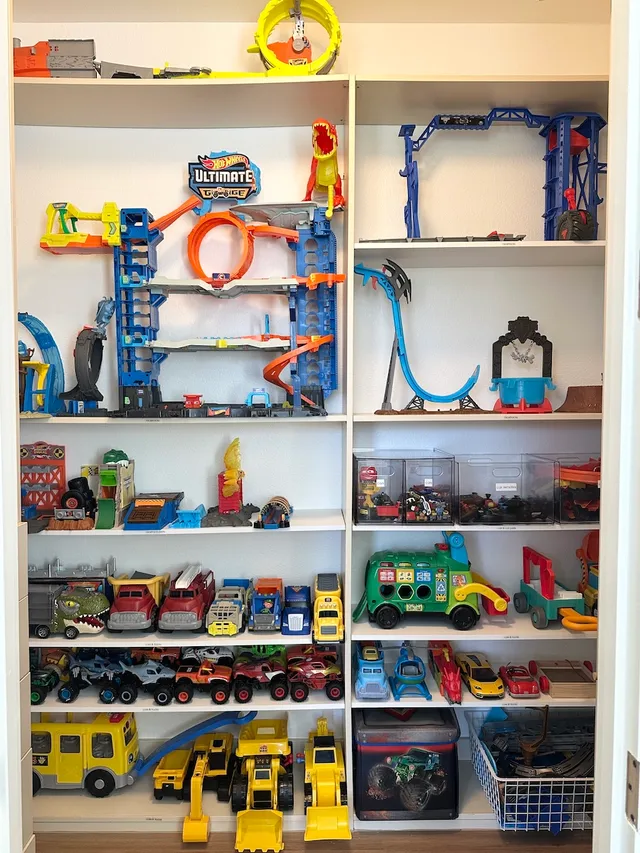
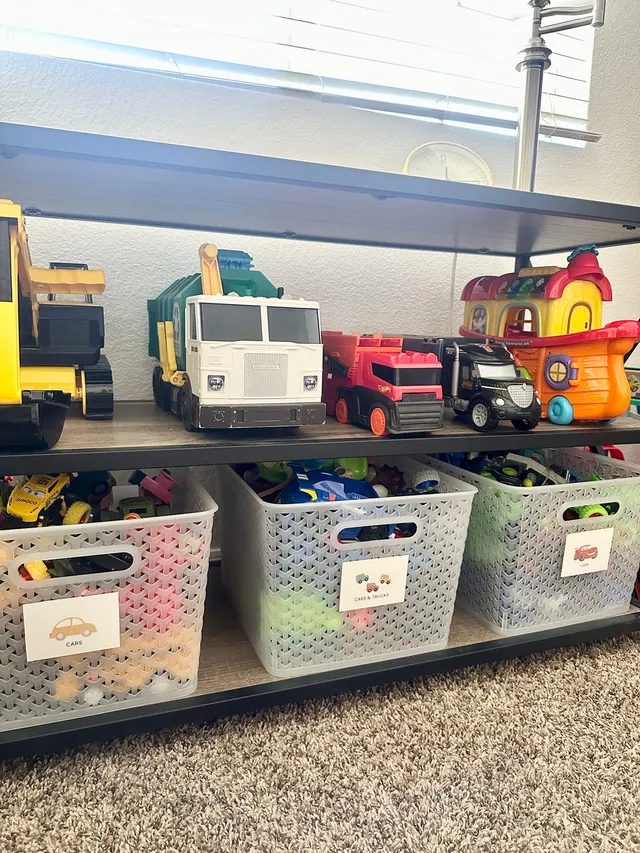
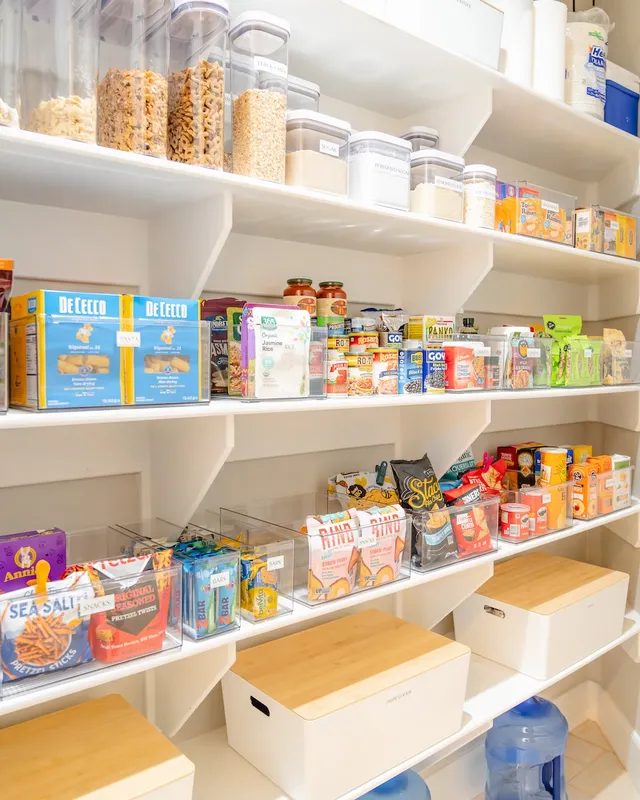
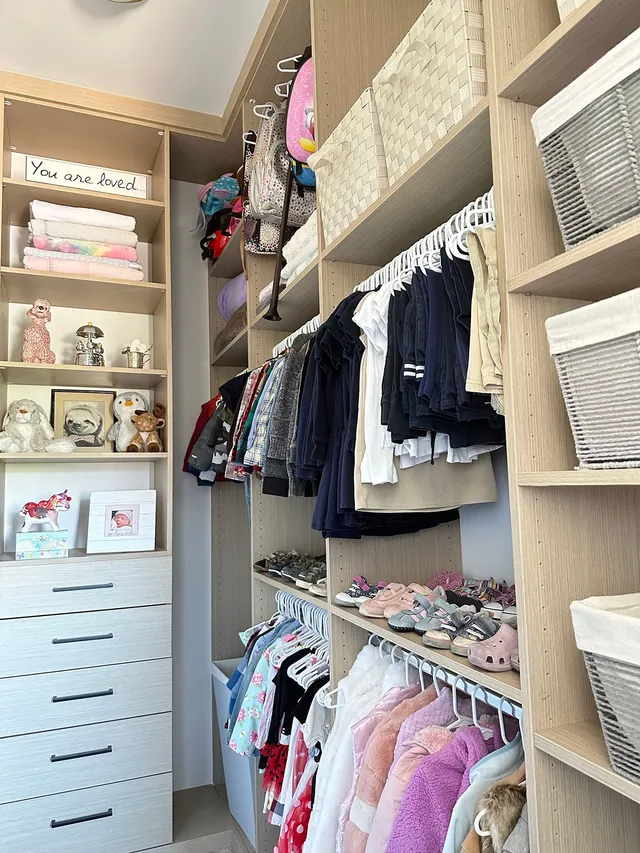
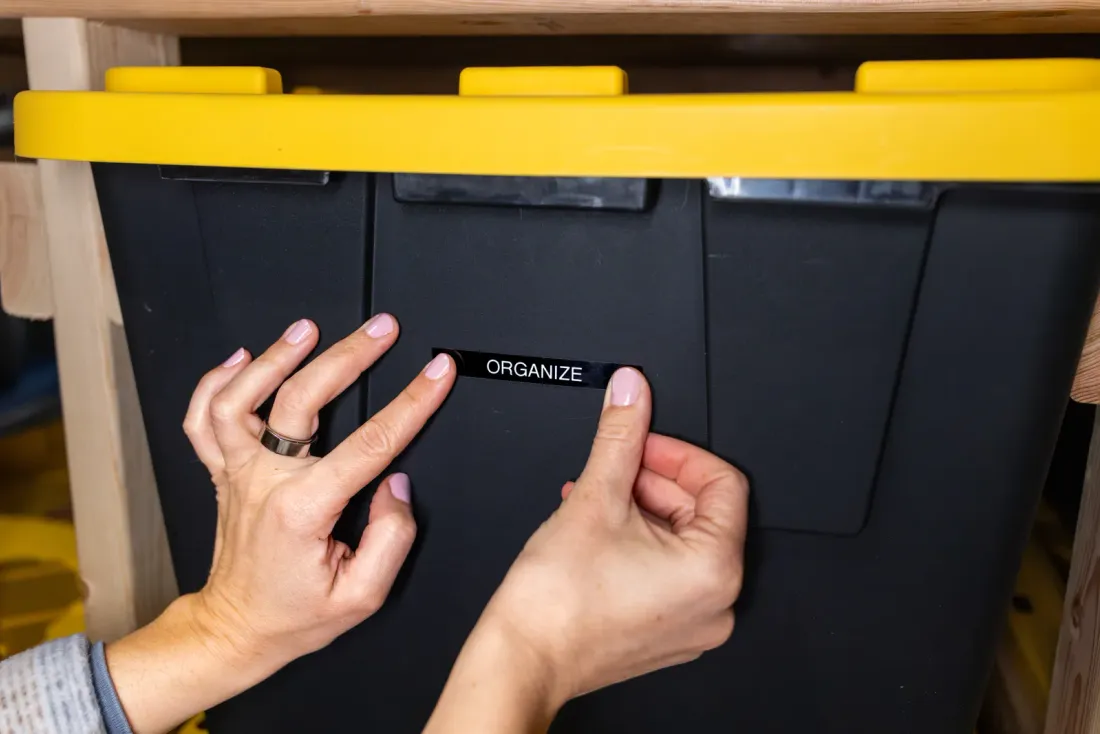
We design from the kids' height up. Everyday toys, clothes and snacks go low and in open bins. Picture labels help pre-readers. Grown-up items, backstock and anything breakable go higher.
Parents still need their own systems, too. A family home works best when the adults have a defined space for their own things, such as a corner of the pantry for coffee and work lunches, so kid storage does not slowly spread into every cabinet.
The rooms that carry family life
Every family is different, but these spaces come up in almost every project.
| Space | What we usually set up |
|---|---|
| Pantry | Kid-height snack zone, breakfast bin, lunch-packing station, backstock above |
| Kitchen | Kids' plates and cups in a low drawer, school water bottles in one place |
| Playroom | Toys grouped by type in labeled bins, a rotation shelf, art supplies in reach |
| Kids' closets | Current size only, next size in a labeled bin, school clothes front and center |
| Entry or drop zone | A hook and bin per child for backpacks, shoes and papers |
| Garage | Bikes, scooters, sports gear and pool toys in zones, scheduled for cooler months |
Long, hot summers mean more time indoors
Las Vegas summers keep kids inside for much of the day, and that puts more pressure on playrooms, family rooms and bedrooms. Toy rotation helps: keep a manageable set out and swap in stored bins every few weeks, so the playroom stays playable.
Heat also affects what can go in the garage. Crayons, markers, art supplies and anything with batteries or adhesives do better stored inside. Our playroom organization page covers the indoor setup in detail.
Paper, artwork and the stream of school things
Families in the valley manage a steady flow of school papers, permission slips, sports schedules and artwork. A simple command center near the kitchen or entry with one inbox per child, a calendar and a place for things that need signatures keeps it from piling onto counters.
Our guide to creating a family command center walks through the setup, and organizing kids' artwork helps with the masterpieces.
Keeping up as the kids grow
Family homes change fast. Outgrown clothes, new hobbies and new siblings mean a system that worked last year may need adjusting this year. Our maintenance visits reset spaces, move outgrown items out and adjust systems to match where your kids are now.
Bags of outgrown clothes and toys, up to a carload, can leave in our car when the session ends. Options around the valley for kids' clothes and toys include Goodwill of Southern Nevada, Opportunity Village and The Shade Tree. Outgrown items you want to save for a younger child go into labeled bins by size.
Pricing for family home projects
A single room such as a pantry or playroom often fits a four-hour session, starting around $600. Whole-home family projects usually take one or more full days, about $1,200 for an eight-hour day.
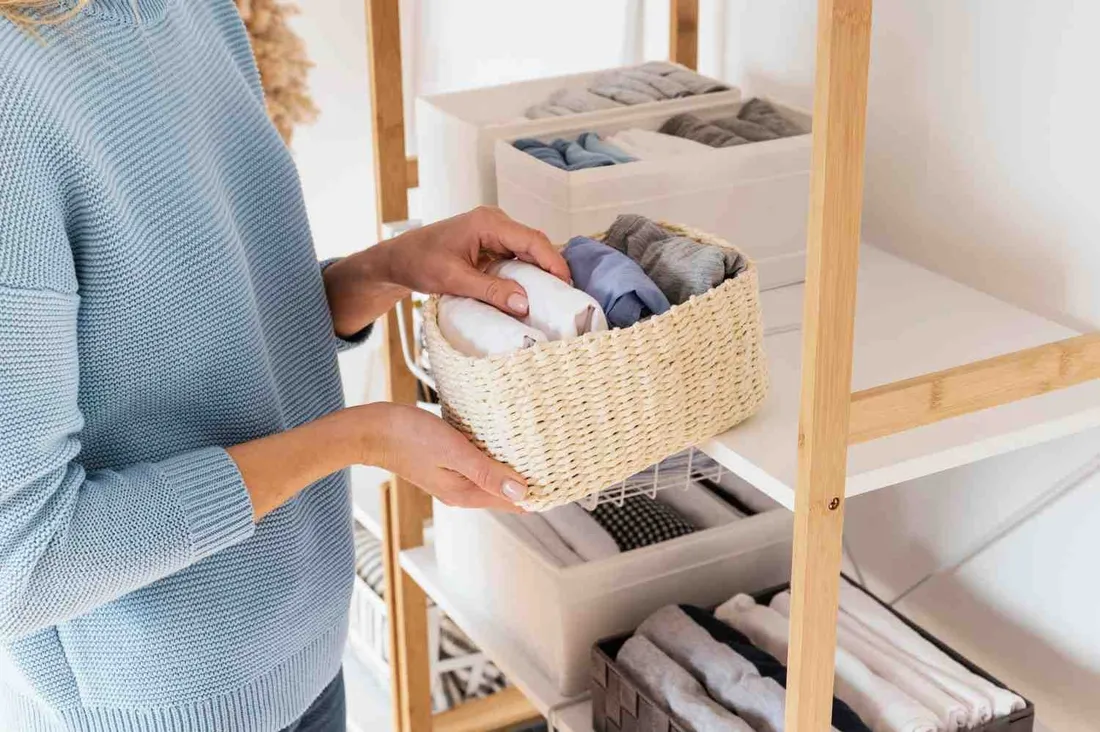
Bins, dividers and labels are an added cost when needed. We buy what fits your shelves and return anything unused.