A playroom stays organized when kids can see and reach every category
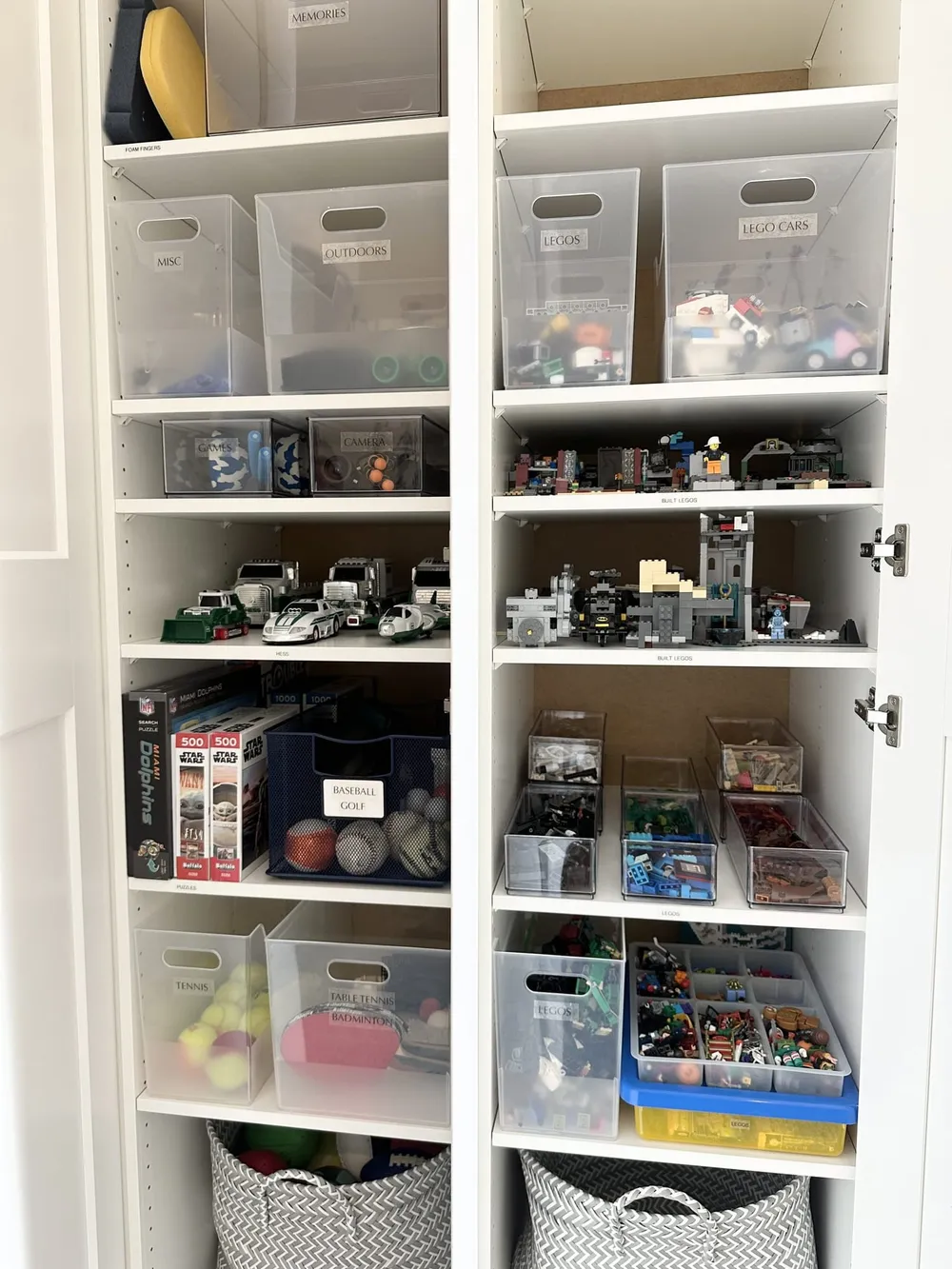
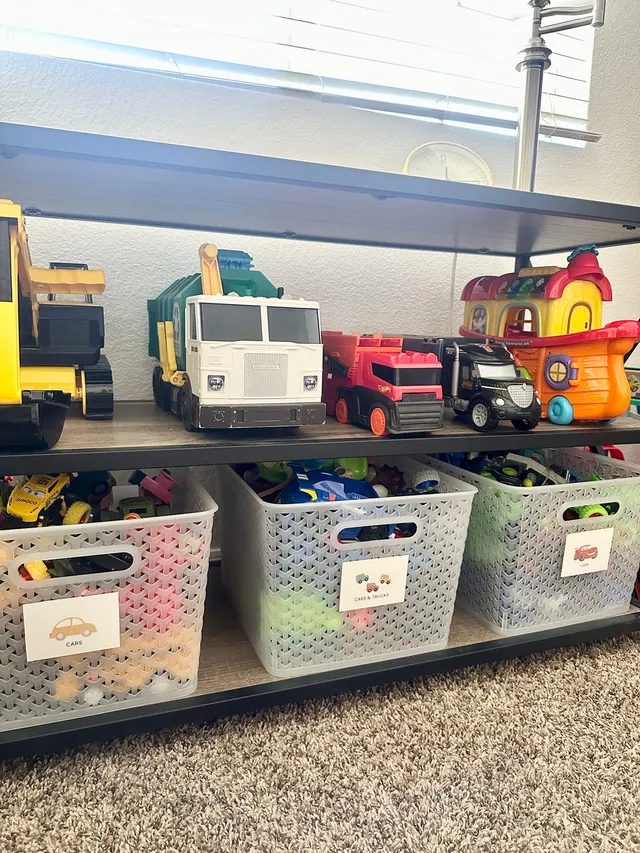
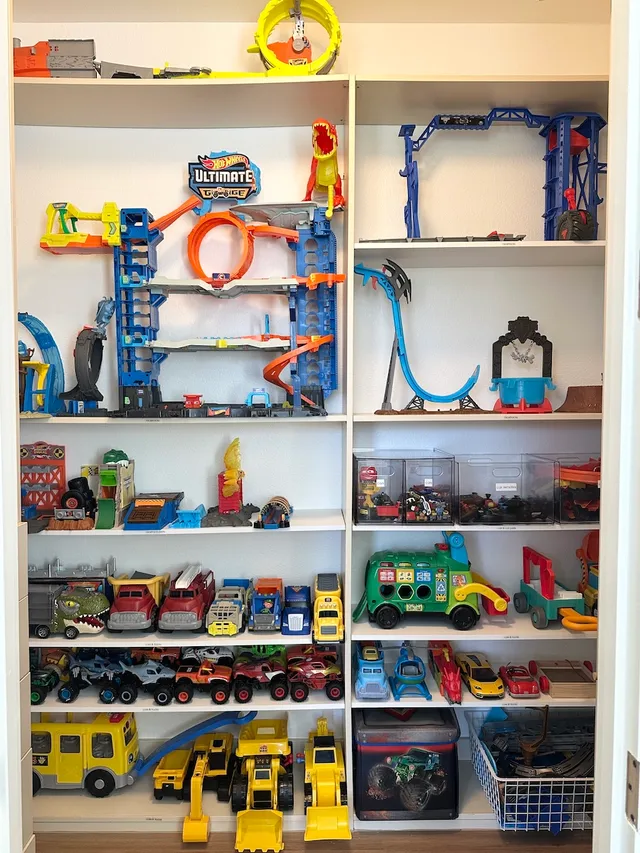
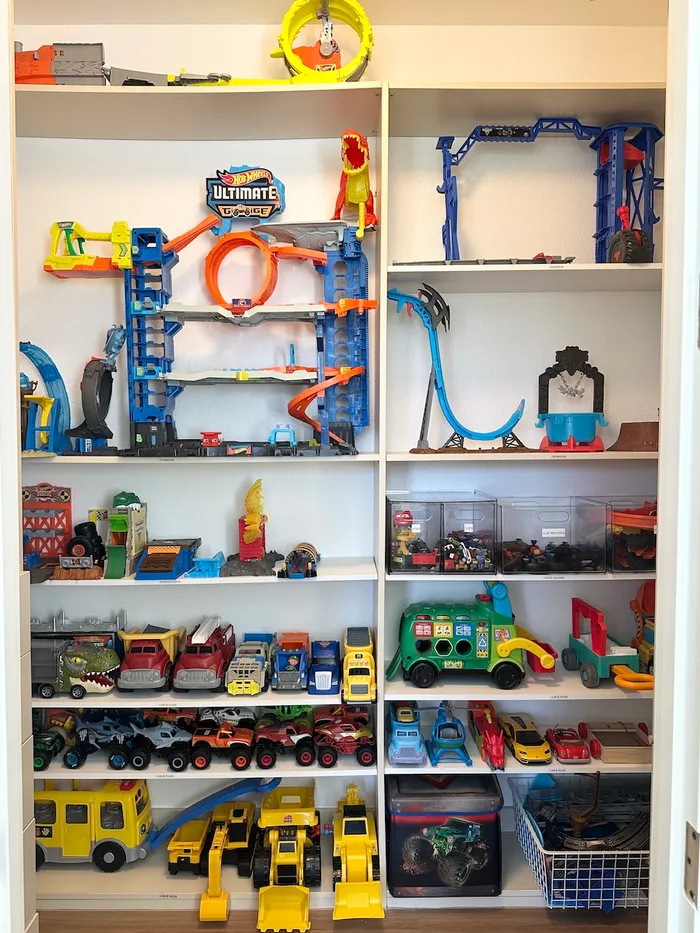
Children put things away when the system is obvious to them. That means one category per bin, bins they can lift, shelves at their height, and labels with a picture as well as a word for children who are not yet reading. Big lidded toy boxes, where everything is mixed together, are the opposite of that.
We design the room around who uses it. A toddler playroom looks very different from a room shared by a seven-year-old and a ten-year-old, and both differ from a teen hangout. We ask about ages, favorite activities and what you most want them to be able to do on their own.
How a playroom session runs
We work through the room in a clear order:
- Gather every toy into one place and group by type: building, vehicles, dolls, art, games, puzzles, dress-up, books
- Edit with you, and with the kids if you like, setting aside broken pieces, outgrown toys and duplicates
- Choose zones: a building table, a reading nook, an art station, a dress-up corner
- Source bins, shelving inserts and art storage that fit the room and the ages
- Label every bin with a picture and a word
- Set up a rotation bin for toys that are stored and swapped in later
Toy rotation keeps the room calm without throwing things away
Many families do not want to get rid of toys; they want fewer out at once. Rotation solves that. We keep a manageable set on the shelves and store the rest in labeled bins in a closet. Every few weeks you swap a bin, and old toys feel new again.
For families with a lot of incoming toys from birthdays and holidays, a simple one-in, one-out habit keeps the collection in check. Our guide to decluttering kids' toys has practical tips.
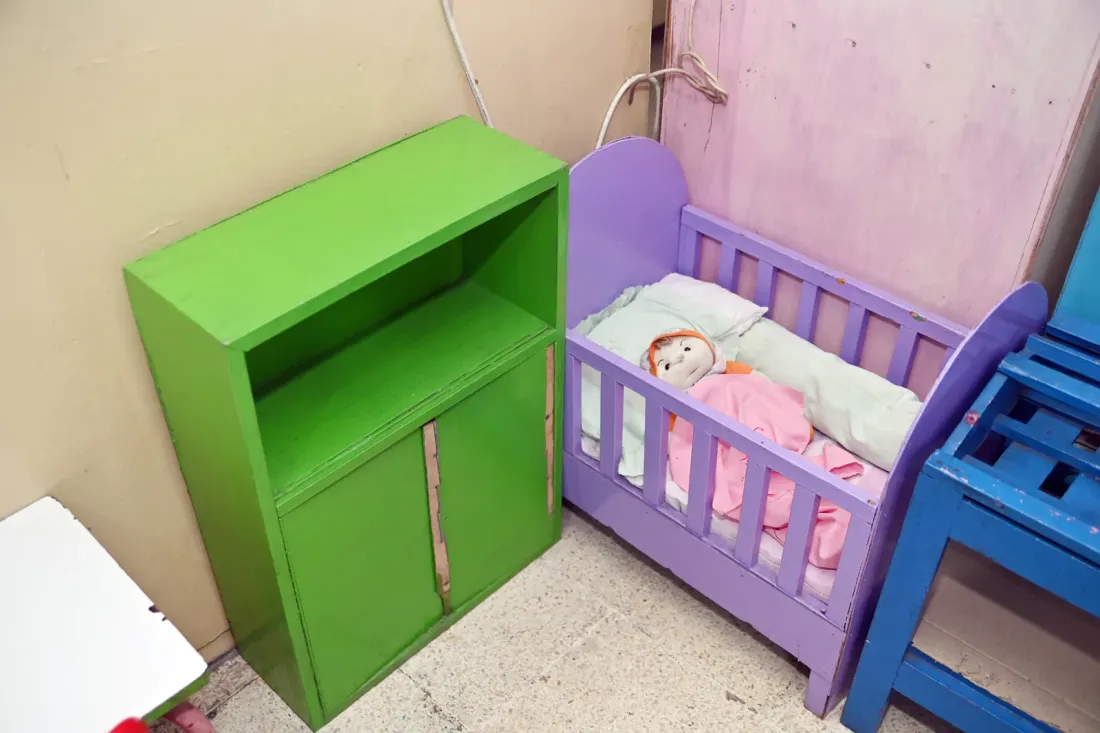
Las Vegas playrooms get heavy use in summer
When afternoons hit 110°F, outdoor play stops and the playroom becomes the hub of the house for months. That is when a fragile system breaks down. We build for that heavy use: sturdy bins, fewer categories, and storage for the outdoor and pool toys that come inside during the hottest weeks.
Many two-story homes in Henderson, Summerlin and the southwest valley have an upstairs loft or bonus room that serves as the playroom. Because those rooms are often open to the stairs, we keep visual clutter behind cabinet doors or in matching baskets so the space looks calm from below. Art supplies, slime and paint stay off the floor and away from sunny windows.
Playroom organizing cost
A typical playroom takes a four-hour session starting around $600. A playroom combined with kids' closets and bedrooms, or a very large toy collection, often needs a full day starting around $1,200 with an eight-hour minimum. Bins, labels and shelving inserts are added only for what you approve.
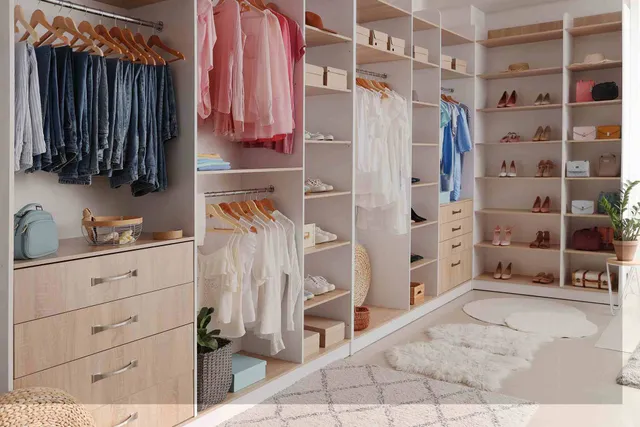
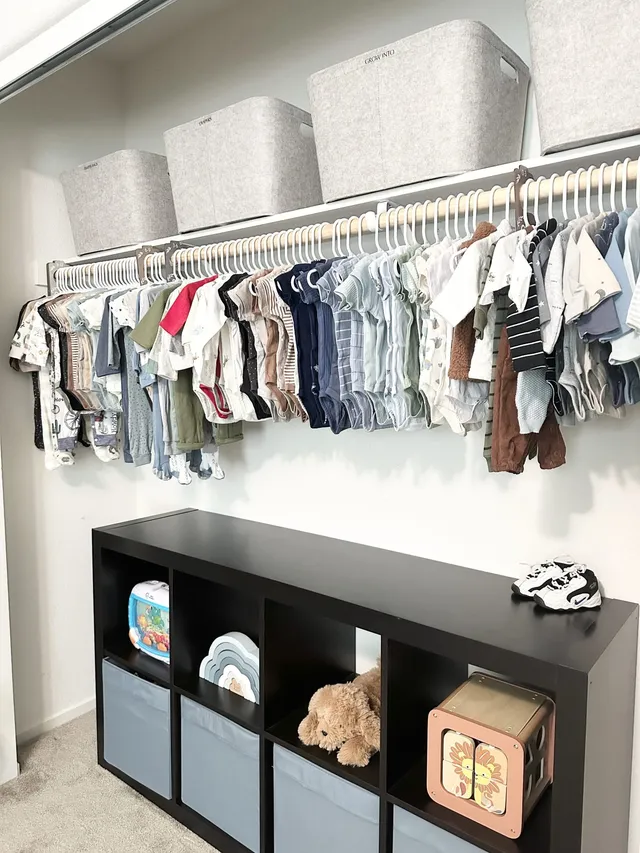
If kids' rooms need help too, see kids' closet organization and our page on home organization for families.
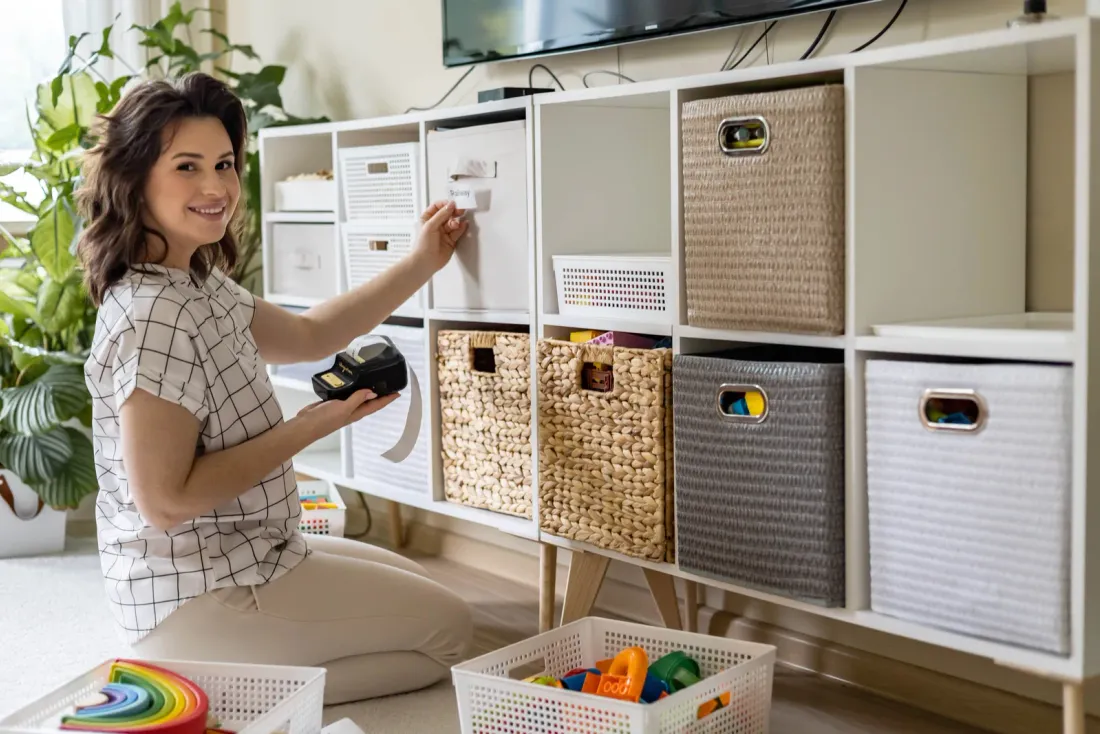
Involving your children
Some parents want the work done while children are at school, then reveal the room. Others like kids to be part of the editing, so they understand the new system and have a say in what goes. Both work. If kids are involved, we keep their part short and fun, usually the final placement and the labels.