Do the first round without the kids
The easy cuts do not need a child's input: toys with missing pieces, broken parts, dried-out markers, fast-food trinkets and items for a younger age. Bag those while children are at school or asleep, and take them out of the house right away.
This first pass usually removes a surprising amount. It also means your child only sees the real choices, which keeps the next step short and calm.
Give children a real role, scaled to their age
Kids are more likely to accept the result when they helped shape it. The trick is offering decisions they can handle.
| Age | What they can do |
|---|---|
| Toddlers | Pick a favorite from a small group of two or three similar toys |
| Ages 4 to 7 | Fill a bin with favorites, and choose a few toys to give to another child |
| Ages 8 to 12 | Sort a whole category, such as stuffed animals or building sets, and help decide where things are stored |
| Teens | Run their own decluttering, with you available to haul bags and answer questions |
Step by step
- Pull everything from one category
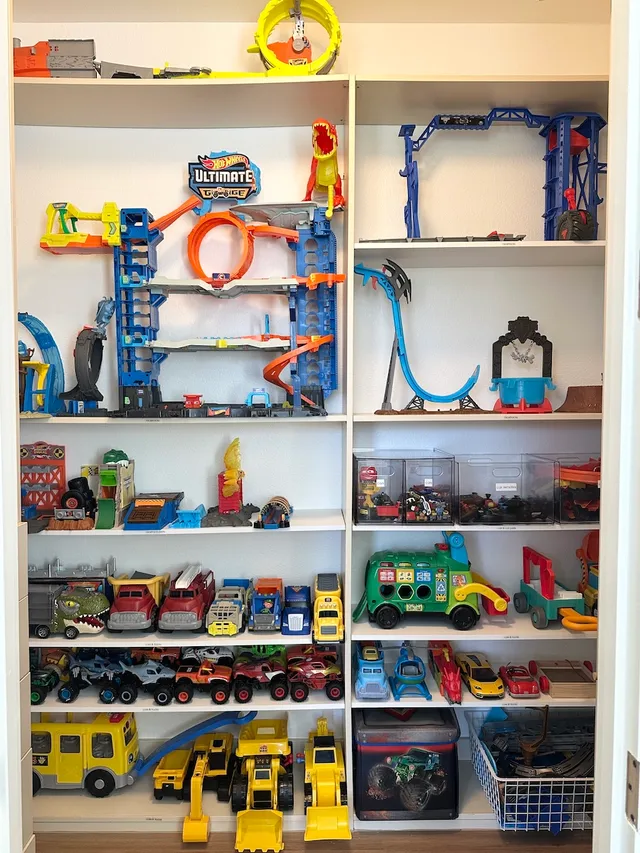
Gather all the stuffed animals or all the vehicles in one place so you can see how many there are.
- Remove the easy cuts
Set aside broken, incomplete and outgrown items for trash or donation.
- Let your child choose favorites
Ask them to pick the ones they love most, up to a number or a bin that fits the space.
- Split keepers into active and rotation
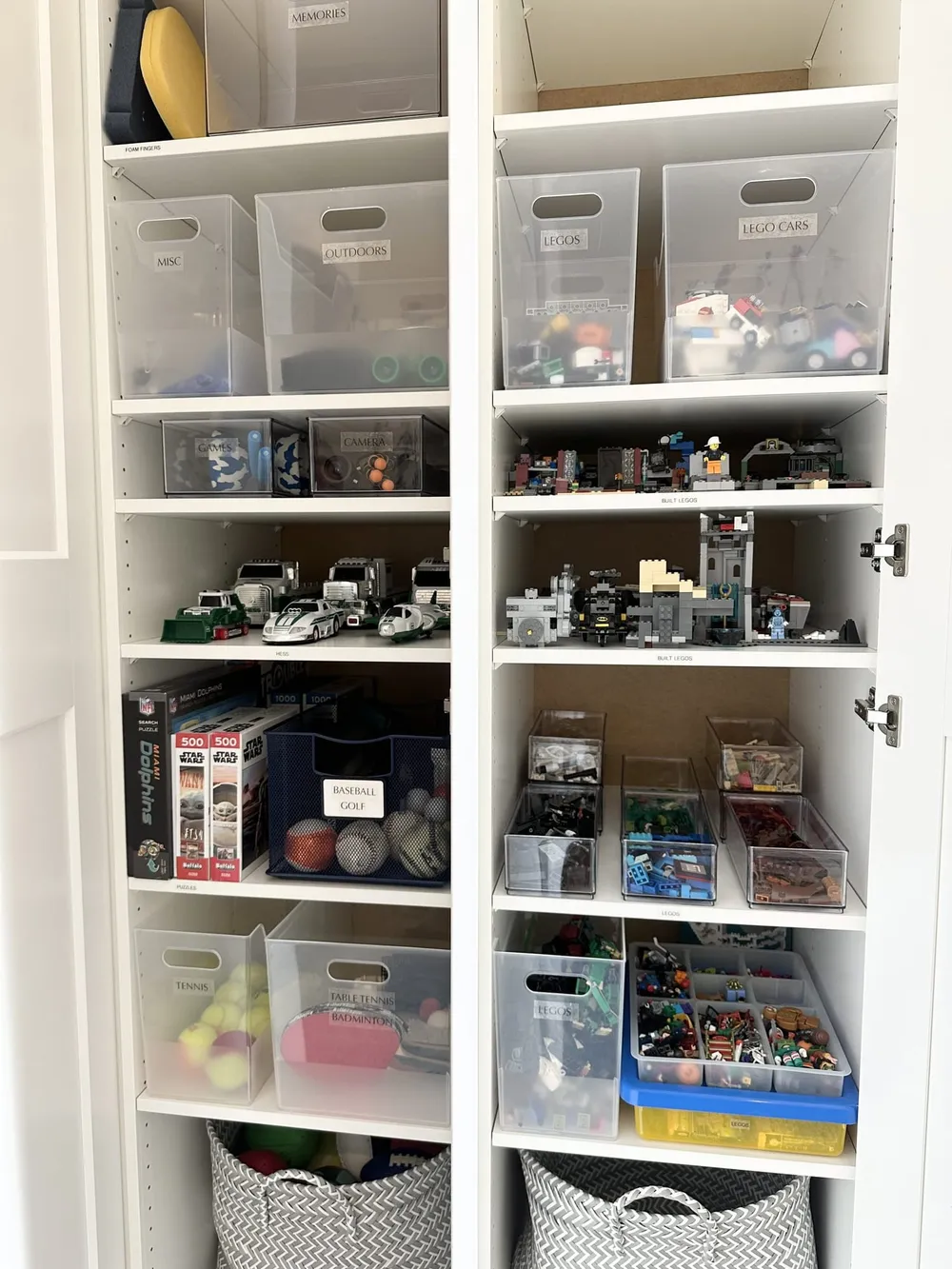
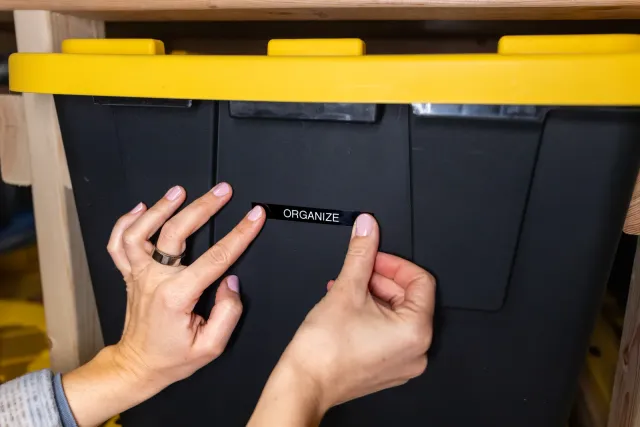
Leave the favorites out and store the rest in labeled bins for the next swap.
- Give every category a home
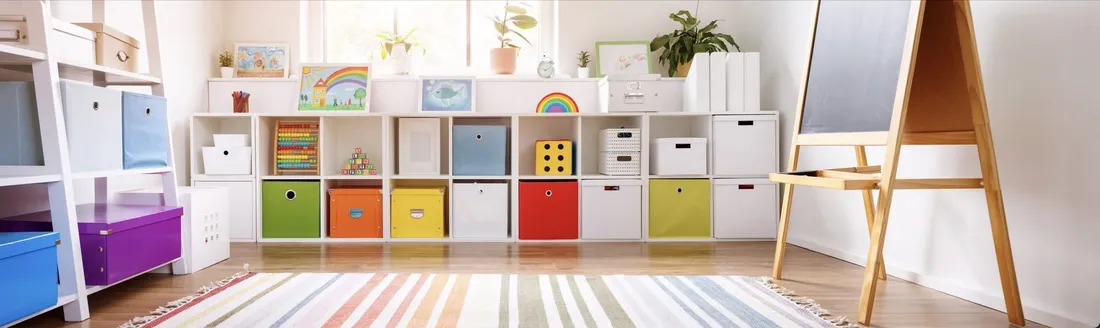
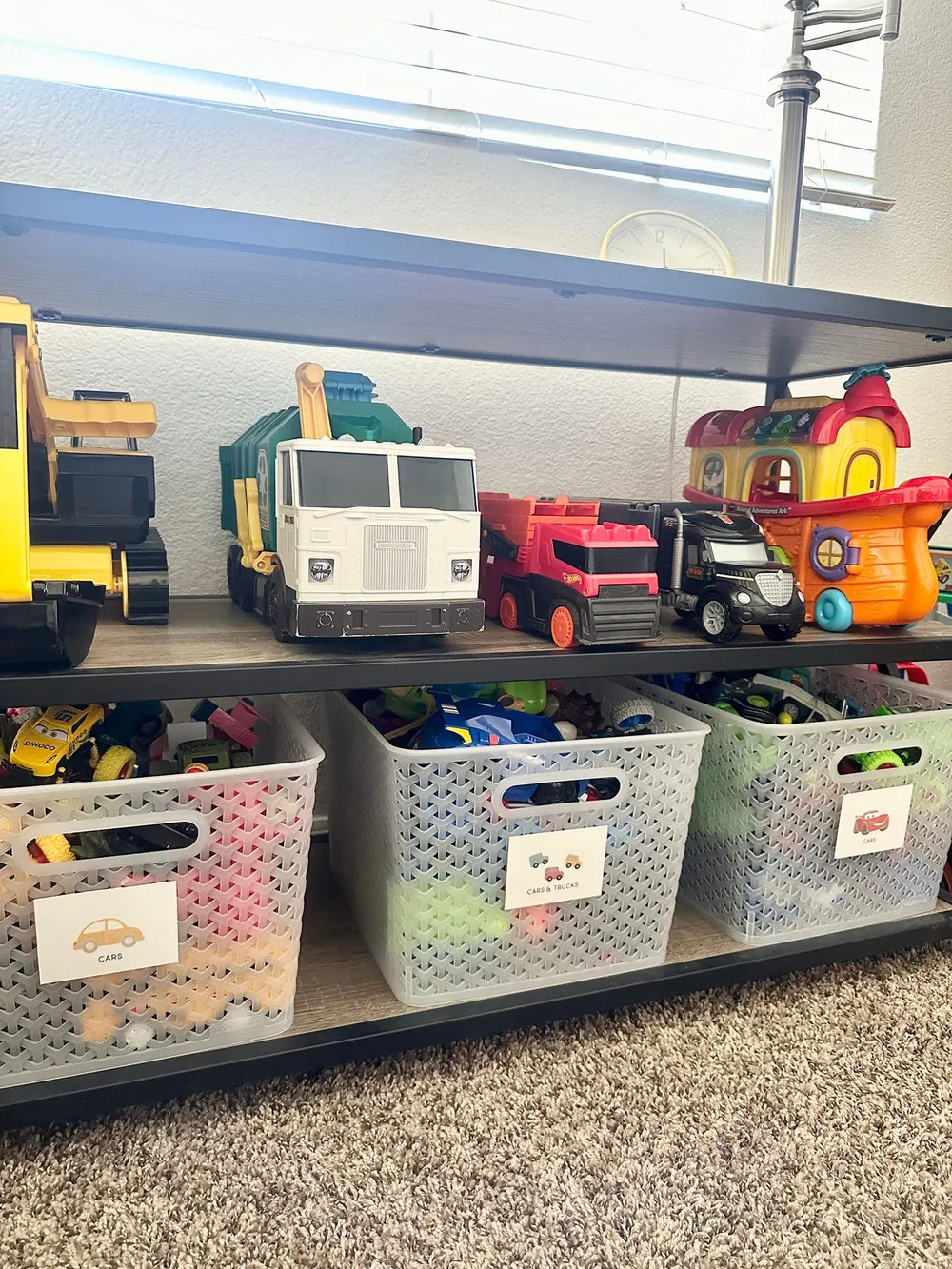
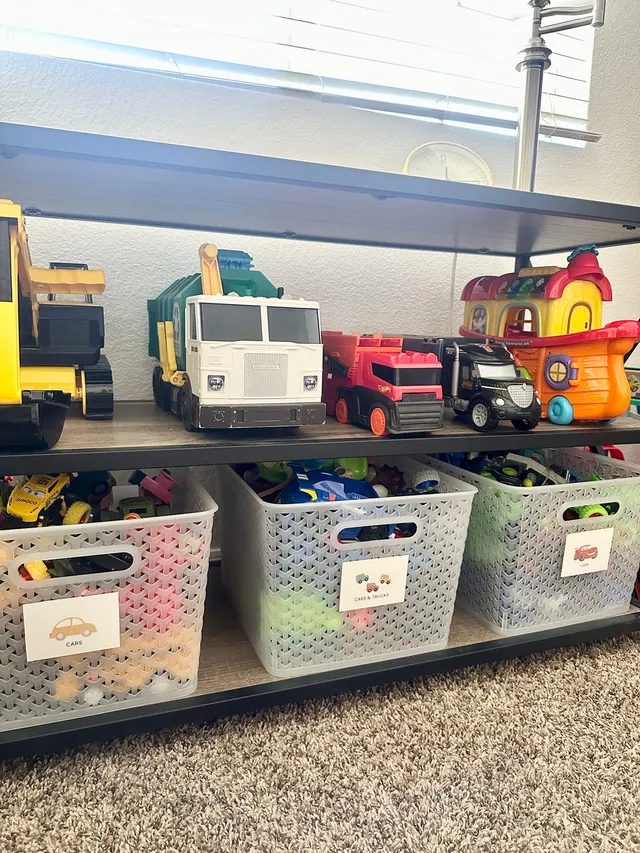
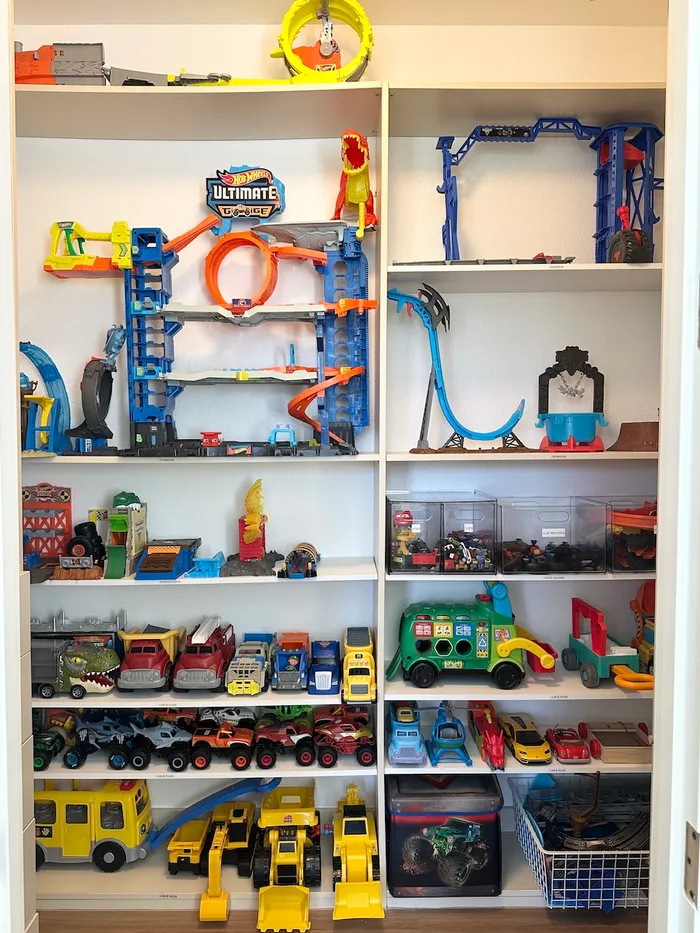
Use open bins with picture labels for younger kids so cleanup becomes something they can do alone.
Rotate toys instead of keeping them all out
A rotation keeps play fresh without buying more. Store roughly half of the kept toys in labeled bins in a closet, then swap a bin out every few weeks. Toys that come back after a break often feel new again.
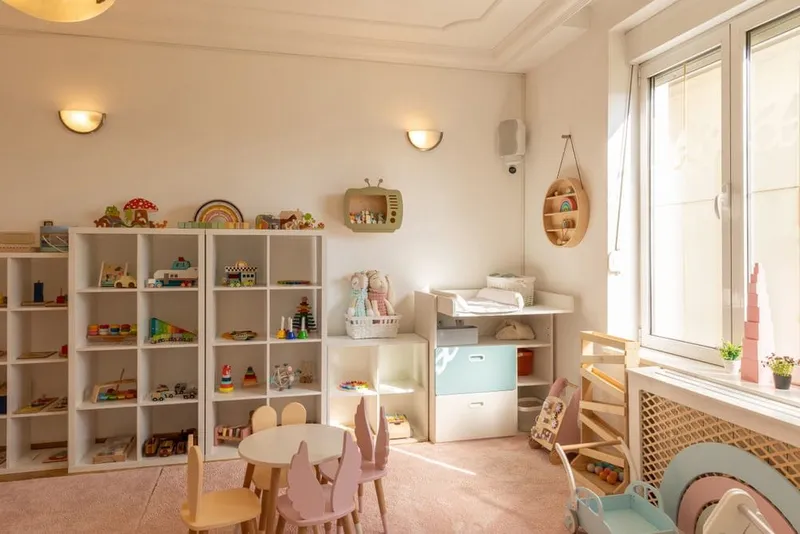
Keep rotation bins indoors. A Las Vegas garage in summer can soften plastic, warp puzzle boards, melt crayons and ruin batteries, so a hall closet or a high shelf in the playroom is a better spot. For setting up the space itself, see how to organize a playroom.
Plan ahead for birthdays and holidays
The weeks before a birthday or the winter holidays are the best time to clear out, because new toys are coming. A quick edit in November makes room for December. Our page on how to declutter before the holidays has a fuller plan.
Afterward, a simple one-in-one-out rule keeps the total steady. Each new toy means one older toy goes to donation, and older kids can choose which one.
Know where outgrown toys can go
Clean, complete toys can go to family, friends with younger kids, or an established charity. Check each organization's current list, since many cannot accept used car seats, cribs or stuffed animals. Board games and puzzles should have every piece, and electronic toys should work with fresh batteries.
A few truly special toys can be kept in a memory box for each child. That way, decluttering does not mean losing everything from early childhood.