Edit before you buy a single bin
Fewer toys is the single change that makes a playroom stay tidy. Children play longer with a smaller, visible selection, and cleanup shrinks to something they can actually finish.
Pull everything into the middle of the room and sort it into piles: loved and used weekly, outgrown, broken or missing pieces, and duplicates. Broken items and orphan puzzle pieces go first. Outgrown toys in good shape can be donated; our guide on decluttering kids' toys covers how to involve children in those choices without tears.
Group toys by the way your child plays
Categories built around play, not toy type, are easier for kids to follow. A child thinks "I want to build," not "I want the plastic items with studs."
Most playrooms settle into five to eight zones. Keep each zone together on one shelf or one wall so the room reads like a small set of stations.
- Building: blocks, magnetic tiles, interlocking bricks
- Pretend: kitchen, dress-up, dolls, figures
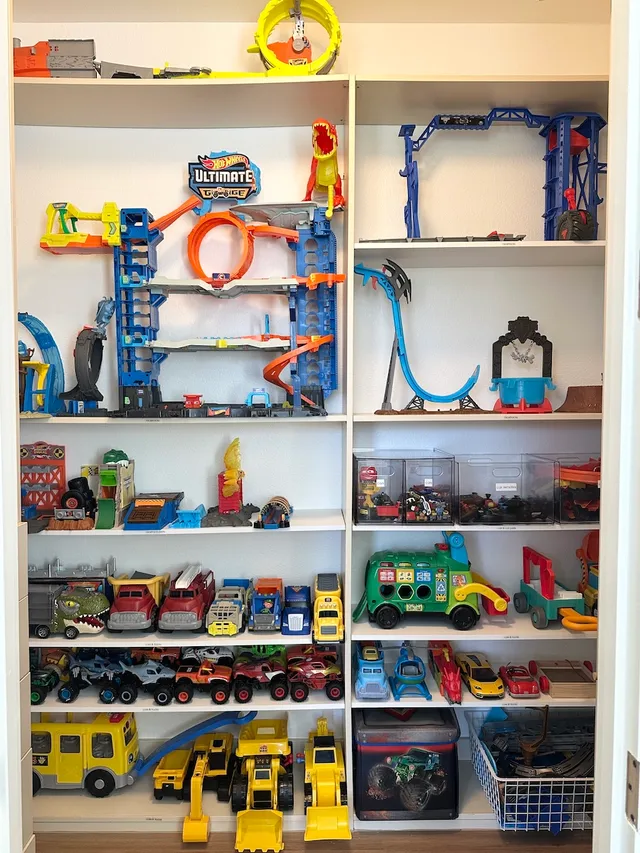
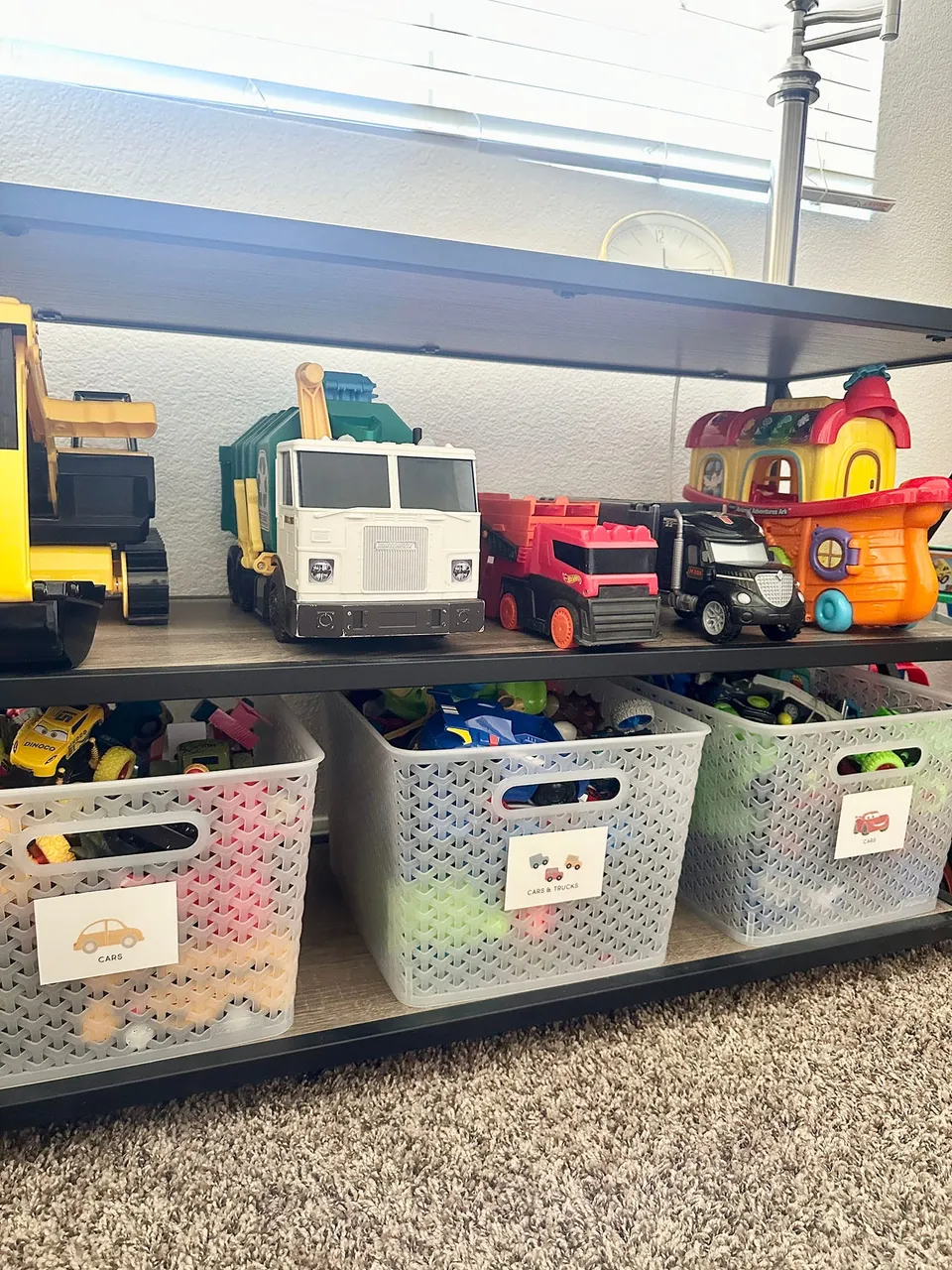
- Vehicles and tracks
- Art and craft (adult-height if supplies are messy)
- Puzzles and board games
- Books, faced out where possible
- Quiet corner: soft seating, a basket of comfort items
Step by step
- Clear the floor
Bring every toy into one pile so you see the true volume.
- Remove the easy no's
Broken, incomplete and outgrown items leave first, before any hard decisions.
- Sort into play zones
Group the remaining toys by building, pretend, vehicles, art, games and books.
- Split each zone in two
Keep the favorite half out and pack the rest into a rotation bin.
- Contain and label
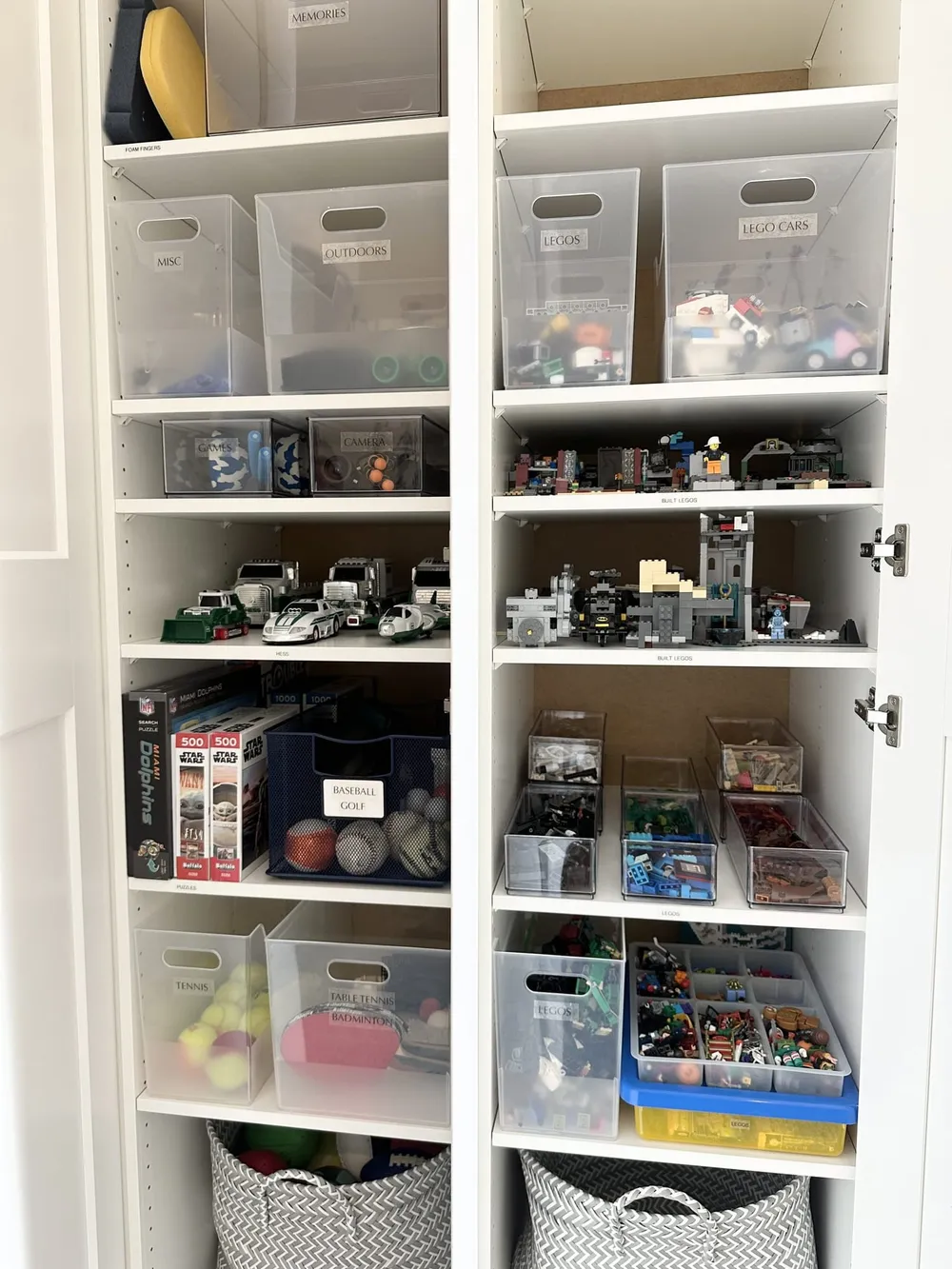
Assign one open bin per category and add a picture label to the bin and the shelf.
- Practice the reset
Do the first few cleanups together, then let your child take over with a timer.
Choose containers a small hand can open
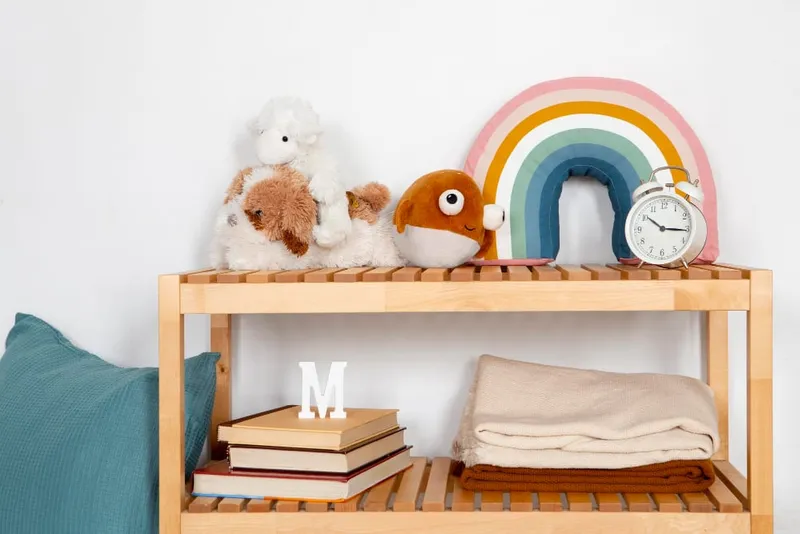
Open bins and low cube shelving beat lidded boxes for anything young children use daily. If a lid takes two hands or a parent, the toy will end up on the floor instead of inside it.
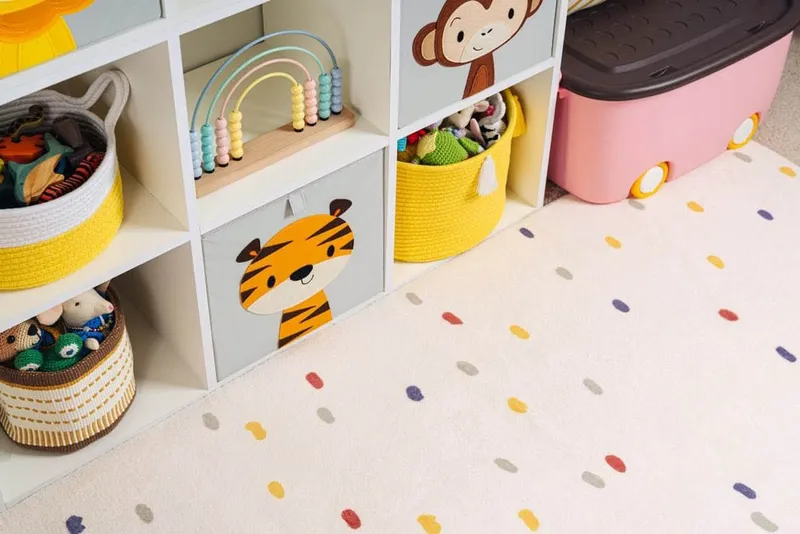
Match container size to the category. Tiny pieces need small, shallow bins so nothing gets buried, while stuffed animals can live in one large basket. Clear bins help children see contents; baskets look calmer in a playroom that doubles as a family room.
Label with pictures until they can read
Picture labels turn cleanup into a matching game. Print a photo of the actual contents, or a simple icon, and pair it with the word so early readers learn both.
Put labels on the front edge of the bin and, for cube shelving, on the shelf itself too. When the bin moves, the shelf still says what belongs there.
Las Vegas playrooms: dust, loft spaces and the garage
Desert dust settles fast on open shelves, so give stuffed animals and dress-up clothes a lidded or fabric-covered home and wipe hard toys during your monthly rotation. Many newer valley homes put the playroom in an upstairs loft open to the stairs, which means everything is on display; baskets and closed cubes keep the space calm from below.
Resist moving overflow toys into the garage for the summer. Garages here regularly get far hotter than the outdoor reading, and crayons, play dough, battery toys and vinyl figures warp or melt. Store rotation bins in a closet inside the conditioned house instead.