Desert dust gets in through the door, not the walls
Most garage dust in Southern Nevada blows in under and around the main garage door, especially on windy spring days. A worn bottom seal, gaps at the side stops and a door left open during yard work let in far more grit than any shelf design can stop.
Check the rubber seal at the bottom of the door for cracks and flattened spots, and look for daylight along the sides when the door is closed. Replacing weatherstripping is ordinary hardware-store work, or a handyman can do it in under an hour.
Choose containers by how they close
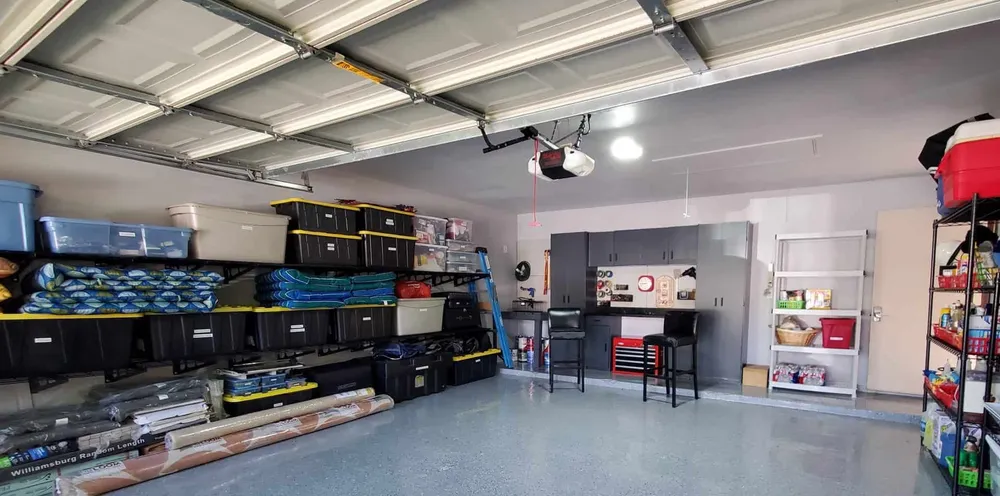
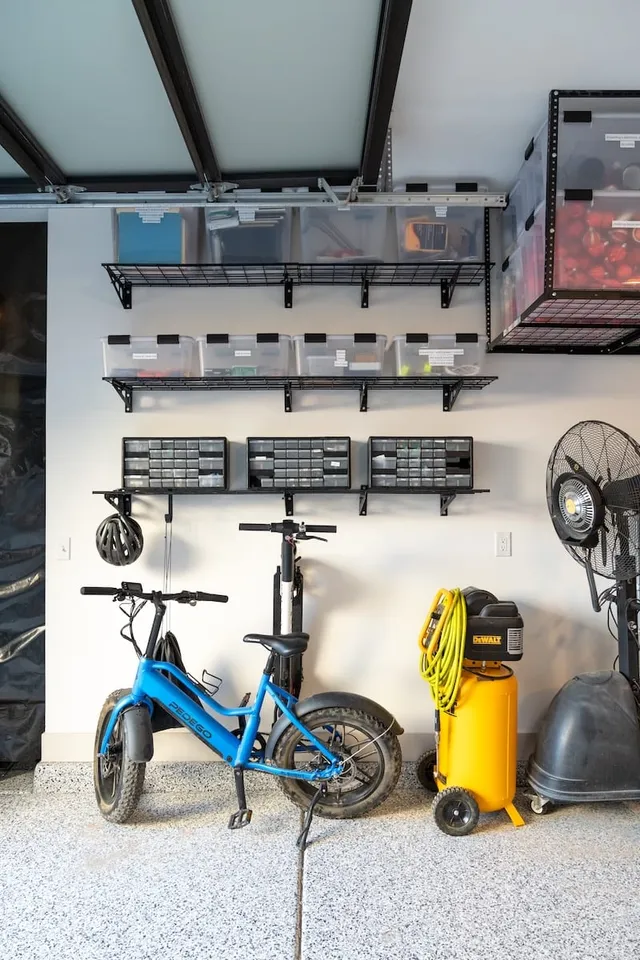
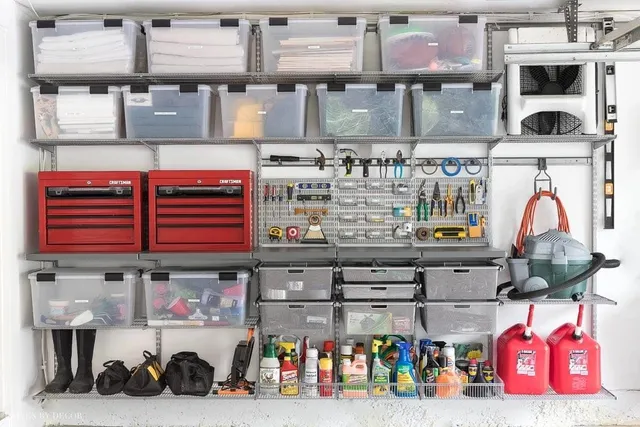
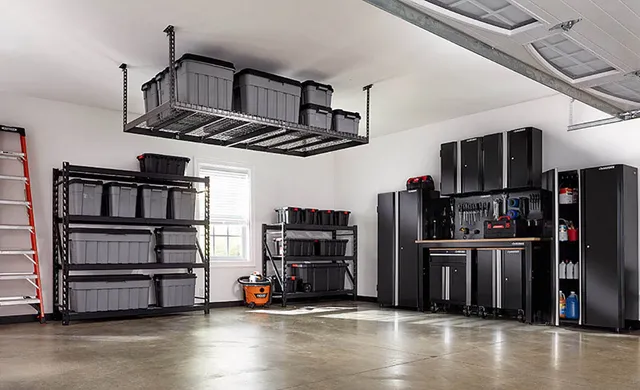
The lid matters more than the bin. Latching lids with a rubber gasket are the closest thing to dust-proof, snap-on lids are good for most categories, and open baskets are fine only for items that can be wiped or rinsed.
Clear gasketed bins are ideal for holiday décor, camping gear and spare linens for a casita or guest suite. Keep in mind that a sealed bin still heats up, so heat-sensitive things belong inside the house regardless of how well the lid fits.
| Container | Dust protection | Good for |
|---|---|---|
| Gasketed latching tote | Very high | Décor, camping gear, textiles |
| Snap-lid bin | Moderate | Sports gear, car supplies |
| Closed cabinet | High if doors seal | Cleaning, pet and household overflow |
| Open bin or basket | Low | Balls, yard tools, rinse-off items |
Step by step
- Check the door seals
Close the garage door on a sunny afternoon and look for light along the bottom and sides. Replace cracked or flattened weatherstripping.
- Sort by sensitivity
Separate rinse-off items from things that must stay clean, and move heat-sensitive items indoors.
- Upgrade the lids
Move clean-only categories into gasketed or snap-lid bins and label them on the front.
- Assign cabinets and open shelves
Delicate and loose items behind doors, rugged items on open shelving.
- Wipe down and set a reset date
Clean every shelf once the system is in, then put a seasonal wipe on your calendar.
Put the most delicate categories behind doors
Cabinets give a second layer of defense for things in bins and a first layer for things that cannot be binned, such as boxed small appliances or spare light fixtures. Our guide to organizing garage cabinets explains how to give each one a single job.
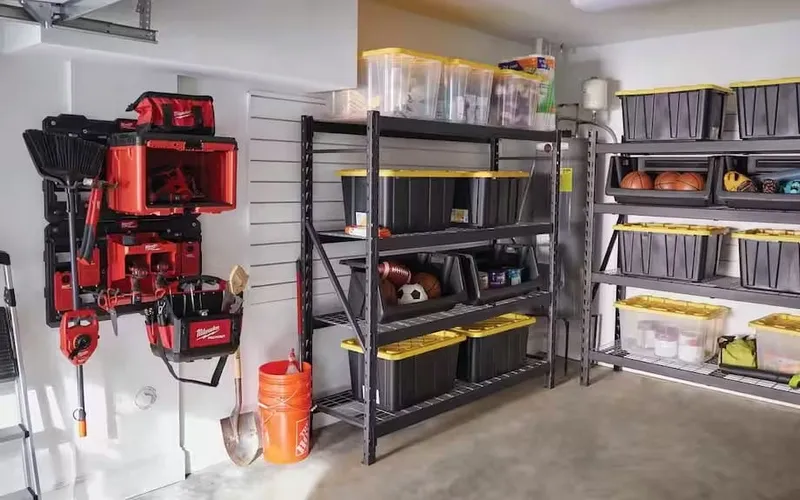
Open shelving is still useful, but load it with things you would not mind hosing off: coolers, beach chairs, kids' outdoor toys, empty planters. That division alone cuts dusting time dramatically.
Small habits stop dust from building up
Dust problems in a garage usually come from a handful of repeated actions. A few changes in routine make the storage system last longer than any product.
- Close the garage door while sweeping the driveway or using a leaf blower.
- Sweep or use a shop vacuum instead of blowing debris around inside.
- Wipe bin lids before opening them so grit does not fall inside.
- Do a quick lid-and-shelf wipe at each seasonal reset.
- Keep a mat at the door into the house so dust stays in the garage.
Build dust control into a full garage reset
The easiest time to switch to sealed storage is during a full garage edit, when everything is already out. Sorted Spaces organizes garages from mid-October through April, sorting categories, sourcing lidded bins and labeling them so everything stays clean and findable.
If you want to tackle it yourself, the complete garage organizing guide covers the full process, and our garage organization service page explains how a professional session works.