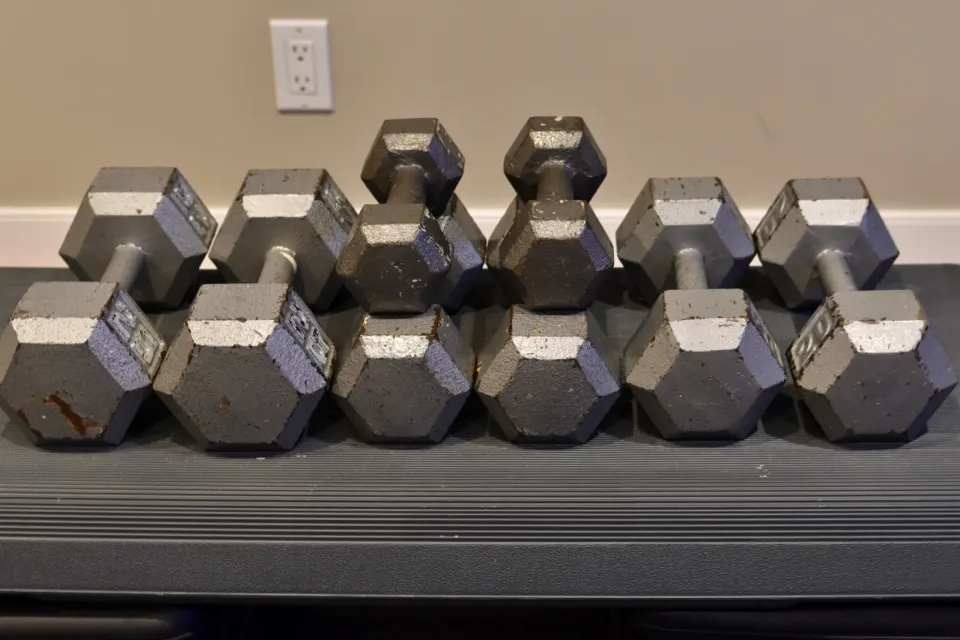
Inventory first, then sort by workout
Before you buy a single rack, pull every piece of equipment into one place and sort it by how you train: strength, cardio, mobility and recovery. You will probably find duplicates, like three jump ropes, and gear you have not touched since you bought it.
Keep what matches the workouts you actually do now. Gently used equipment donates easily; options in the valley include Goodwill of Southern Nevada and the Salvation Army. The freed floor space is worth more than an unused rowing machine.
Map the room into stations
A station layout means you can finish a workout without crossing the room. Put each category where it is used so the equipment returns to its spot naturally.
| Station | Lives here | Storage that works |
|---|---|---|
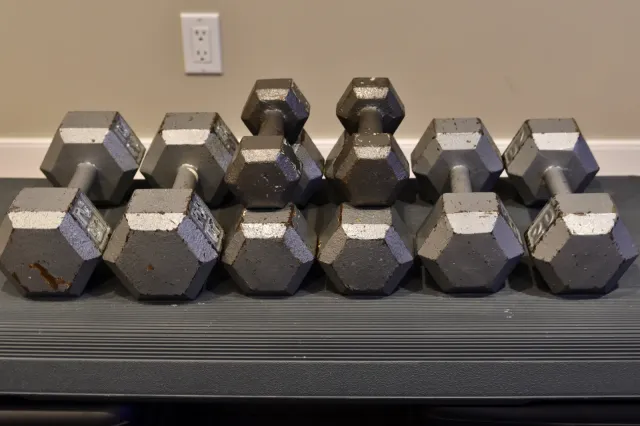
| Strength | Dumbbells, kettlebells, plates | Floor-level rack or low heavy-duty shelf |
| Mobility | Mats, blocks, bands, foam roller | Wall hooks and an upright mat holder |
| Cardio | Bike, rower or treadmill | Clear zone with an outlet and fan nearby |
| Recovery and towels | Massage tools, towels, water bottles | A shelf or cubby near the door |
Step by step
- Gather and sort
Collect every piece of equipment and sort into strength, cardio, mobility and recovery.
- Edit
Keep what you use now and donate or sell the rest.
- Place stations
Position each group where it is used, heavy items low and near the training area.
- Mount small gear
Install hooks, a pegboard or a slat wall for bands, ropes and accessories.
- Protect from heat
Move rubber, foam and electronics indoors or into a closed cabinet if the gym is in the garage.
Go vertical with everything under ten pounds
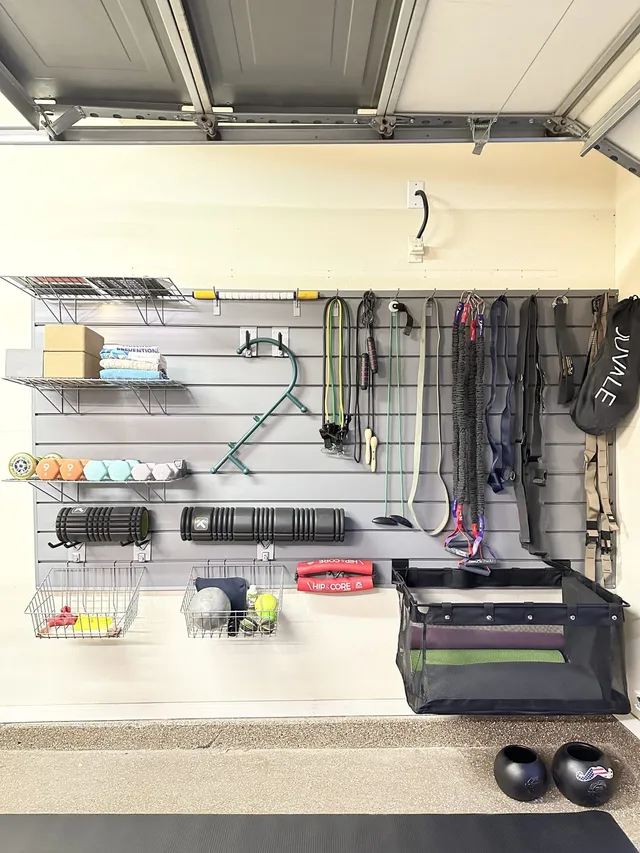
Small gear is what makes a home gym look chaotic, so get it off the floor. A pegboard or slat wall with hooks holds resistance bands, jump ropes, lifting belts and grips where you can see them. Mats roll and stand in a tall bin or hang on wall straps.
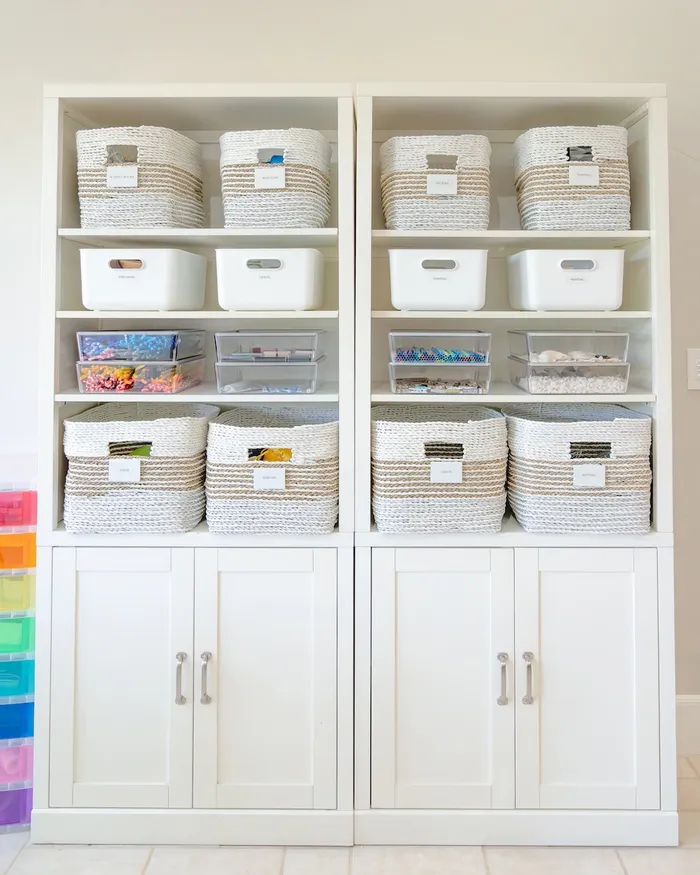
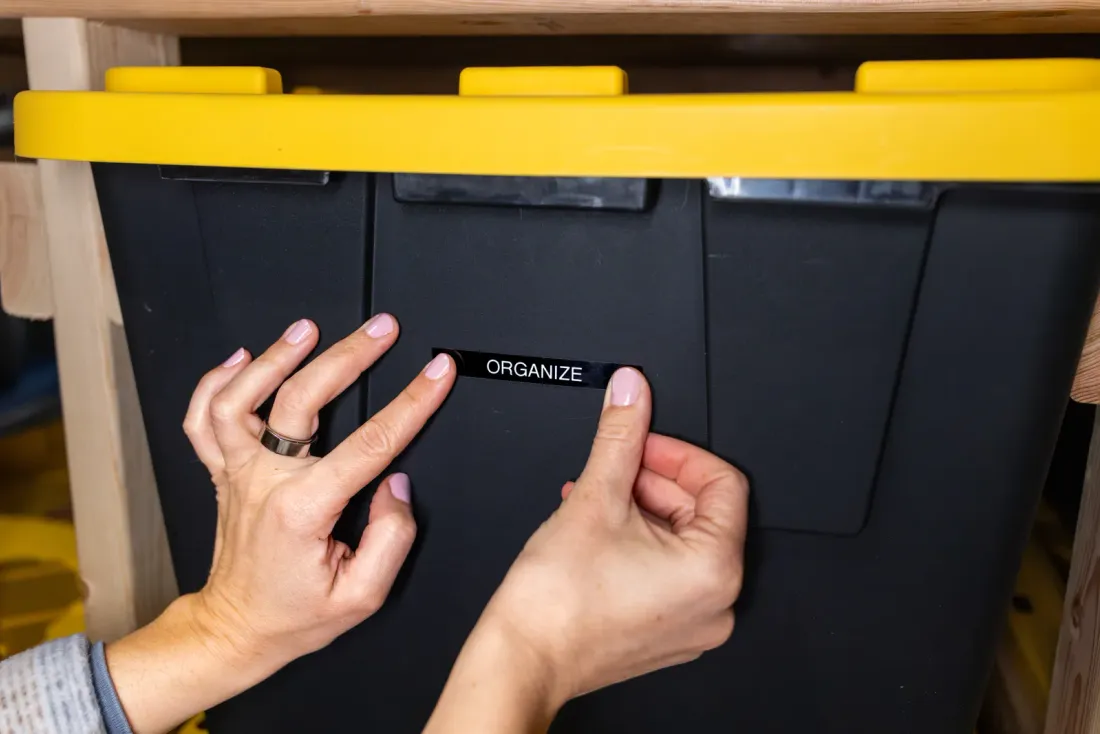
Use open, labeled bins for loose items like mini bands and straps. Lids slow you down mid-workout, and anything slow to put back stays out.
Protect gear from garage heat
A Las Vegas garage regularly runs far hotter than the outdoor temperature in summer, and that heat breaks down rubber, foam and adhesives faster than you might expect. Yoga mats get sticky, foam rollers warp and resistance bands lose stretch and snap.
Store bands, mats and anything with a battery or screen indoors, or in a closed cabinet on the house wall, which stays slightly cooler. Many people bring heart-rate straps and earbuds inside entirely. If your gym shares the garage with cars and tools, our garage organization service runs mid-October through April for exactly this reason.
Keep the floor for movement
A home gym works when you can roll out a mat without moving anything. Leave a clear rectangle at least the length of a mat plus your arm span, and mark it mentally as a no-storage zone. If boxes or bikes creep in, the gym quietly turns into storage again.
Rubber flooring tiles help define the zone and protect the slab. Keep a small towel bin and spray bottle at the edge so wiping down equipment is part of finishing a session.