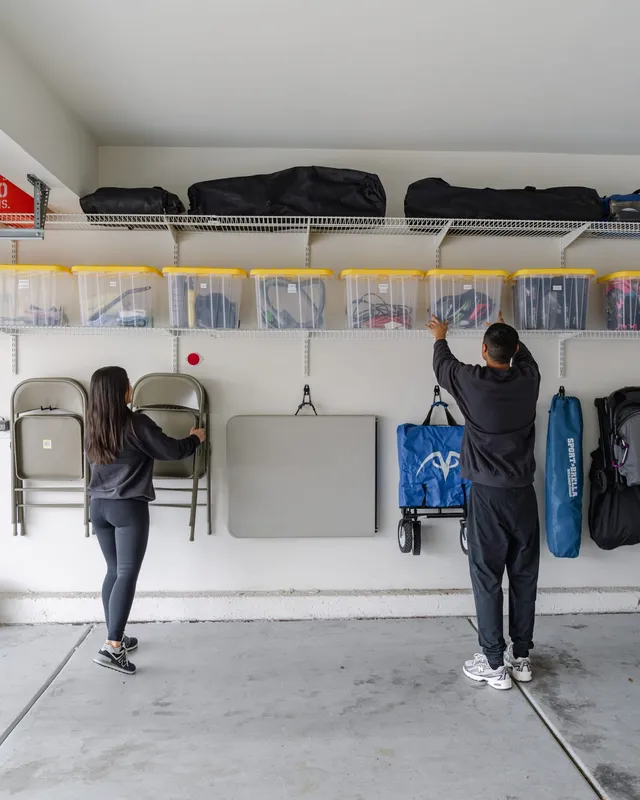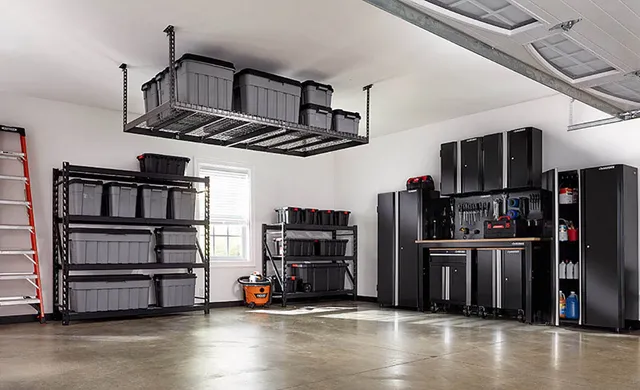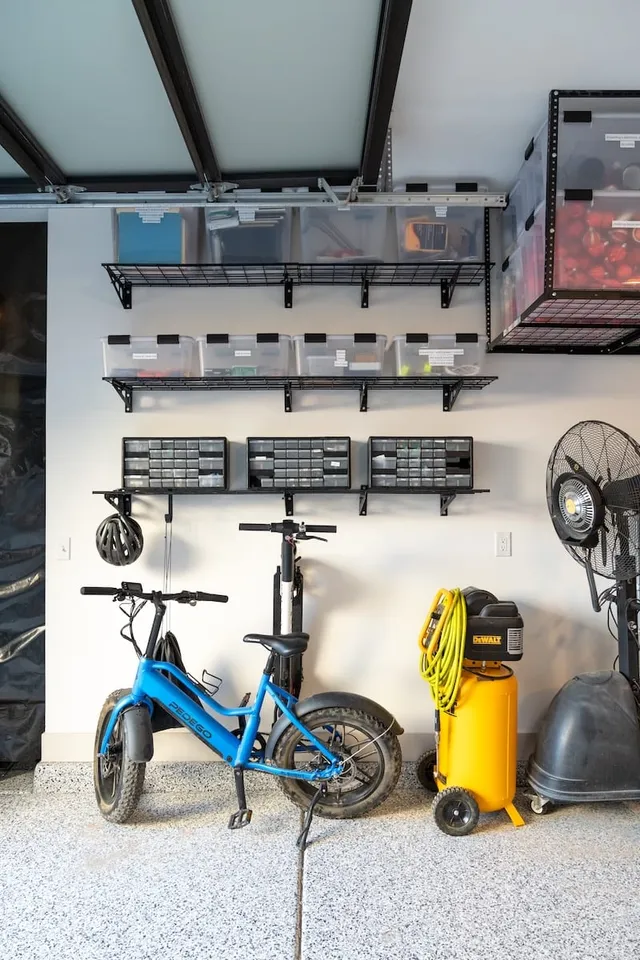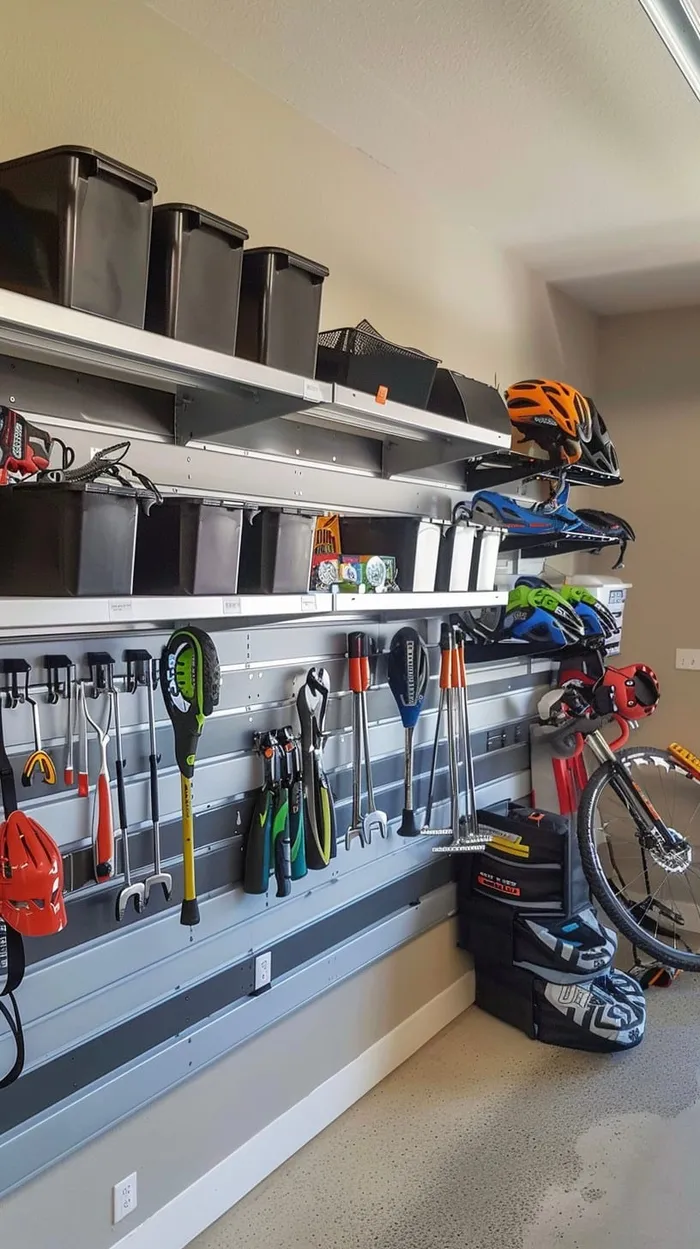
A zone is a home for a category, not a shelf
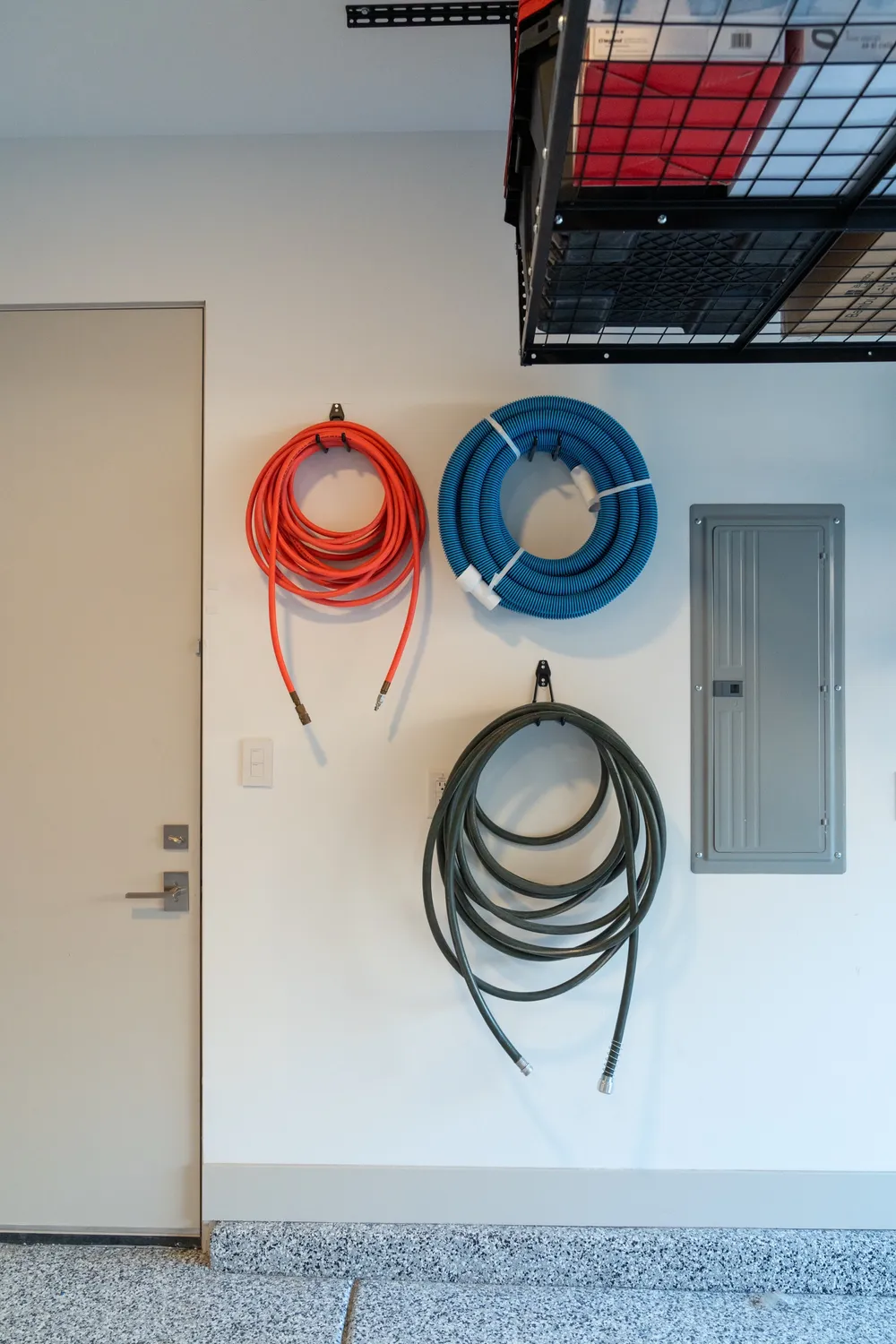
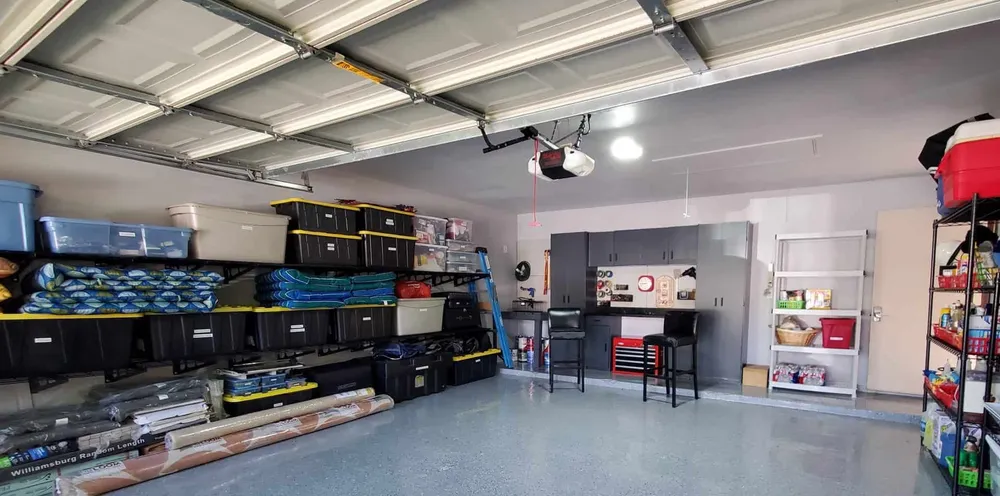
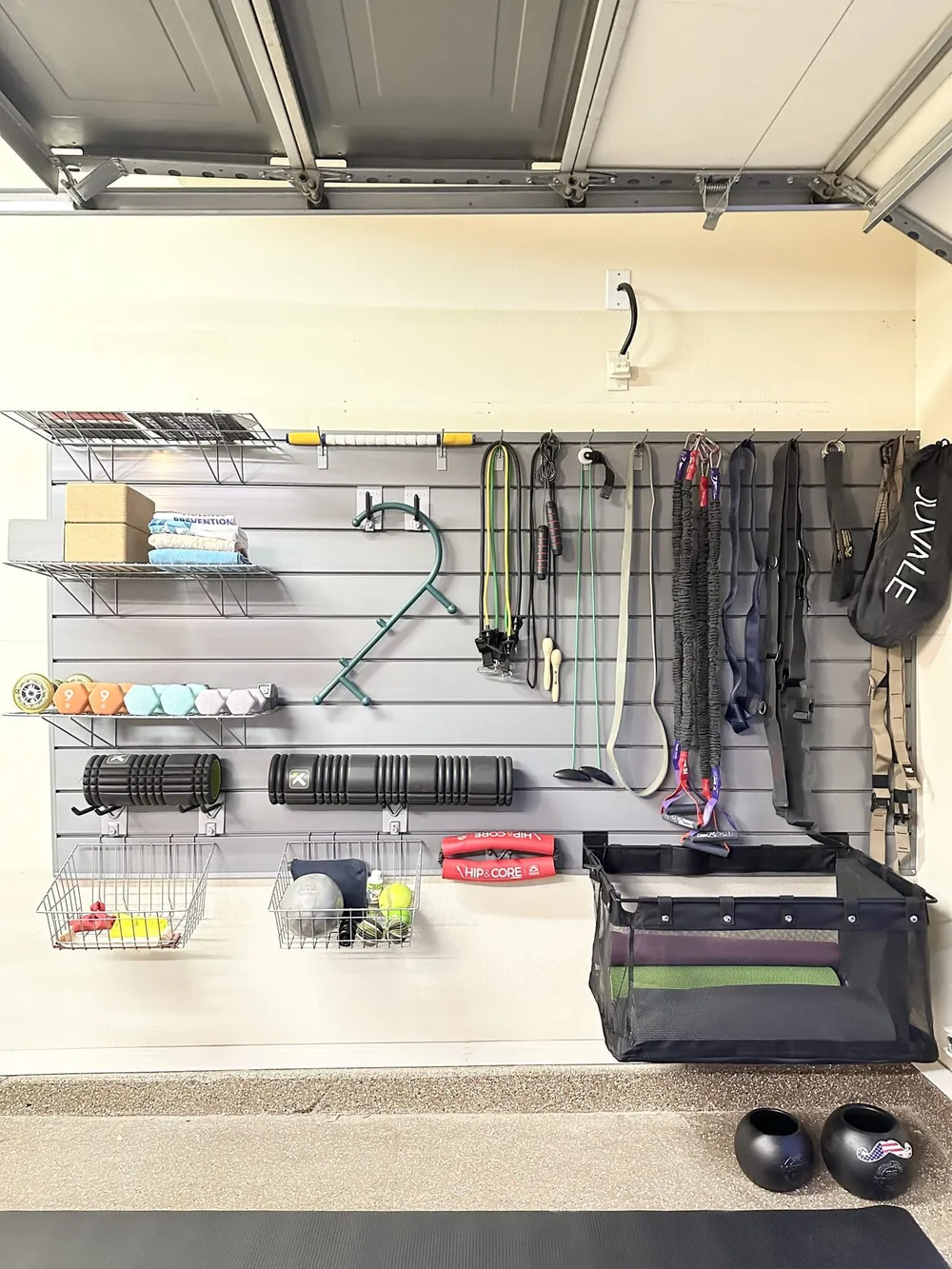
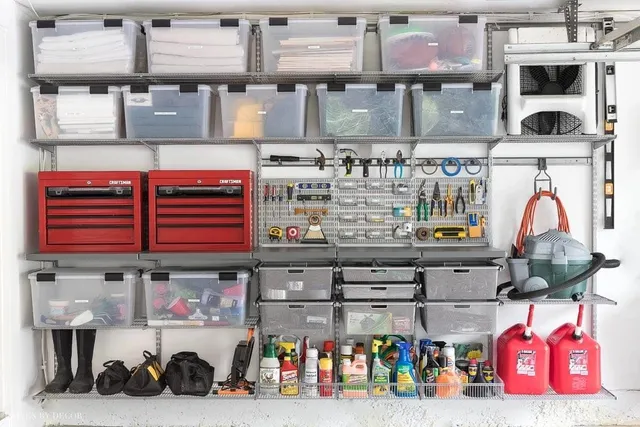
Think of a zone as an address. Everything camping lives on the camping shelf; everything for the car lives in the auto bin by the driver's door. When something is out of place, anyone in the house can see where it goes back.
Without zones, garages fill in the order things arrive, and the newest box ends up in front. With zones, the layout follows your routines instead of your last shopping trip.
The six core zones most garages need
Nearly every household ends up with some version of these six. The table shows where each usually works best.
| Zone | What lives there | Best location |
|---|---|---|
| Landing zone | Shoes, reusable bags, dog leash, outgoing returns | Beside the door into the house |
| Tools and projects | Hand tools, power tools, hardware, a work surface | A full wall with good light and an outlet |
| Sports and recreation | Bikes, balls, helmets, skates, scooters | Near the garage door for easy roll-out |
| Garden and outdoor | Hoses, pruners, pots, soil, patio supplies | Corner nearest the yard access |
| Auto care | Car wash supplies, jumper cables, sunshades | Shelf or bin by the driver's side |
| Long-term storage | Holiday, keepsakes that tolerate heat, spare bedding in sealed bins | Overhead racks or top shelves |
Step by step
- List your categories
Write down every type of item the garage holds, then combine anything with fewer than a bin's worth into a larger category.
- Rank by frequency
Mark each category as daily, weekly, seasonal or rarely used.
- Sketch the floor plan
Draw the garage with the car parked, then place frequent zones near doors and rare ones high or deep.
- Set up and sign
Install storage zone by zone and add a clear label to each one.
Zones that Las Vegas households often add
Local lifestyles add a few more. Homes with pools usually need a pool and patio zone for floats, noodles, test kits and cushion bins, kept by the side door that leads out back. Our page on pool and patio storage organizing covers that setup.
Golf communities from Summerlin to Henderson mean a lot of garages carry two or more bags, push carts and shoe bins, which deserve a dedicated golf zone near the car. Many valley families also keep a bulk zone for water cases and paper goods, though food and drinks hold up better in a cooler interior pantry than in a hot garage.

Size each zone by measuring what you kept
Zones should be sized after the edit, never before. Group each category on the driveway, estimate how many bins or how many feet of wall it fills, then add about 20 percent for growth.
A tool zone with a work surface needs roughly six to eight feet of wall. A family of four with bikes usually needs eight feet or more for wall hooks, or less if bikes hang vertically. Heavy items such as paint cans, bags of soil and toolboxes go on low shelves only, never overhead.
- Under 36 inches high: heavy and kid-accessible items.
- 36 to 72 inches: daily and weekly use.
- Above 72 inches and overhead racks: light, seasonal, rarely used.
Keep zones from blurring over time
Zones fail when they lose their edges. Label each zone with a shelf tag or a sign at eye level, and label bins inside it so the category stays obvious even when a guest puts things away.
Check zones at the change of seasons. In the fall, the pool zone shrinks and holiday storage comes forward; in spring, they trade places. A quick swap keeps the zones matched to how you are actually living that month.