Measure the cars before measuring the shelves
Park both cars where they normally sit, open every door fully and mark the outer edge of each door swing on the floor with painter's tape. Do the same for the rear hatch or trunk.
What is left outside the tape is your storage space. In many valley tract homes, that turns out to be a strip of 18 to 30 inches along each side wall and a band at the back between the bumpers and the wall. Knowing the exact numbers prevents buying a 24-inch-deep unit for a 20-inch strip.
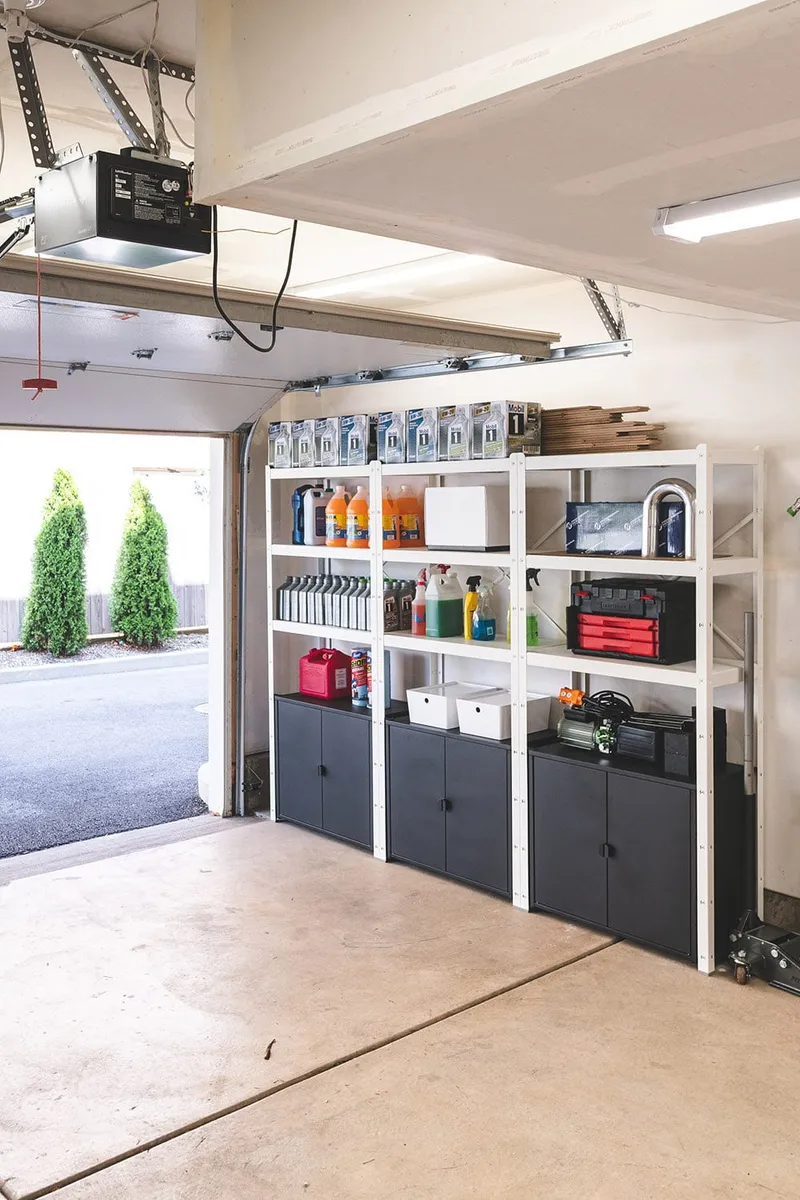
Use the back wall for the deepest storage
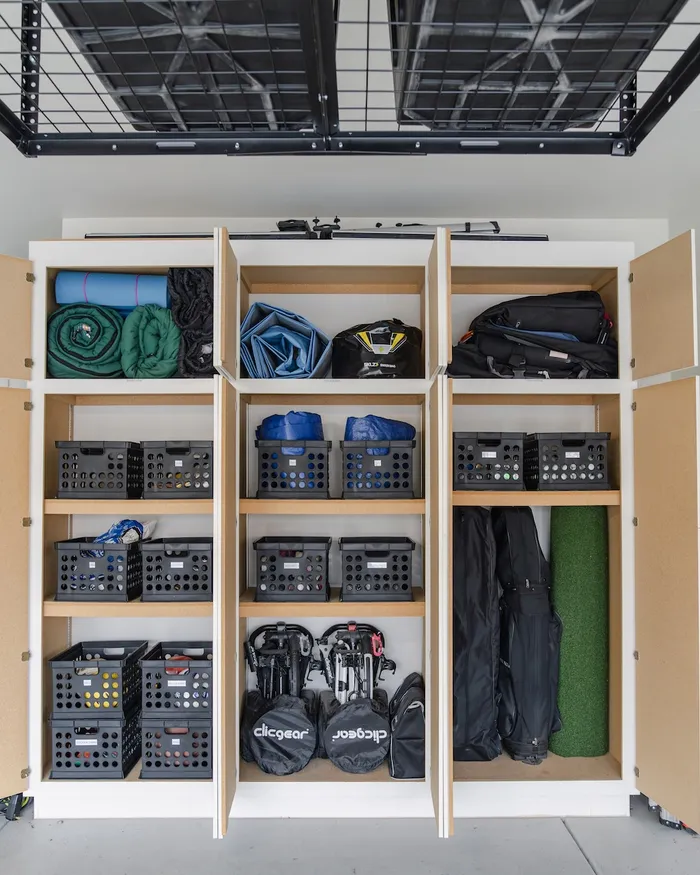
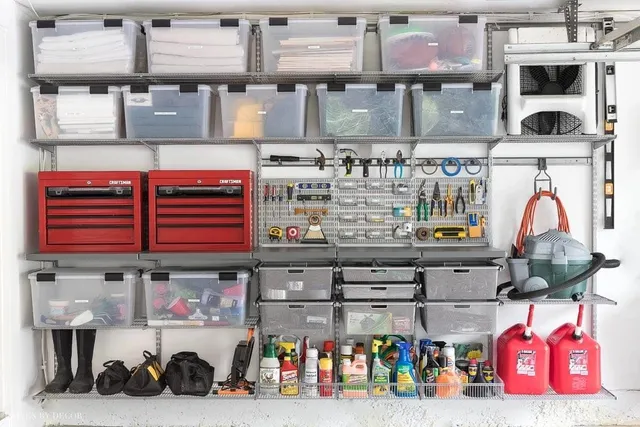
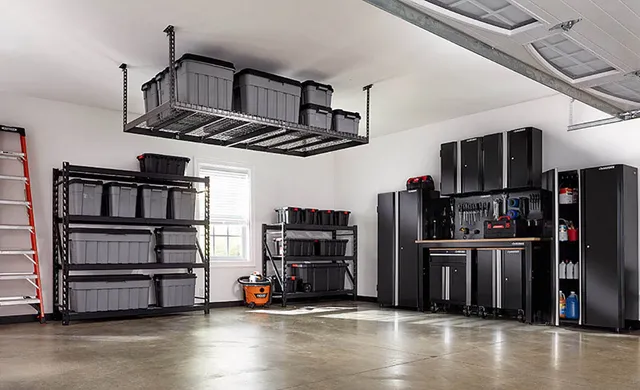
The back wall is usually the only place deep shelving fits. Freestanding units 18 to 24 inches deep can run its full width if bumpers clear them. Keep heavy items on the lowest shelf and pull everyday categories to the middle.
If one car is shorter, place the deeper unit or a workbench in front of that car and keep shallower storage in front of the longer vehicle. A tennis ball hung from the ceiling or a parking stop on the floor keeps bumpers from creeping into the shelves.
Step by step
- Tape out the parking footprint
Park both cars, open all doors and mark the swing zones on the floor.
- Empty and edit
Sort everything in the driveway and decide what stays, goes or moves inside.
- Plan the walls
Assign deep storage to the back wall, shallow systems to the sides and light bins overhead.
- Install and load
Set up shelving and wall storage, then place each category in its zone.
- Test park
Pull both cars in, open every door and adjust anything that is in the way.
Keep side walls shallow and vertical
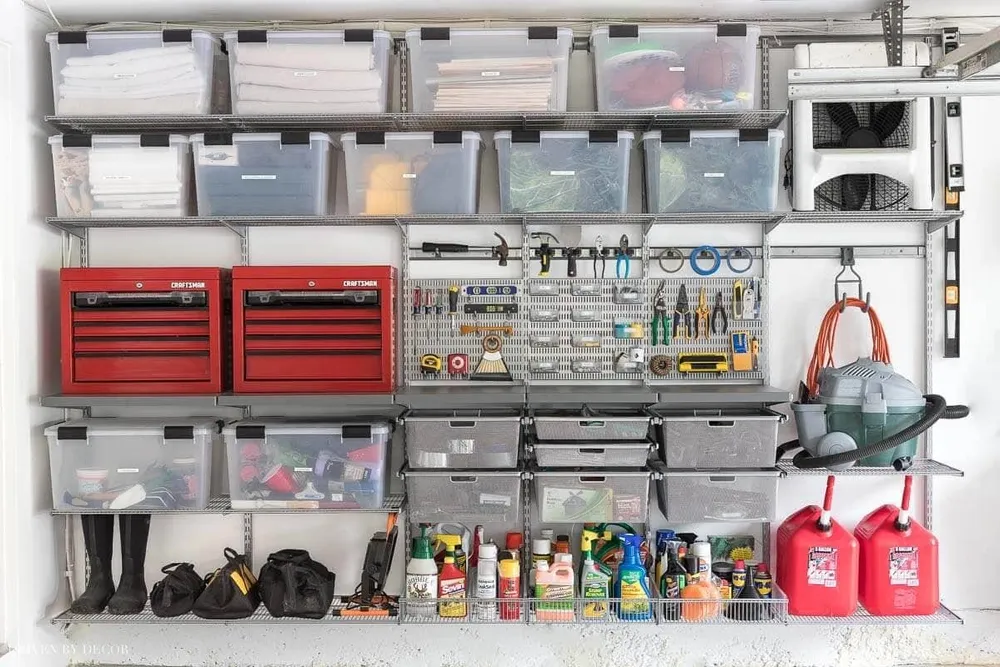
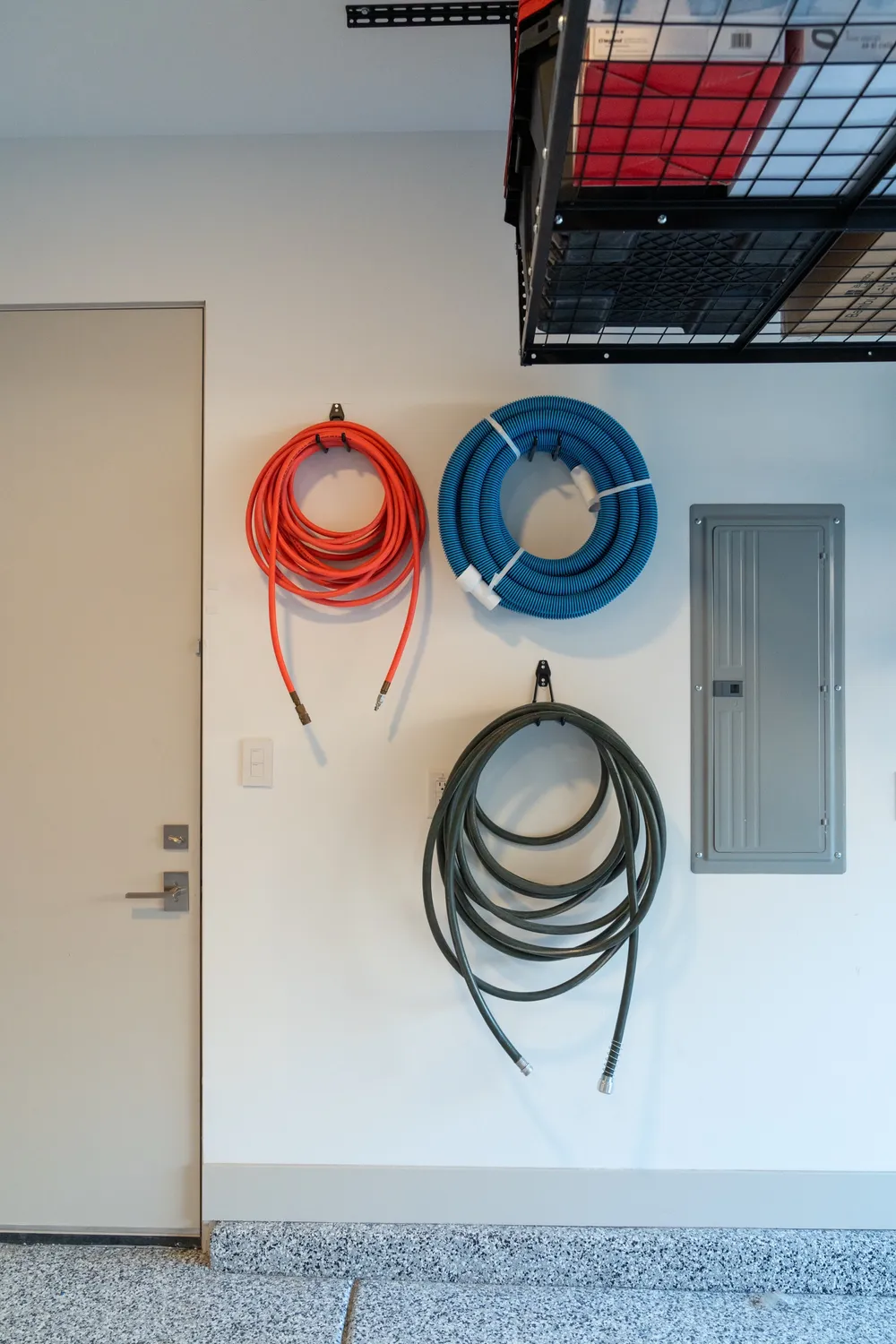
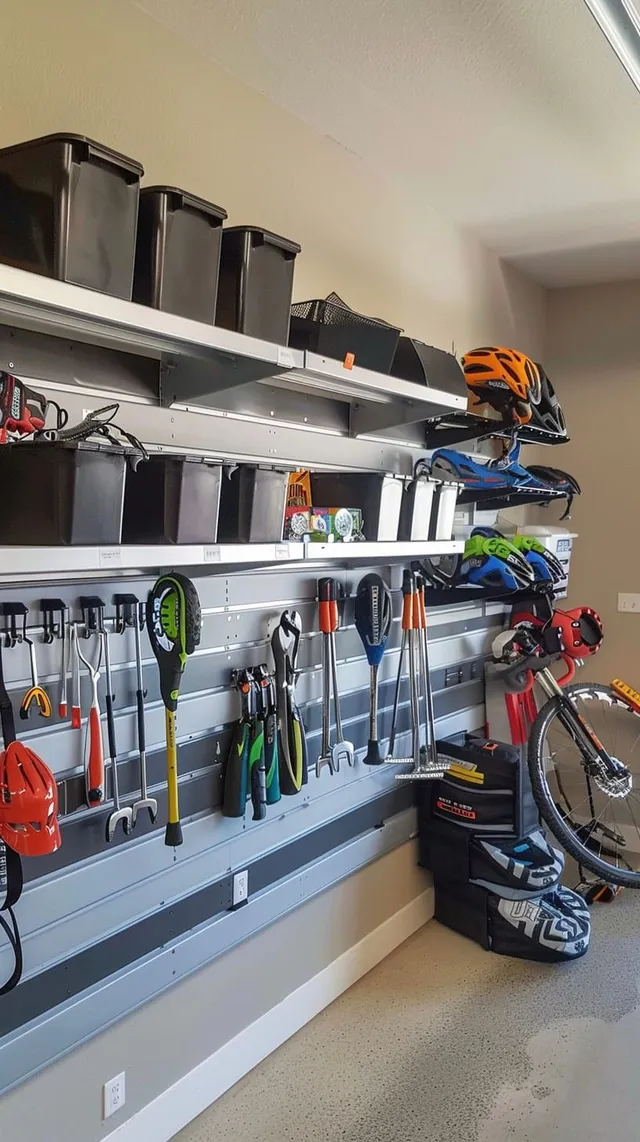
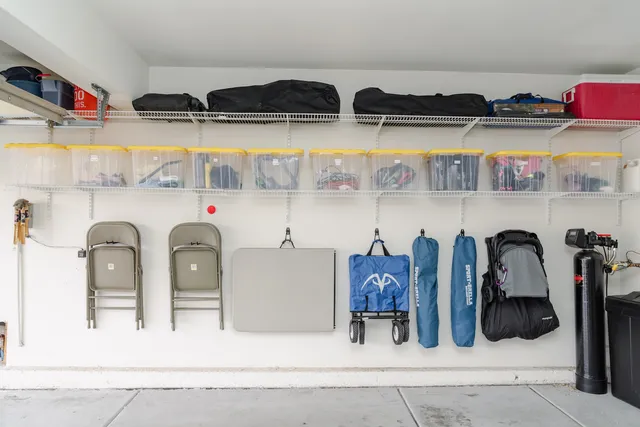
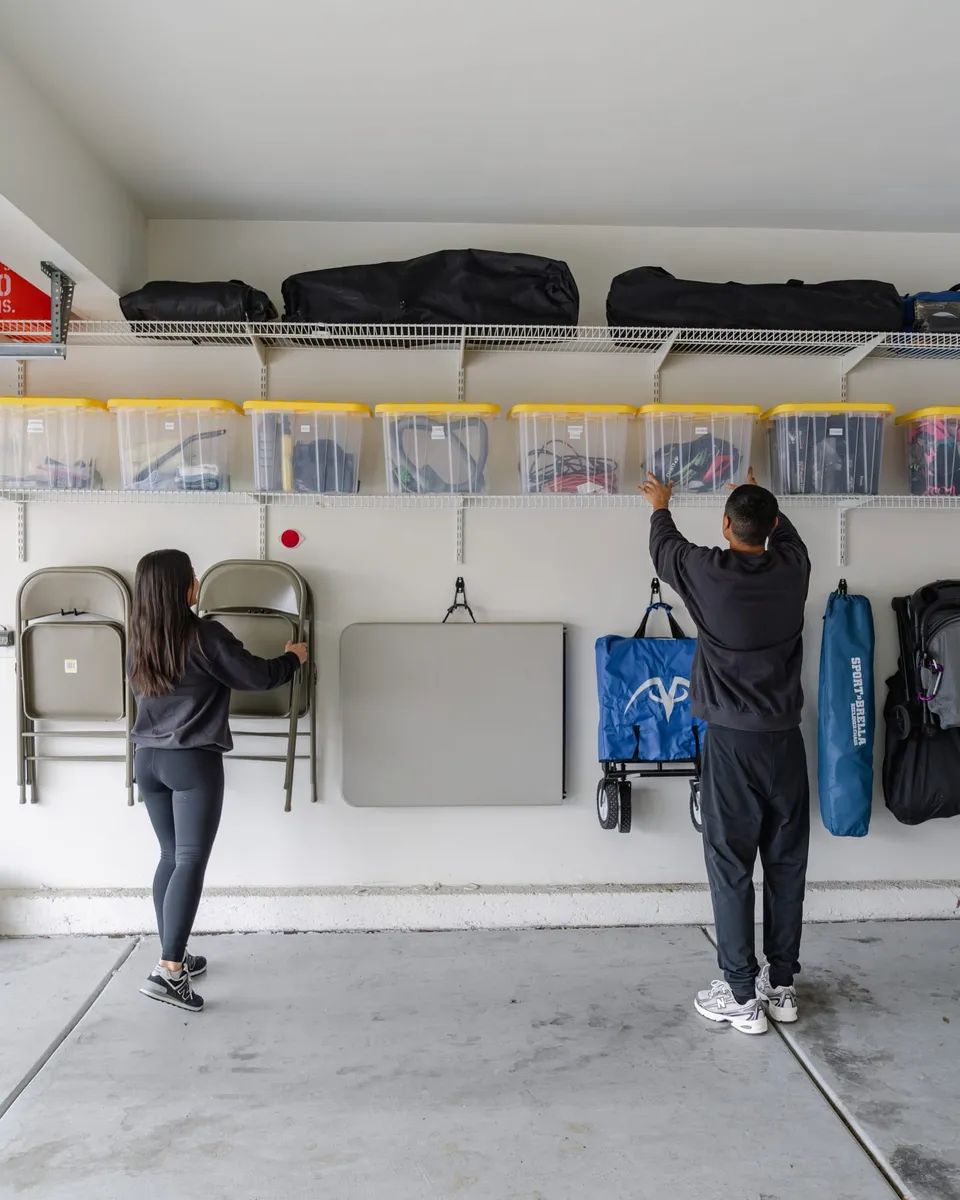
Side walls are where wall panels, rails and hooks earn their place. Bikes hung vertically, folding chairs, brooms, ladders and garden tools all live within a few inches of the wall.
Plan around the door into the house, the water heater and any electrical panel, which all need clear access. Keep a landing spot by the house door for shoes and bags, since that is where daily traffic goes.
- Under 12 inches: wall panels, hooks, bike hooks, rails.
- 12 to 18 inches: shallow shelving for car care and small bins.
- No storage: in front of the water heater, the electrical panel or the attic hatch.
Send low-use bins overhead
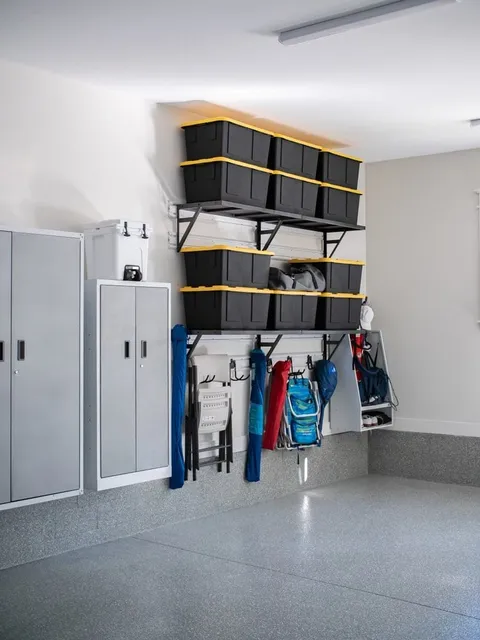
The ceiling above the hood of each car is often unused. Ceiling racks hold light bins of holiday décor or camping gear and free the walls for daily items. Keep them clear of the garage door opener, its rail and the door's path when open.
Check rack weight ratings and your ceiling height, and leave room for taller vehicles. Our page on garage overhead storage organizing explains when ceiling storage fits.
Two-car garages in new builds need extra editing
Many newer homes in master-planned communities like Inspirada, Skye Canyon or Cadence have compact two-car garages, sometimes with no attic and a water heater on the side wall. Households moving from larger homes, or from California with a basement or storage unit, often find the garage is now their only storage.
That makes the edit the main event. Decide what truly needs garage space, move heat-sensitive items inside and plan for the categories you own now, not the ones you had in the last house. Our guide to garage zones helps rank what stays.