Plan the room around night tasks, not décor
A nursery works when you can do the hardest routines half asleep and with one hand. Sketch the room and mark where the crib, changing surface and feeding chair go, then check the walking path between them in the dark.
Keep the changing station away from the window and away from cords. The feeding chair wants a small side table for water, burp cloths and a phone, and a dim lamp you can reach without standing up.
Build a changing station you can run with one hand
Everything at the changing station should open with one hand, because your other hand stays on the baby. Use open bins or a drawer divider rather than lidded boxes or zip pouches.
Stock only a day or two of supplies at the station and keep backstock in the closet. A small refill routine, once a day, is easier than digging through a jumbo box mid-change.
- Top drawer or caddy: diapers, wipes, cream, a spare outfit
- Second drawer: burp cloths, bibs, swaddles
- Within reach but out of baby's reach: thermometer, nail clippers, saline
- Lidded hamper beside the station, not across the room
Step by step
- Measure and map
Note the closet, windows and outlets, then place crib, changer and chair with a clear path between them.
- Wash and sort clothing
Launder gifted clothes and sort them into newborn, 0–3 months, 3–6 months and larger.
- Load the closet
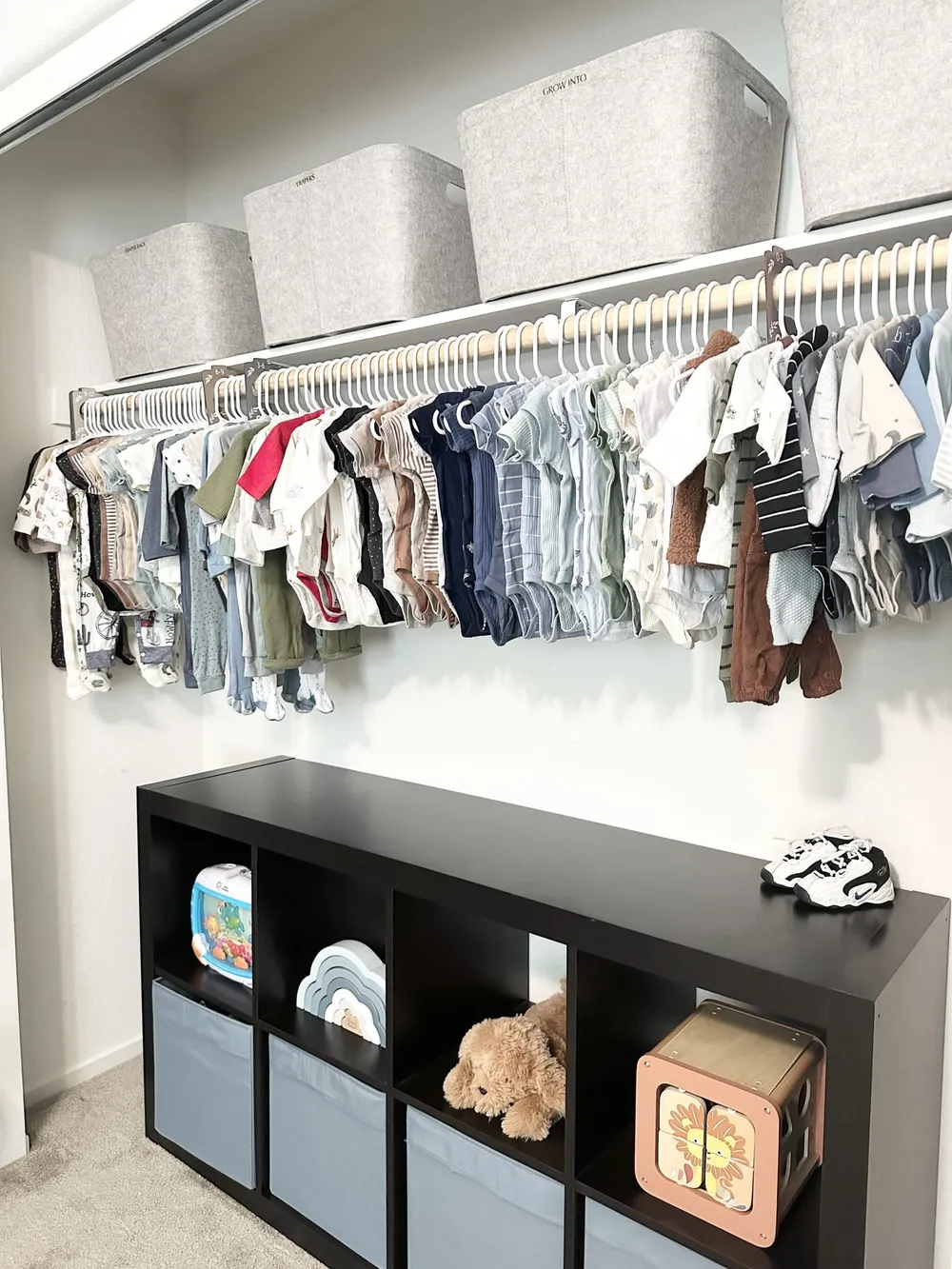
Hang the first two sizes with dividers and shelve the larger sizes in labeled bins.
- Stock the stations
Fill the changing and feeding areas with a two-day supply and move backstock to a closet shelf.
- Test it at night
Walk the routine with the lights off and move anything you had to search for.
Sort baby clothes by size and keep the next size ready
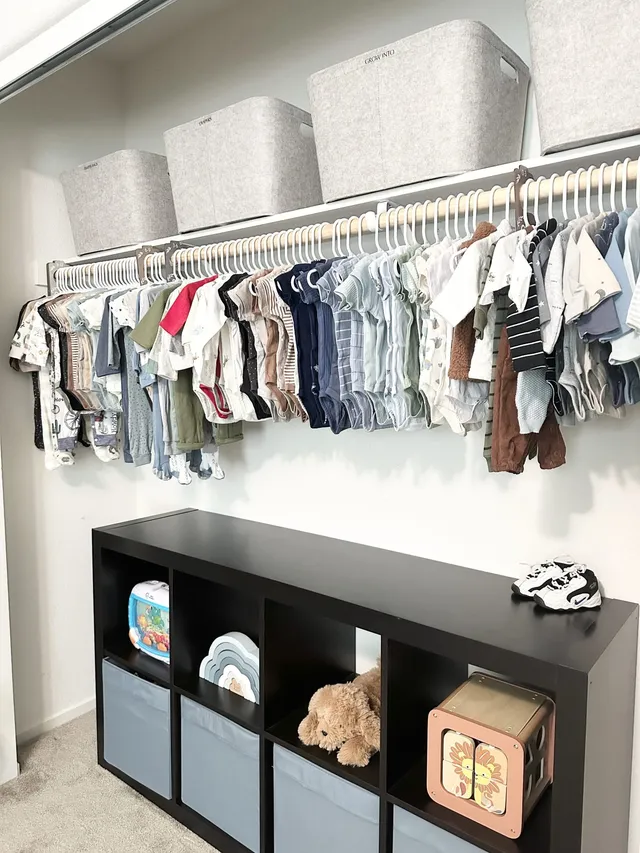
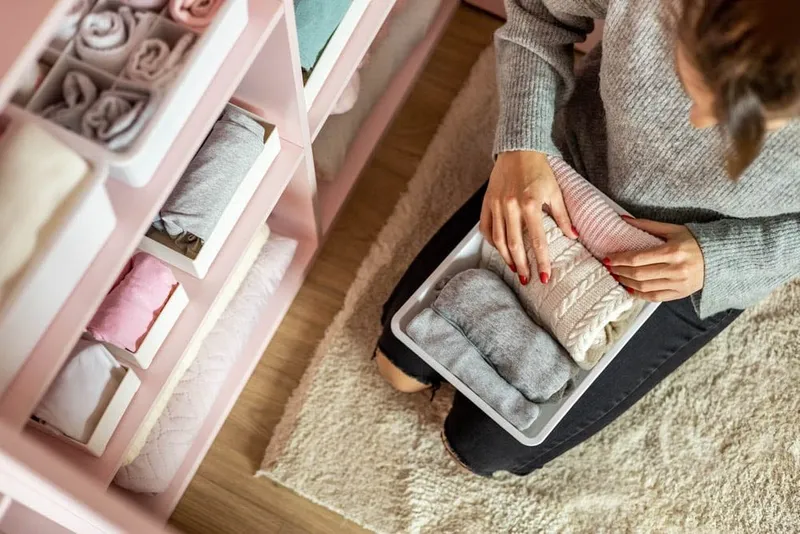
Babies outgrow sizes faster than most parents expect, so the closet should hold the current size at eye level and the next size on a higher shelf, already washed. Closet size dividers on the rod make this visual.
Dresser drawers work best by type: sleepers, bodysuits, pants, socks. Fold small items in a file style so you can see every piece from above. Our step-by-step guide to organizing baby clothes by size covers the outgrown pile and hand-me-down storage.
Store gifts and extras outside the nursery
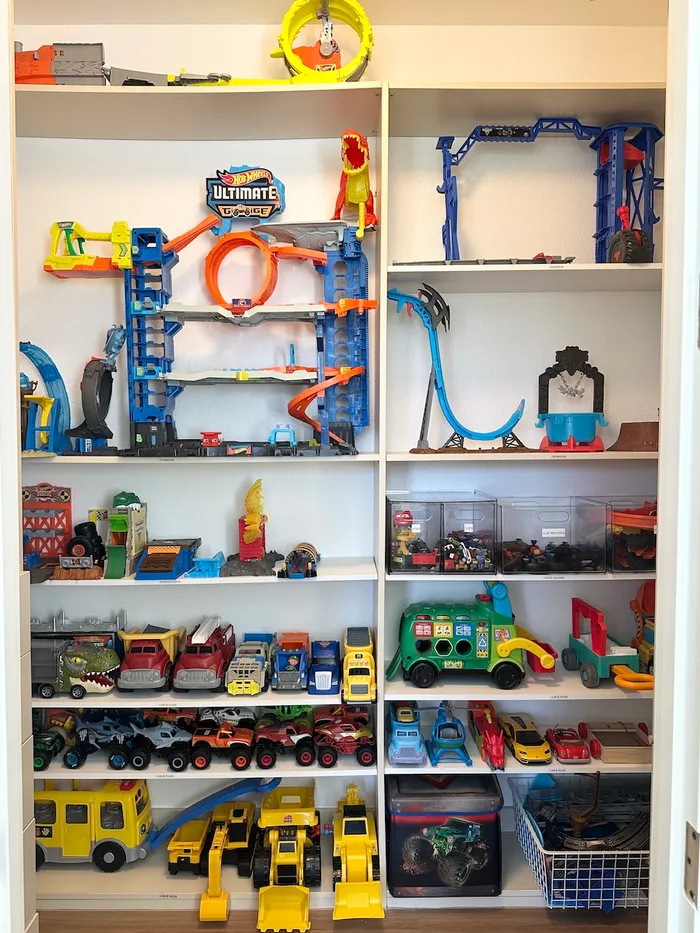
Shower gifts, bulk diapers and the toys baby will not use for a year crowd a small room quickly. Keep only near-term items in the nursery and park the rest in a hall closet or a labeled bin in a guest room.
Skip the garage for anything baby will use later. Las Vegas garages get dangerously hot in summer, which can warp plastic bottles and pump parts, break down lotions and creams, and damage batteries in monitors and toys. Inside, climate-controlled storage protects them.
Keep the room easy to clean in desert dust
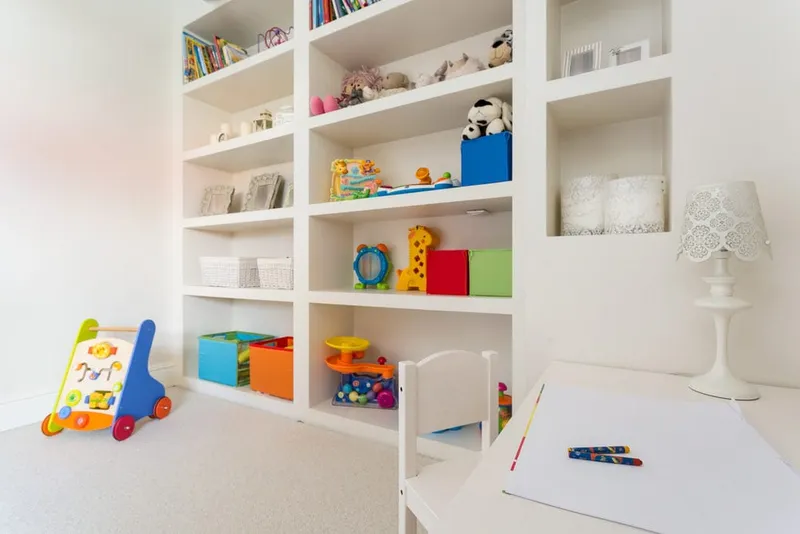
Fine dust in the valley lands on every open shelf, so a nursery with fewer exposed items stays cleaner and better for little lungs. Use closed bins for blankets and soft toys, and limit open shelving to books and a few decorative pieces.
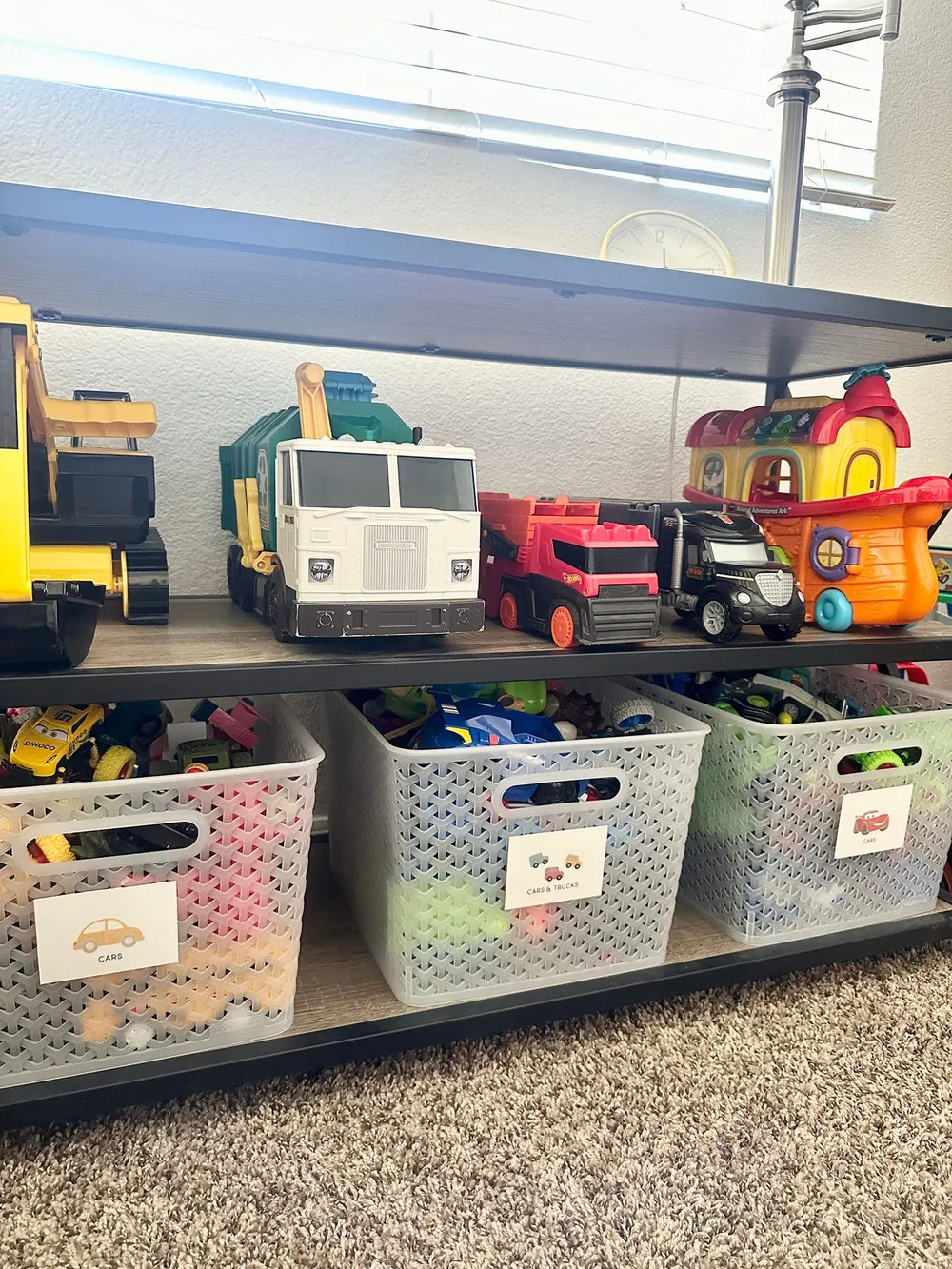
Choose wipeable containers and washable basket liners. Once a week, while you restock the changing station, give the surfaces a quick wipe.