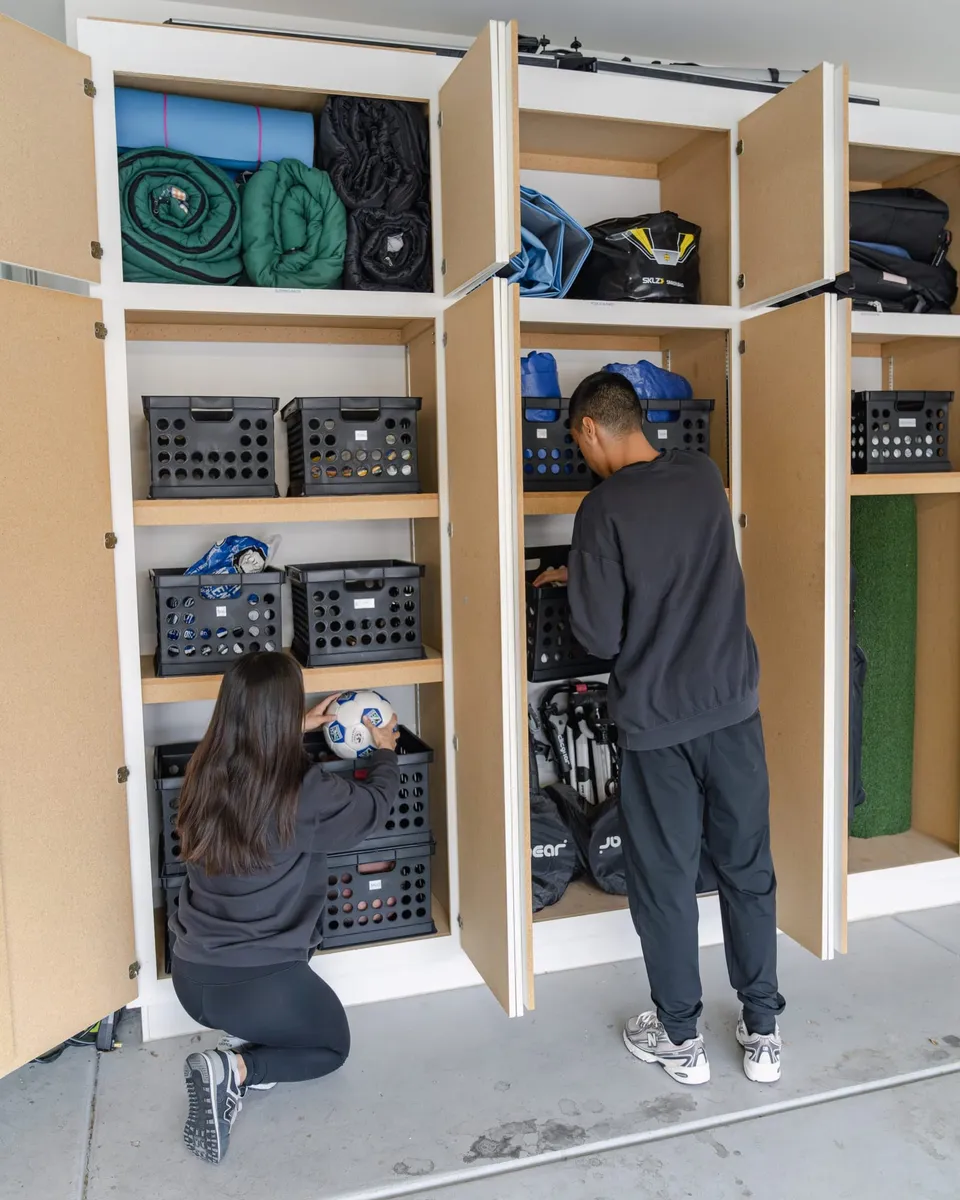
Divide the space into wet and dry
A pool house works best when wet gear never touches dry storage. Put the wet zone nearest the pool door, with a floor that can handle drips, and the dry zone deeper inside.
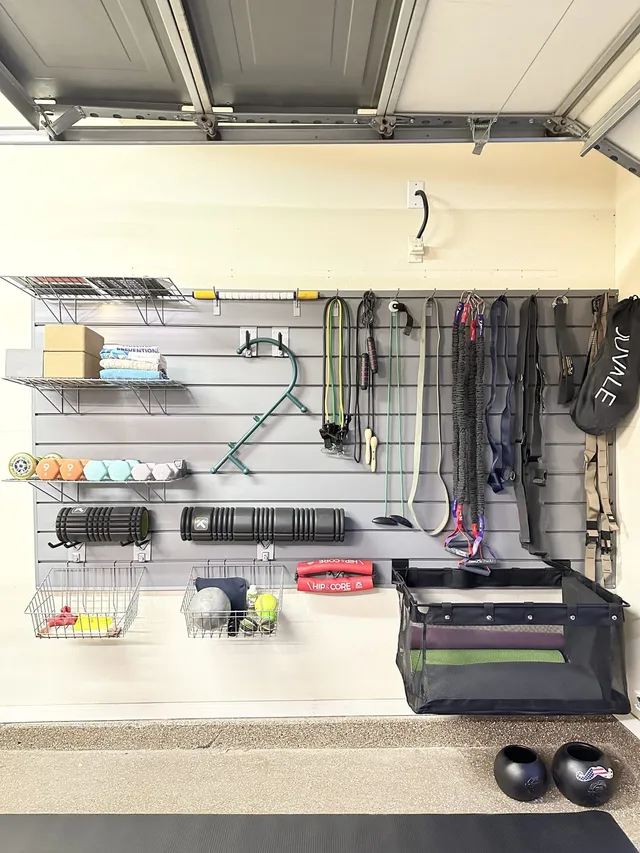
Wet zone items need air flow to dry, so use open hooks, slatted shelves and mesh bins. Dry zone items, like spare towels, sunscreen and snacks, belong in closed cabinets or lidded bins that keep out dust and heat.
| Zone | What lives there | Storage |
|---|---|---|
| Wet | Used towels, floats, goggles, kickboards | Hooks, mesh bins, slatted racks |
| Dry | Clean towels, guest kits, sunscreen | Closed cabinets, lidded bins |
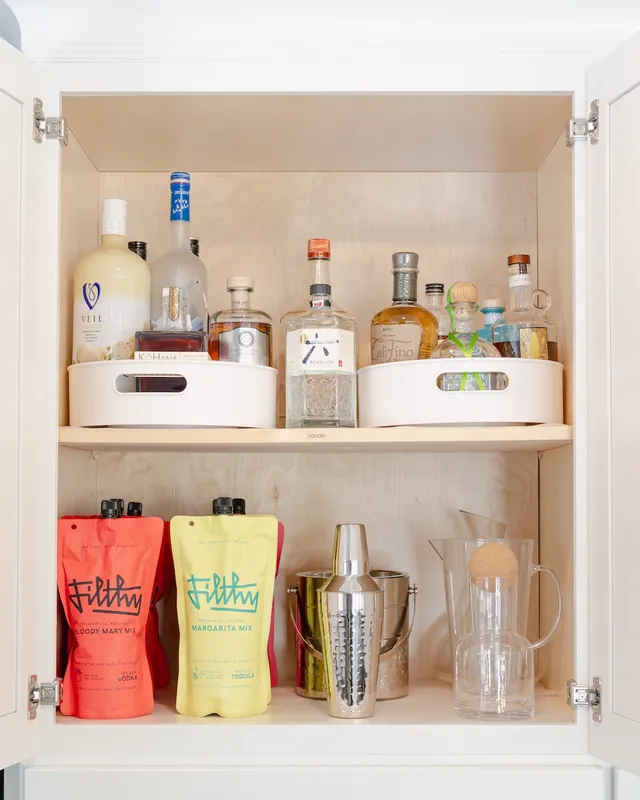
| Refreshments | Drinks, cups, snacks | Beverage fridge, labeled bins |
| Chemicals | Pool chemicals, test kits | Locked, shaded cabinet away from food |
Store towels and floats so they dry and stay put
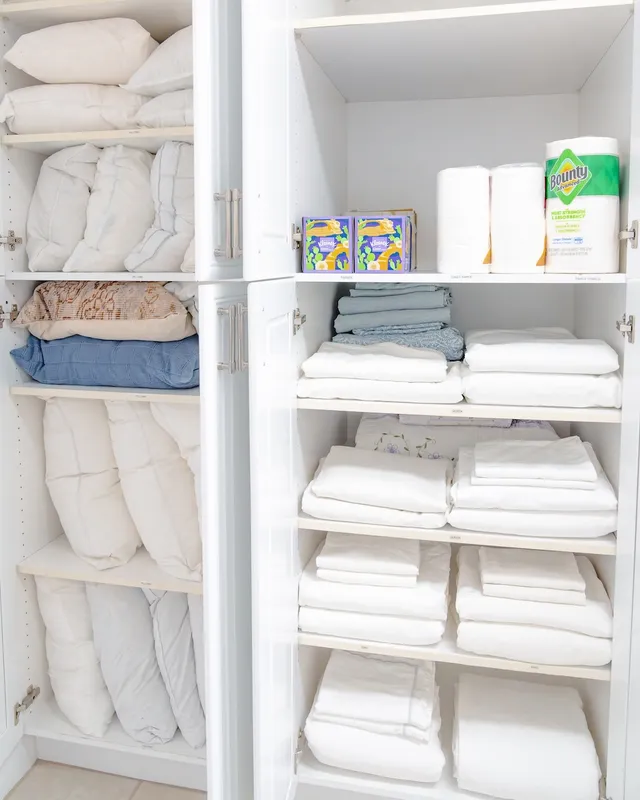
Wet towels need hooks, not baskets. A row of large hooks, one per family member plus a few guest ones, lets towels dry between swims. Clean towels can be rolled in a cabinet or on open shelves inside.
Floats and pool toys need ventilated storage. A tall mesh bin or a wall-mounted float rack holds them and lets water drain. Deflate larger floats at the end of the season to save space.
Set up a guest changing area
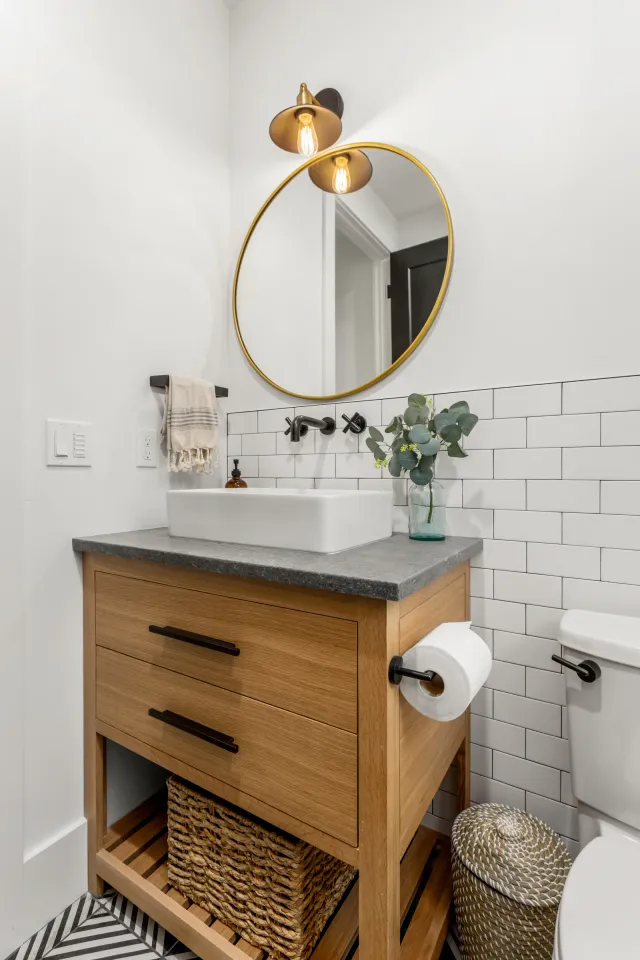
If guests change in the pool house, give them a hook, a bench, a mirror and a small basket with essentials. Include sunscreen, hair ties, a comb and spare flip-flops.
If the pool house doubles as a casita, the casita guide explains how to set up a guest space that also handles longer stays.
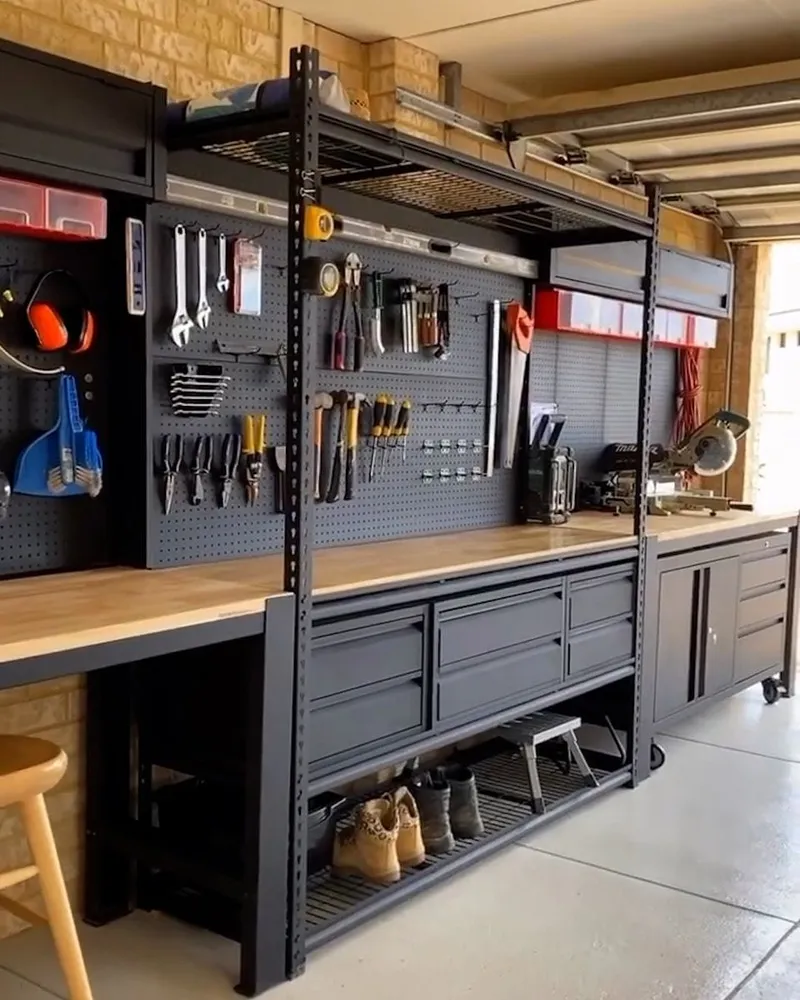
Keep chemicals separate and safe
Pool chemicals need their own storage, away from food, towels and kids. Follow the label instructions, keep containers closed, store them out of direct sun and never mix products.
A locked cabinet in the shade, or a separate equipment area, is common. Many chemical labels warn against heat, so keep them somewhere protected and consult your pool service if you are unsure.
Plan for Las Vegas heat and the off-season
A pool house in the valley can get very hot in summer and is often closed up for parts of the winter. Heat damages candles, electronics, snacks and sunscreen, so keep those items in closed cabinets or bring them inside between uses.
At the end of swim season, wash and store towels in lidded bins, deflate floats and wipe down shelves before dust settles. A spring reset before the first swim makes the season start smoothly. The pool and patio storage service can help with both.
- Fall: wash towels, deflate floats, clear snacks and sunscreen
- Winter: lidded bins for stored gear, check chemicals
- Spring: restock guest basket, set up hooks and float rack