Keep less, and keep it in the original container
The safest chemical storage is a small inventory. Old paint, half-used solvents and mystery bottles add risk without adding value, especially in a garage that bakes all summer.
Keep products in their original labeled containers with lids tight. The label tells you what is inside, how to store it and what to do in an emergency. Never pour chemicals into food or drink bottles, even for a quick job.
Read the label for temperature, then plan around the heat
Most paint and many cleaning products list a storage range on the can, and many advise keeping them away from extreme heat and freezing. A Las Vegas garage can far exceed that range in summer, so the label is the guide to what should move.
Latex paint can thicken, separate or skin over after a hot summer. Aerosol cans list a maximum temperature because heat raises the pressure inside, which is a good reason to keep spray paint and aerosols in the coolest part of the garage or in an interior utility closet.
Step by step
- Gather and inspect
Pull every chemical out, checking labels, lids and the condition of each container.
- Retire the old
Set aside spoiled paint, rusted cans and unneeded products for hazardous waste drop-off.
- Group by type
Sort what stays into paint, solvents, pool, lawn and auto groups.
- Store closed, low and cool
Load a closed cabinet on the coolest wall, liquids low, with a tray under anything that drips.
- Move propane outside
Keep grill and camping cylinders upright in a shaded outdoor spot.
Separate chemicals by type
Grouping chemicals by type prevents dangerous combinations and makes the right product easy to find. Use separate shelves, cabinets or lidded bins for each group.

| Group | Examples | Storage notes |
|---|---|---|
| Paint and stains | Latex, touch-up cans, wood stain | Labeled with room and color; low closed shelf |
| Solvents and fuels | Mineral spirits, gasoline, lighter fluid | Approved containers, small amounts, far from water heater |
| Pool chemicals | Chlorine, acid, test reagents | Own cabinet or bin, dry and away from fuels and other chemicals |
| Lawn and pest products | Fertilizer, weed killer, insect sprays | Closed cabinet, child-locked if kids are home |
| Automotive | Motor oil, coolant, washer fluid | Drip tray on a low shelf |
| Propane | Grill and camp cylinders | Outdoors, upright, shaded, not in the garage |
Choose a closed cabinet in the right spot
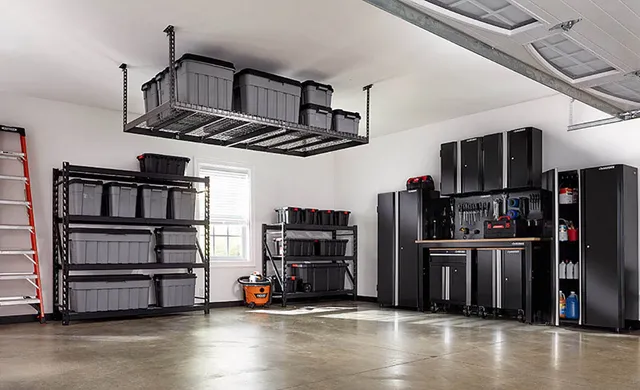
A closed metal or heavy-duty resin cabinet keeps chemicals out of sun and dust and away from curious hands. Put it on the wall that gets the least afternoon heat, usually not the west wall, and keep it clear of the water heater, dryer vent or any spark source.
Store liquids on lower shelves so a leak cannot drip onto other products, and set a tray under oil and coolant. A lock or child latch is worth adding in homes with kids or visiting grandchildren. Our garage organization service page explains how we plan this zone.
Handle touch-up paint and leftovers wisely
Touch-up paint is the one thing worth keeping, especially in a new build where the builder left cans by room. Label each can's lid with the room, finish and color name, and keep a single quart-size amount per color instead of three nearly empty gallons.
Anything dried out, separated beyond stirring or no longer needed should go to a household hazardous waste drop-off or collection event rather than the trash. Your waste hauler can tell you the current options in your part of the valley.
- Stir test: if paint will not blend smooth after stirring, it is done.
- Smell test: a sour or rotten smell in latex paint means it has spoiled.
- Rust check: rusted or bulging cans should be retired.