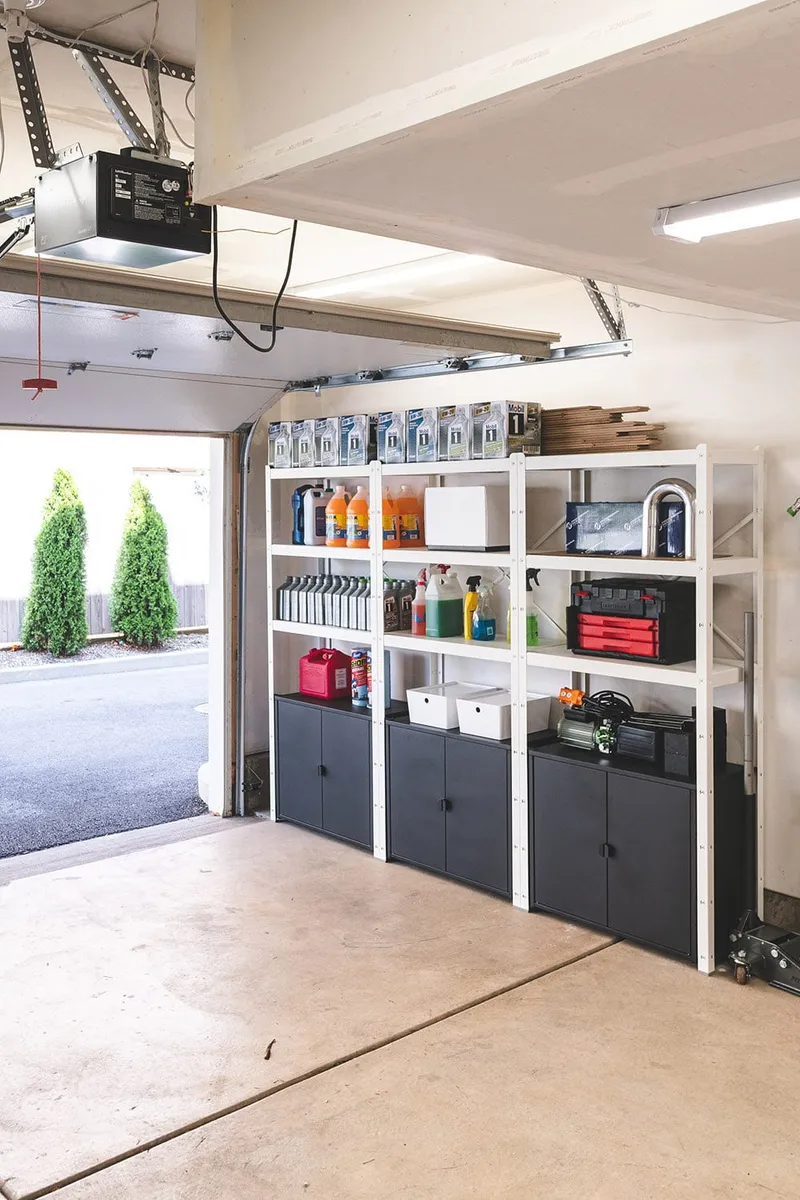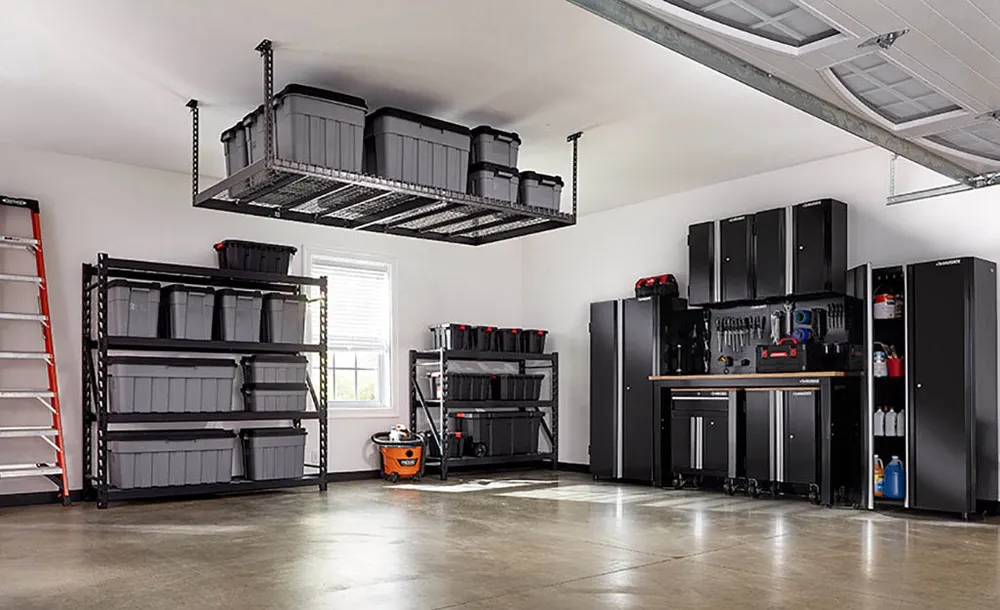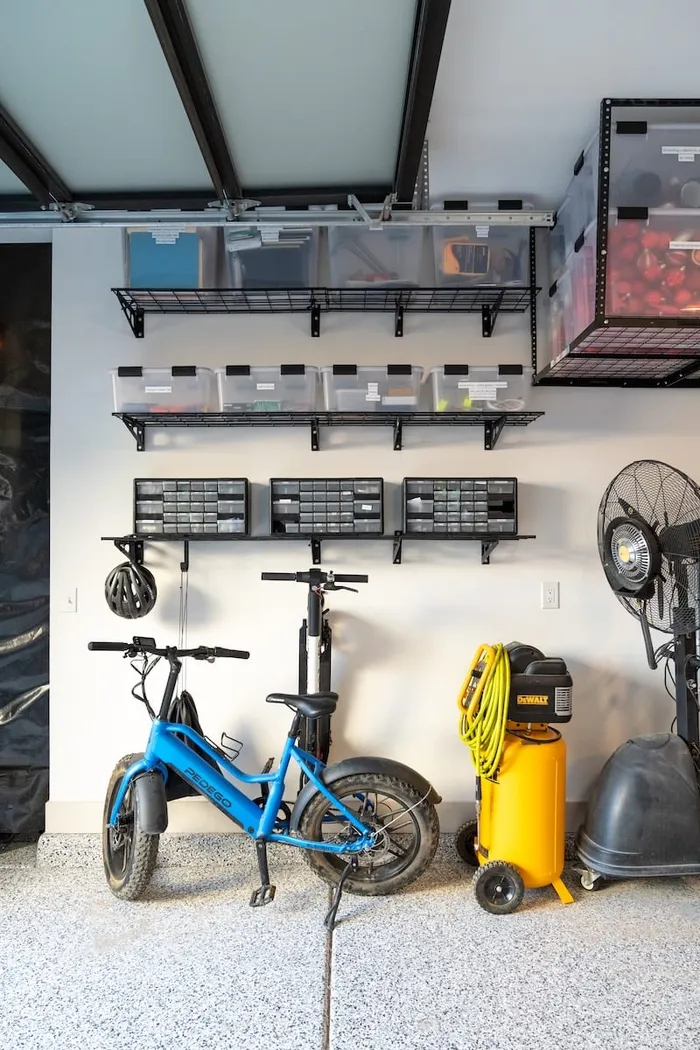
Start by deciding who uses the tools and for what
The right setup depends on whether you own a basic household kit or a serious hobby collection. A household that hangs pictures and assembles furniture needs one tidy station; a woodworker needs a workbench zone with power tools, clamps and lumber planned around it.
Count the tools you actually used in the last year. Duplicates of screwdrivers, tape measures and hammers are the most common source of garage clutter, and keeping the best one or two of each frees a surprising amount of wall.
Walls beat drawers for anything with a handle
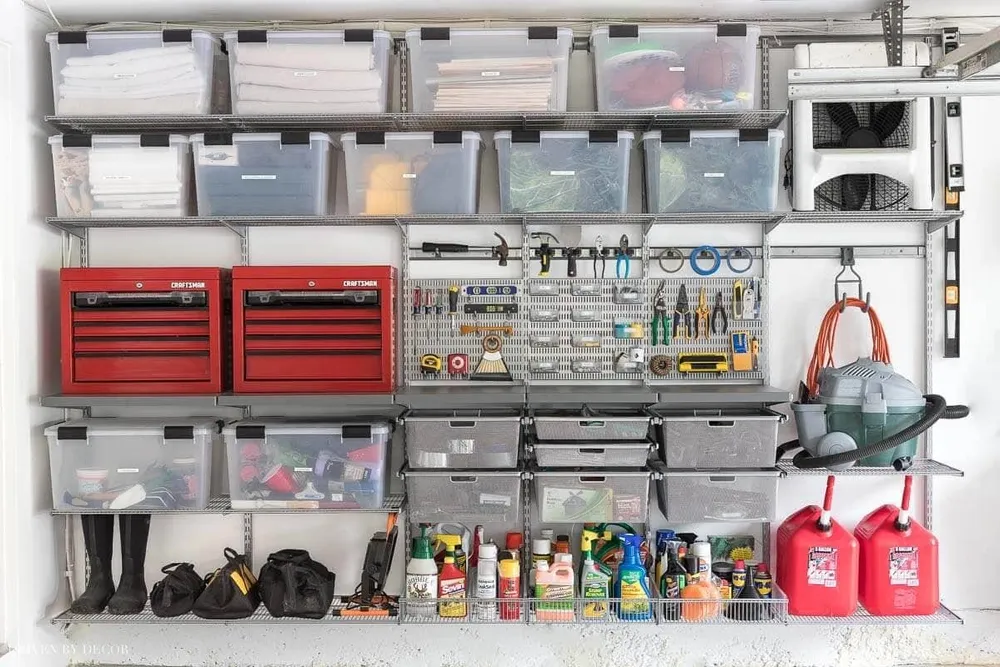
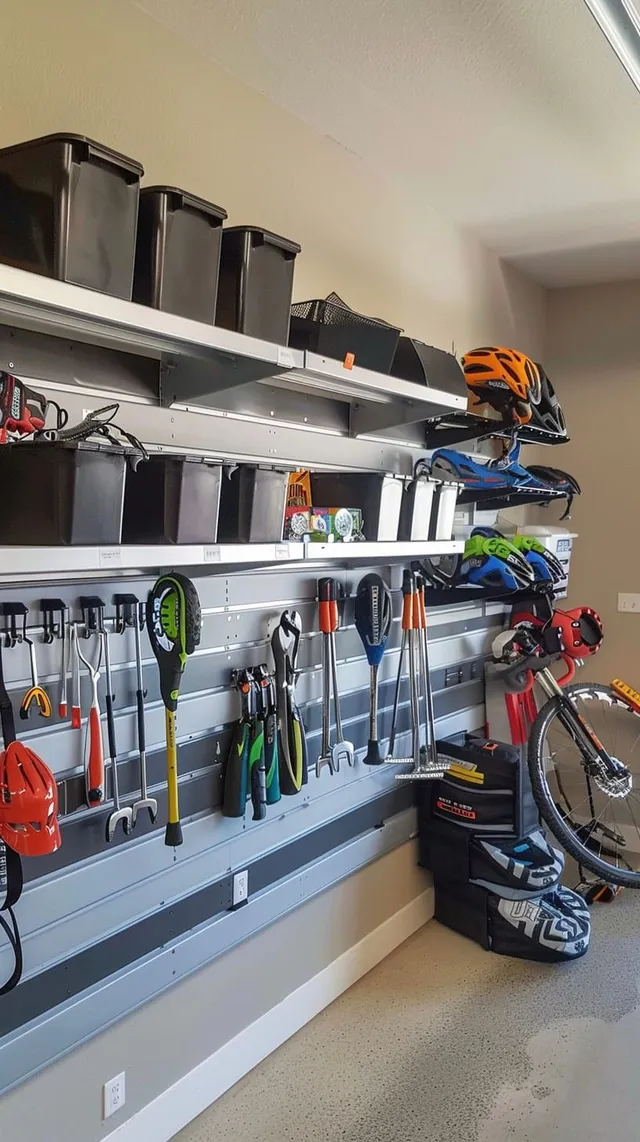
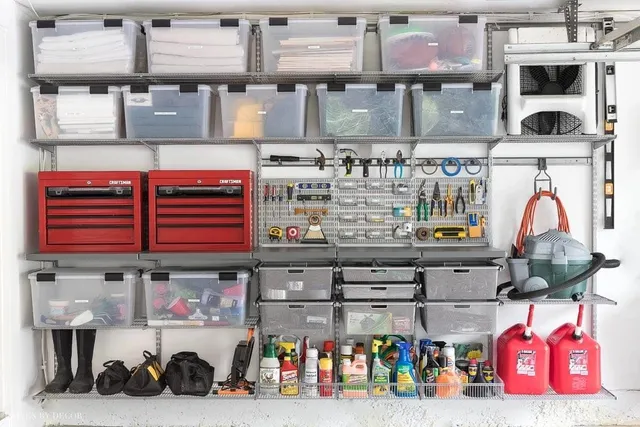
Pegboard, slatwall and rail systems let you see every tool at once, which is the main reason people stop buying duplicates. Hang hand tools in the order you use them on a project: measuring, marking, cutting, fastening.
Long-handled yard tools such as rakes, shovels and brooms go on a separate rail near the door to the yard, heads up, so they never fall into the car bay. Outline or label each spot so tools return to the same hook every time.
- Eye level: the dozen hand tools you reach for most
- Below the bench: power tools in their original cases
- Side wall near the yard door: shovels, rakes, pruners
- Top shelf: rarely used specialty tools, clearly labeled
Step by step
- Gather every tool in one place
Pull tools from kitchen drawers, cars and closets as well as the garage. You cannot plan storage for tools you have forgotten about.
- Sort by type and cull duplicates
Keep the best of each, donate working extras and recycle broken ones.
- Choose the tool wall
Pick the wall least likely to be bumped by cars, ideally with an outlet for charging in the cooler months.
- Install the system and hang by frequency
Most-used tools at eye level, seldom-used ones higher or lower.
- Label every hook and bin
Labels turn putting things away into a two-second habit for the whole household.
Protect batteries, cords and blades from Las Vegas heat and dust
Cordless tool batteries are the item most worth moving during summer, because manufacturers generally warn against charging or storing lithium-ion packs in extreme heat. A small basket by the door into the house makes it easy to bring them in from June through September.
Fine desert dust works its way into drill chucks, saw tracks and open bit sets. Closed cases, a cabinet for blades and bits, and a quick wipe-down after each project keep moving parts working. Our dust-proofing guide for garage storage covers which containers seal best.
Small hardware needs the most structure
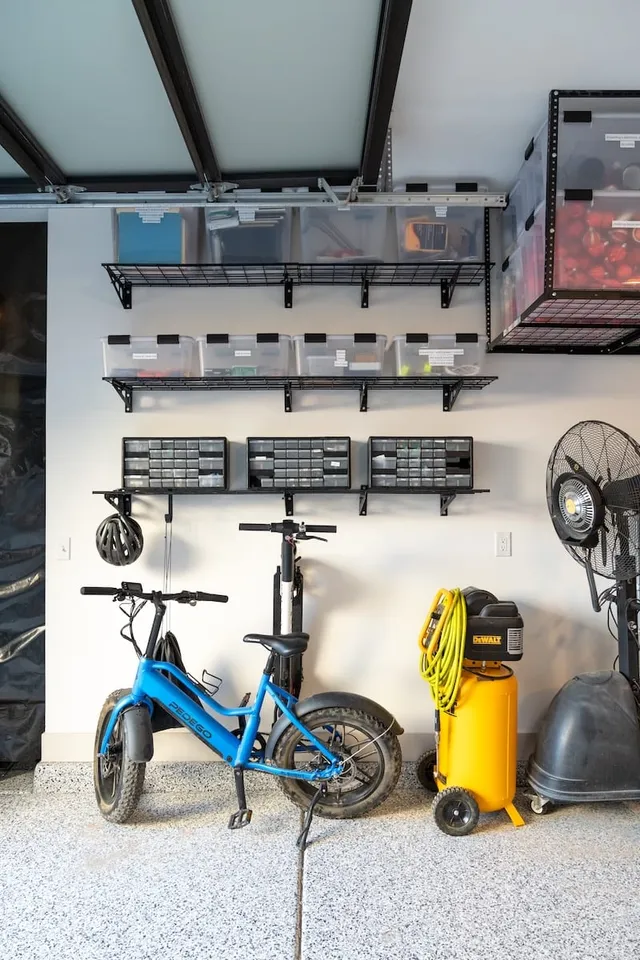
Screws, anchors, nails and washers are where tool storage usually falls apart. A divided drawer unit or a row of small labeled bins, sorted by type rather than by project, lets you find a drywall anchor in seconds.
Keep a single project caddy you can carry into the house with a hammer, a screwdriver set, a level, a tape measure and picture hooks. It saves a trip to the garage for every small job and keeps the wall system intact.
| Tool type | Best storage | Las Vegas note |
|---|---|---|
| Hand tools | Pegboard or rail at eye level | Wipe dust off quarterly |
| Power tools | Original cases on a low shelf | Cases keep dust out of motors |
| Batteries and chargers | Indoor basket in summer | Heat shortens battery life |
| Yard tools | Wall rail by the yard door | Rinse soil before hanging |
Fit tool storage into the whole garage plan
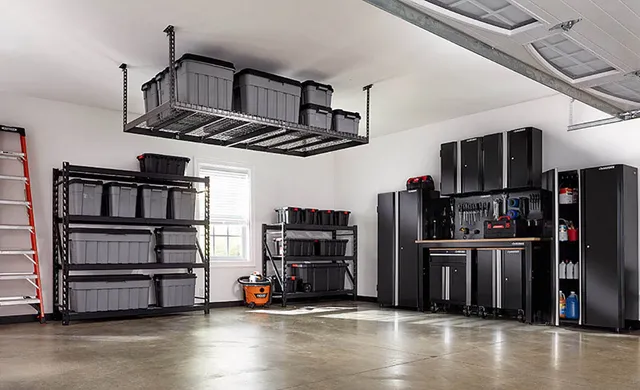
A tool wall works best when it is one zone among several, not the whole garage. Placing it on the wall opposite the car door keeps it clear of bumpers and leaves room to open a car door fully.
If you would rather have the entire garage zoned, labeled and set up in one cool-season visit, the team at Sorted Spaces does exactly that between mid-October and April. Learn how a project runs on our Las Vegas garage organization page.