Arrive to a finished home instead of a garage full of boxes
Moves do not always line up neatly. The truck may arrive before you can, a job may start the day after you land, or you may still be closing up the old house in another state. Remote setup means the hard part is done before you walk in.
The goal is a home you can live in from the first night: beds made, kitchen working, bathrooms stocked and clothes hung, with a short note on the counter showing where the less obvious things ended up.
How a remote setup works
Remote projects depend on a clear plan, so the planning stage carries more weight than usual. We agree on priorities, how you want decisions handled and how you would like to stay updated.
Most of that happens in a single video call. You walk us through the floor plan, tell us which rooms matter most and which items are personal or valuable, and choose whether you would like photo updates room by room or one summary at the end of each day. We write it down so everyone on the team works from the same plan, and anything that falls outside it waits for your answer.
How the project runs
- Video consultation
We review your new floor plan, your inventory or packing list and your priorities.
- A written plan
We outline what goes where in the kitchen, closets and other key spaces, and agree on how decisions are handled.
- Delivery and unpacking
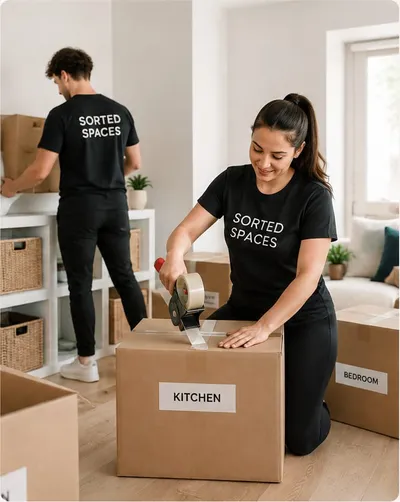
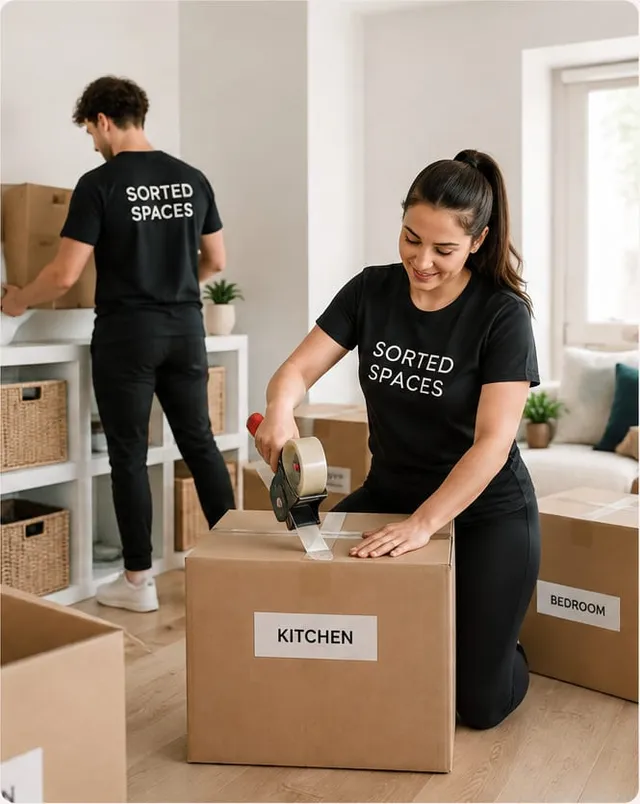
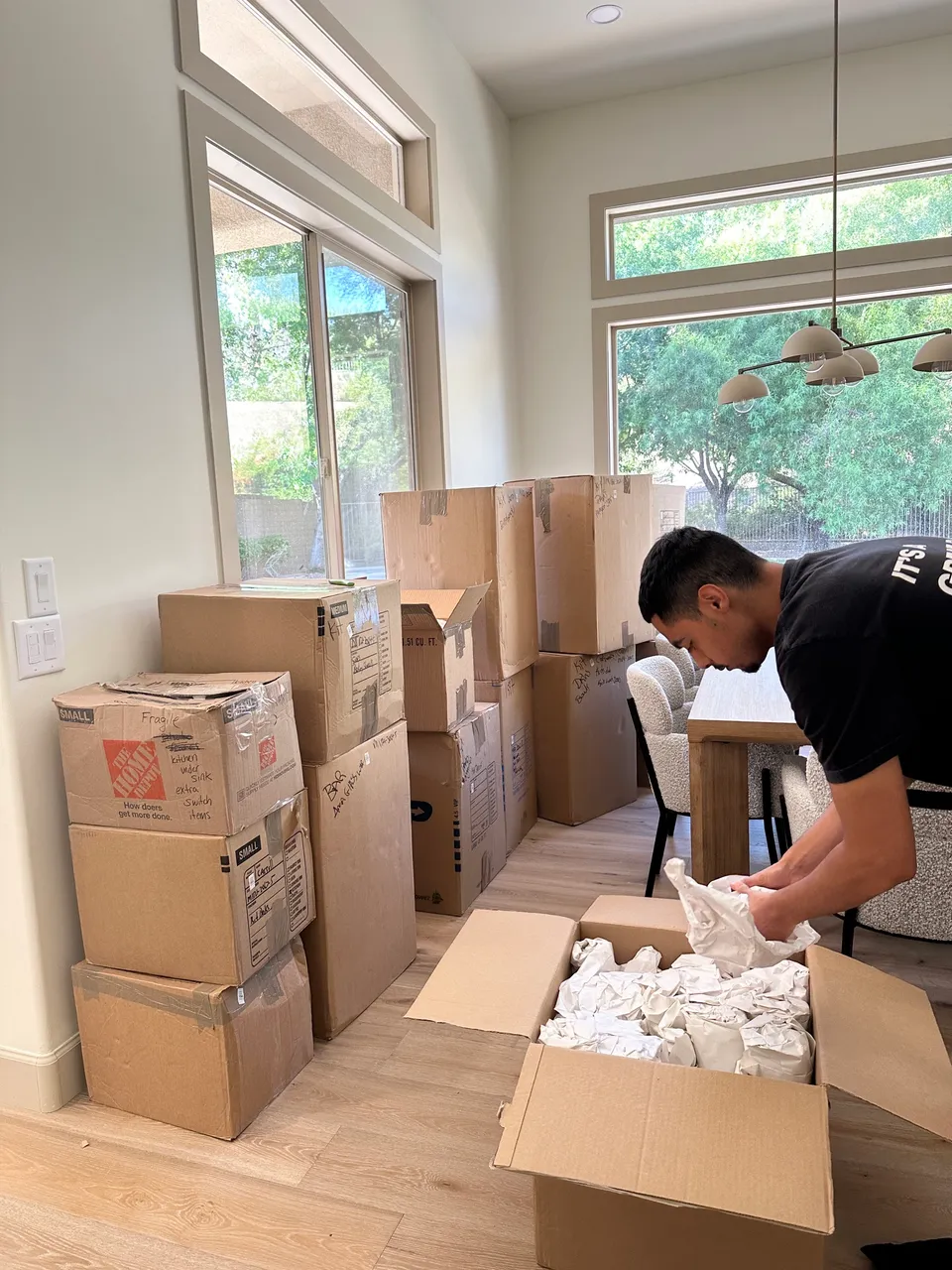
Once the movers finish, we unpack, organize, label and clear away packing materials.
- Updates and walk-through
We send photos as rooms are finished, then walk you through the home by video or in person when you arrive.
Access and the delivery day
Someone you authorize needs to let the movers in and handle the delivery paperwork, such as you, a family member, your realtor or a property manager. We plan our sessions around the delivery and coordinate timing with your mover so unpacking can start as soon as boxes are in.
For new construction, builders sometimes have their own rules about access before or after closing. Our page on new construction move-in organization covers that situation. For condos, building elevator and loading rules also apply.

What gets set up first
When you are not here to say which box matters most, a standard priority order helps. We start with the essentials, then work outward. Our what to unpack first after a move guide explains the logic.
- Beds assembled by your movers, then made with sheets you have packed
- Bathrooms: towels, toiletries, toilet paper, shower basics
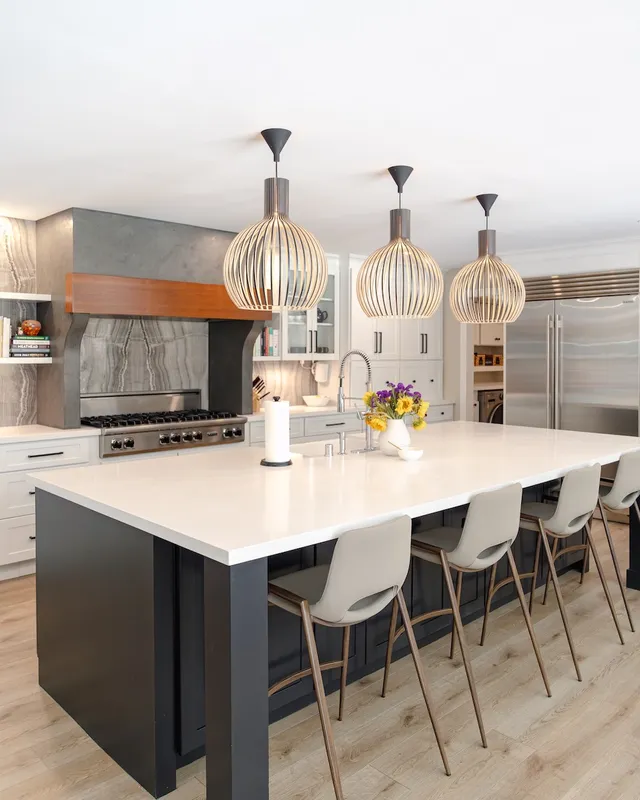
- Kitchen: dishes, cookware, coffee setup and a few pantry basics
- Primary closet: clothes hung and folded by category
- Kids' rooms, if relevant, then home office, then storage spaces
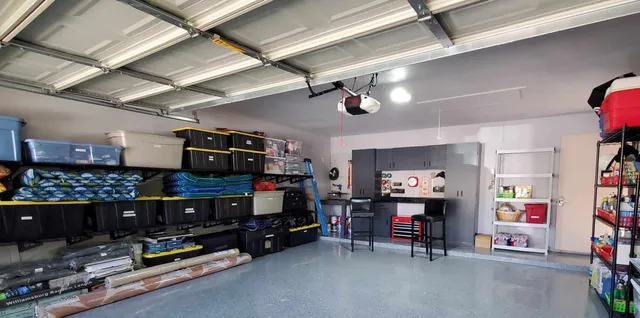
- Garage last, and scheduled mid-October through April for hands-on work
Desert-specific things we handle before you arrive
In summer, boxes left in a Las Vegas garage can get hot enough to damage wine, candles, electronics, photos and food, so we bring those categories into the cooled house first. Fine desert dust settles quickly in a home that has stood empty, so linens and clothes go into closets and drawers rather than staying in open boxes.
If you are relocating from somewhere cooler, we can store heavy winter clothing on a high shelf so the everyday closet holds what you will actually wear here. Our moving to Las Vegas checklist lists other things to sort before you arrive.
Cost of a remote move-in
Remote unpacking projects start around $600 with a four-hour minimum. A whole home typically takes one or more full days with a team, with a typical full day of remote unpacking starting around $1,800.
We can shop for organizing products and basics you have listed, such as shower curtains or hangers, and handle returns of anything unused. Product costs are added to the project.